Image 1 of 4
1 / 4
Plant Reference
Diplarrena, Genus, moraea, Species,
- Genus & species
Australian white iris
Southeastern Australia — Victoria, New South Wales, and Tasmania; open eucalypt woodlands, heathlands, and grassy slopes at low to middle elevations
Overview
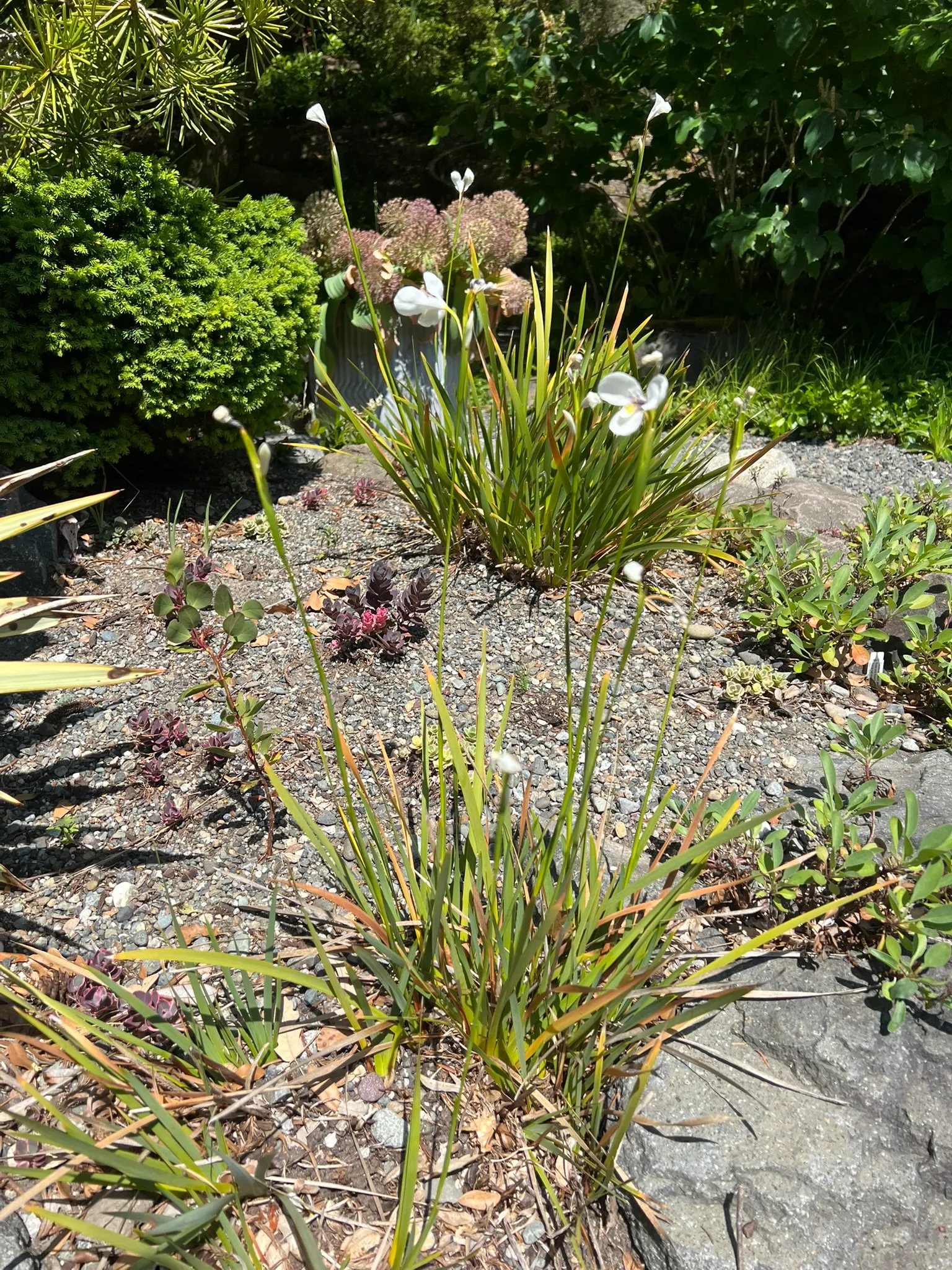
Diplarrena moraea is a clumping semi-evergreen perennial in the iris family Iridaceae growing 18–36 inches (45–90 cm) tall in bloom and 12–24 inches (30–60 cm) wide from a slowly expanding rhizomatous crown. The genus name Diplarrena is Greek for two stamens and refers to the fact that the flowers carry only 2 fertile stamens rather than the 3 stamens found in most genera in the iris family — this 2-stamen character is a departure from the typical Iridaceae floral plan and is the key botanical character that defines the genus. Only 2 species are recognized in the genus: D. moraea (southeastern mainland Australia and Tasmania) and the less widely cultivated D. latifolia (broader-leaved form endemic to Tasmania). Narrow sword-shaped mid-green leaves 12–24 inches (30–60 cm) long are arranged in a basal fan similar to an iris fan, and the foliage is semi-evergreen (retained year-round in mild climates and dying back partially in cold winters at the lower end of the hardiness range). White iris-like flowers 1.5–2 inches (4–5 cm) across with yellow and violet-purple markings at the base of the 3 smaller inner tepals open on branched stems above the foliage from April through June across a 5-week bloom period; each individual flower is fragile and lasts only 1–2 days before the petals wilt, but new flowers open in succession along the branched stems so that the display is maintained across the full 5-week window. Limitation: the species tolerates light frost to approximately 20 °F (−7 °C) but is damaged by sustained hard freezes below that threshold, and the limited cold hardiness restricts outdoor cultivation to USDA zones 8 through 10 — in colder climates the species is grown as a container specimen that is overwintered under cover. Native to southeastern Australia — Victoria, New South Wales, and Tasmania — growing in open eucalypt woodlands, heathlands, and grassy slopes at low to middle elevations. Drought-tolerant once established because the rhizomatous crown holds water reserves through summer dry periods in the native range. Deer-resistant. Toxicity to pets and humans is unknown and unstudied.
Native Range
Native to southeastern Australia — Victoria, New South Wales, and Tasmania — growing in open eucalypt woodlands, heathlands, and grassy slopes at low to middle elevations. The species is adapted to the summer-dry Mediterranean-type climate of southeastern Australia and enters a partial rest period during the driest summer months in its native range.Suggested Uses
Used in Mediterranean-climate borders, coastal gardens, native Australian plantings, rock gardens, and containers of at least 3 gallons (11 L) at 12–24 inch (30–60 cm) spacing between plants. The white iris-like flowers with yellow and violet markings, the narrow sword-shaped foliage fan, and the drought tolerance combine to suit the species for dry-summer garden positions in zones 8–10 where the Mediterranean-climate watering regime matches the species' native Australian growing conditions. Wet winter positions, heavy clay soils, and gardens in USDA zones 7 and colder without container protection are unsuitable because of the drainage requirement, the cold hardiness limit, and the tendency for crown rot in saturated winter soils.How to Identify
Appearance
Size & Dimensions
Height1'6" - 3'
Width/Spread1' - 2'
Bloom Information
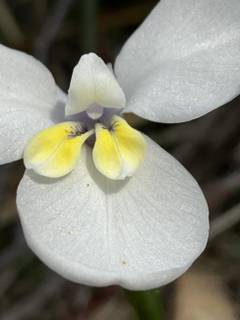
White iris-like flowers 1.5–2 inches (4–5 cm) across with yellow and violet-purple markings at the base of the inner tepals open on branched stems above the foliage from April through June across a 5-week bloom period. Each individual flower is fragile and lasts only 1–2 days before the petals wilt, but new flowers open in succession along the branched stems so that the display is maintained across the full bloom window. Honeybees and native Australian bees work the flowers for nectar and pollen during the spring bloom period.
Detailed Descriptions
Flower Description
white with yellow and violet-purple markings at the base of the 3 smaller inner tepals; 3 large white outer tepals and 3 smaller marked inner tepals, 1.5-2 inches (4-5 cm) across; each individual flower is fragile and lasts only 1-2 days, but new flowers open in succession on branched stems across the 5-week bloom periodFoliage Description
mid-green; narrow sword-shaped leaves 12-24 inches (30-60 cm) long arranged in a basal fan similar to an iris fan; semi-evergreen year-round in mild climatesGrowing Conditions
Sun Requirements
Requires 4-8 hours of direct sunlight daily
• Full Sun: 6+ hours of direct sunlight
• Partial Shade: 3-6 hours of direct sunlight
• Full Shade: Less than 3 hours of direct sunlight
Care & Maintenance
Care Guide
Site in part sun to full sun with 4–8 hours of direct sun per day in well-drained soil with a pH of 5.0–7.0. The species tolerates loam and sandy soils and calls for sharp drainage to prevent crown rot during the wet winter months. Drought tolerance develops once the rhizomatous crown is established, typically after the first or second growing season, and supplemental irrigation is needed only during extended dry periods in the first year. The species tolerates light frost to approximately 20 °F (−7 °C) but is damaged by sustained hard freezes, and the limited cold hardiness restricts outdoor cultivation to USDA zones 8 through 10 — in colder climates the species is grown as a container specimen that is overwintered under cover. Spent flower stems are cut at the base after the last flowers in the succession have opened, and old tattered foliage is cut back in early spring (March) before the new season's growth emerges. Divide clumps every 3–4 years to maintain vigor and to increase the planting. Deer-resistant. Toxicity unknown. Hardy in USDA zones 8–10.Pruning
Spent flower stems are cut at the base after the last flowers in the succession have opened (June), and old tattered or cold-damaged foliage is cut back in early spring (March) before the new season's growth emerges from the crown. Division of crowded clumps is done every 3–4 years in early spring by lifting the clump and separating the rhizomatous sections into individual fans, each with roots attached, and replanting at the original depth and spacing. No other pruning is needed.Pruning Schedule
Prune: March & June
early springsummer
Container Growing
Suitable for container growing
Minimum container size: 3 gallons