Image 1 of 9
1 / 9
© No machine-readable author provided. Phyzome assumed (based on copyright claims)., some rights reserved (CC-BY-SA) · Wikimedia Commons
Dioscorea, Genus, villosa, Species,
- Genus & species
wild yam
Overview
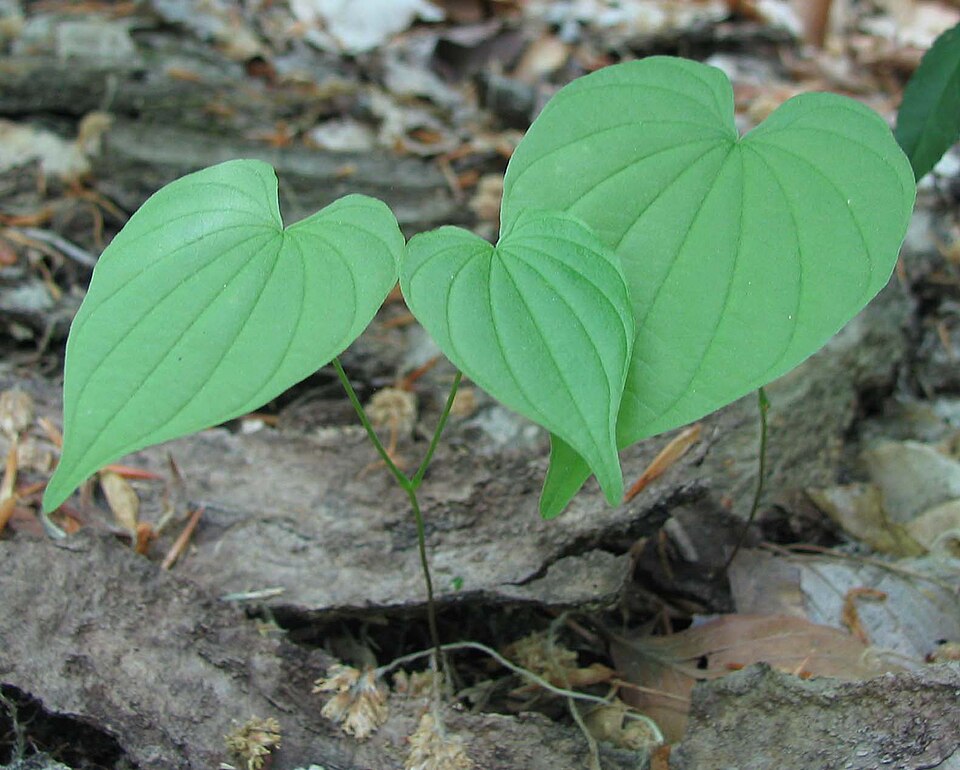
Dioscorea villosa is a herbaceous twining vine native to eastern North America, with annual stems that climb 6-15 feet (1.8-4.5 m) over shrubs and fences each season from a knotty underground rhizome. The heart-shaped leaves are 2-4 inches (5-10 cm) long, with smooth margins and several prominent curved veins; they are whorled in groups of three to eight at the lower nodes and become alternate higher up. The slender stems twine in a counterclockwise direction. The plant is dioecious, with small greenish-yellow flowers in early summer: drooping clusters on female plants and longer panicles on males. Pollinated female plants form three-winged papery capsules that dry to tan and persist into autumn. D. villosa grows in moist woods, thickets, swamp edges, and roadside fencerows. The rhizomes contain saponins and the steroidal compound diosgenin; raw material can cause nausea and vomiting if eaten. The vine spreads by rhizome and can overrun small plantings. It is hardy in USDA zones 4 through 8.
Native Range
Native to eastern and central North America, from Ontario and New England south to Florida and Texas. It grows in moist deciduous woods, thickets, stream banks, and along fencerows.Suggested Uses
Grown on trellises, arbors, and fences in native plant and woodland gardens, and used in restoration of moist woodland edges. Its seed capsules add interest to dried arrangements.How to Identify
Appearance
Size & Dimensions
Height6' - 15'
Width/Spread1' - 3'
Bloom Information
Small greenish-yellow flowers appear in early summer, generally May through July, on separate male and female plants. The flowers are inconspicuous and pollinated by small insects. Three-winged seed capsules develop on female plants and ripen from green to tan by autumn.
Detailed Descriptions
Foliage Description
GreenGrowing Conditions
Sun Requirements
Requires 3-6 hours of direct sunlight daily
• Full Sun: 6+ hours of direct sunlight
• Partial Shade: 3-6 hours of direct sunlight
• Full Shade: Less than 3 hours of direct sunlight
Care & Maintenance
Care Guide
Grow D. villosa in part shade to full shade with moist, humus-rich soil and a support for the stems to climb. It tolerates full sun where soil stays damp but is suited to woodland edge conditions. A trellis, fence, or shrub supports the twining stems, which reach full length in a single season. The rhizomes spread underground, so confine the plant or allow room for it to wander. Stems die back to the ground each winter and regrow in spring. Established plants need little attention beyond seasonal cleanup.Pruning
No pruning is required for health. Cut the dead stems to the ground in late fall or winter after they wither. Pull or dig spreading rhizomes to keep the vine within its allotted space.Pruning Schedule
Prune: November–December
fallwinter