Dioscorea, Genus, spp., Multiple species,
- Genus
- Multiple species
cinnamon vines
Tropical and warm-temperate Africa, Asia, the Americas, and the Pacific
Overview
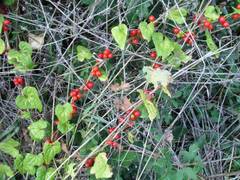
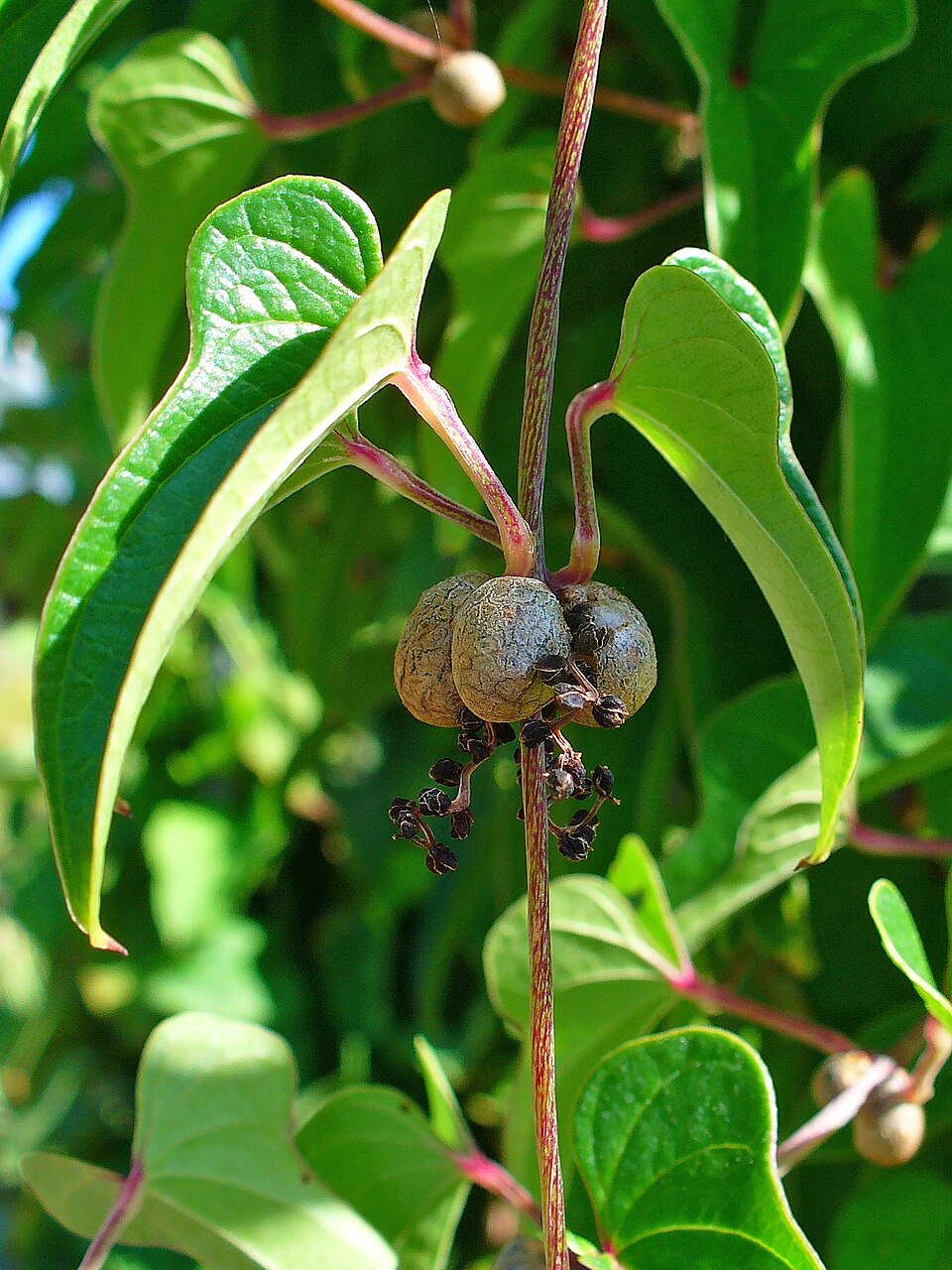
Dioscorea is a genus of about 600 species of mostly twining, herbaceous to somewhat woody vines in the family Dioscoreaceae, known as yams, native to tropical and warm-temperate regions worldwide. Plants grow from large underground tubers or rhizomes and send up annual climbing stems 6 to 30 feet (1.8 to 9 m) long that twine over other vegetation. The leaves are usually alternate or opposite, heart- or arrow-shaped, 2 to 8 inches (5 to 20 cm) long, with several prominent veins running from base to tip. Many species produce small, greenish to white flowers in slender spikes or clusters, with separate male and female plants; some, such as D. polystachya, carry a cinnamon scent. A number of species form small aerial tubers, called bulbils, in the leaf axils, which drop and grow into new plants. Dioscorea includes major food crops, among them white yam D. rotundata and water yam D. alata, whose starchy tubers feed hundreds of millions of people in the tropics, as well as D. villosa, a source of the steroid precursor diosgenin. Several species are invasive outside their native range, including air potato D. bulbifera and cinnamon vine D. polystachya in the southeastern United States. The raw tubers and bulbils of many species contain bitter, toxic compounds and are eaten only after cooking or processing.
Native Range
Dioscorea is native to tropical and warm-temperate Africa, Asia, the Americas, and the Pacific, with cultivated yams long grown across West Africa and Southeast Asia. Plants climb through forest edges, thickets, and disturbed ground. Several Asian species, including D. polystachya and D. bulbifera, have naturalized and become invasive in the warmer parts of North America.Suggested Uses
Food-crop species are grown for their starchy tubers in tropical gardens and farms, and some, such as D. polystachya, are grown for edible tubers and bulbils in temperate gardens. Quick-growing species are trained on trellises, arbours, and fences for summer screening. D. villosa is grown as a source of medicinal compounds.How to Identify
Appearance
Size & Dimensions
Height6' - 30'
Width/Spread3' - 10'
Bloom Information
Flowering occurs in summer and early autumn on the current season's climbing stems, with small greenish to white flowers in slender, often drooping spikes. The flowers are inconspicuous, and the cinnamon scent of some species, such as D. polystachya, is more noticeable than the bloom itself. Bulbils form in the leaf axils through late summer and drop in autumn.
Detailed Descriptions
Flower Description
greenish to whiteFoliage Description
green, sometimes flushed reddish or purple on the stemsGrowing Conditions
Sun Requirements
Requires 4-10 hours of direct sunlight daily
• Full Sun: 6+ hours of direct sunlight
• Partial Shade: 3-6 hours of direct sunlight
• Full Shade: Less than 3 hours of direct sunlight
Water & Climate
Water Needs
Care & Maintenance
Care Guide
Dioscorea species grow in full sun to partial shade in moist, deep, well-drained soil and climb readily on supports, fences, or other plants. The genus needs warmth and a long growing season; tropical food yams grow only in frost-free climates, while hardier species die back to the tuber each winter and resprout in spring. Plants are propagated from tubers, tuber pieces, or bulbils, and the climbing stems can reach full length in a single season. Tubers are lifted for food or storage in autumn after the foliage yellows. Several species spread quickly from bulbils and tubers and are regulated as invasive weeds in parts of the southern United States. The raw tubers of many species are bitter and require cooking before they are safe to eat.Pruning
Dioscorea stems are cut to the ground after they yellow in autumn or after frost kills the top growth. Removing stray bulbils and seedlings limits the spread of invasive species. On food crops the vines are left intact through the season so the tubers can enlarge before harvest.Pruning Schedule
Prune: October–November
fall