Dieteria, Genus, canescens, Species,
- Genus & species
hoary tansyaster
Overview
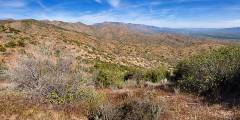
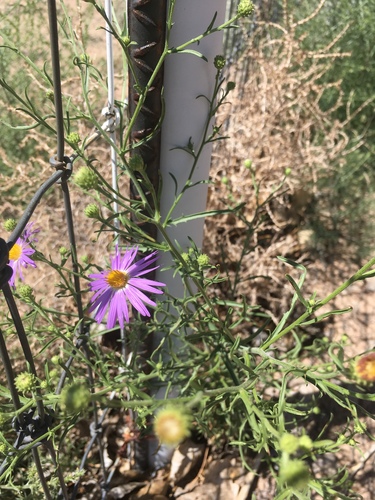
Dieteria canescens is a short-lived perennial or biennial in the aster family, growing 8-30 inches (20-75 cm) tall with a bushy, branching habit. The stems and narrow, toothed leaves are covered in dense gray hairs that give the plant a hoary, grayish cast. From midsummer into fall it carries many daisy-like flower heads about 1-1.5 inches (2.5-4 cm) across, with violet to purple ray florets surrounding a yellow center. It grows in dry, open ground across western North America, including sagebrush flats, plains, roadsides, and disturbed sites, often on sandy or gravelly soil. The plant is drought tolerant and reseeds freely, behaving as a pioneer on bare and disturbed ground. Because it is short-lived, it depends on regular reseeding to persist and may not return in the same spot year after year. The late flowers support bees and butterflies into autumn. Its open, somewhat weedy form suits naturalized plantings more than formal beds.
Native Range
Native to western North America, from the Great Plains and Rocky Mountains west to the Pacific states and from Canada south into Mexico. It grows in sagebrush steppe, dry plains, open woodland, and disturbed roadsides.Suggested Uses
Used in xeriscape, native plant, and pollinator gardens and in prairie and roadside restoration for its late-season color. It suits dry meadows and naturalized plantings, spaced about 12-18 inches (30-45 cm) apart, rather than irrigated formal borders.How to Identify
Appearance
Size & Dimensions
Height8" - 2'6"
Width/Spread8" - 1'6"
Bloom Information
Flowers from July through October across much of its range, with violet to purple heads opening over a long late-season window. Bloom is heaviest in late summer and continues until frost. The timing fills a gap after spring and early-summer wildflowers fade.
Detailed Descriptions
Flower Description
violet to purpleFoliage Description
gray-greenGrowing Conditions
Sun Requirements
Requires 6-12 hours of direct sunlight daily
• Full Sun: 6+ hours of direct sunlight
• Partial Shade: 3-6 hours of direct sunlight
• Full Shade: Less than 3 hours of direct sunlight
Care & Maintenance
Care Guide
Dieteria canescens grows in full sun in dry, well-drained sandy or gravelly soil and tolerates poor, alkaline ground. It is drought tolerant once established and needs little or no supplemental water. Overly rich or moist soil produces lank growth and shortens the plants life. It tolerates a soil pH from about 6.5 to 8.5 and self-sows readily on bare soil. Sowing seed in fall or early spring on cleared ground establishes new stands. Because plants are short-lived, leaving some seed heads in place keeps the planting going from year to year.Pruning
Shearing plants lightly after the first flush of bloom can bring on a second round of flowers. Cutting spent stems in late fall tidies the planting, though leaving some seed heads allows self-sowing. Plants need little pruning beyond this.Toxicity: Not assessed
UnknownPlanting Guide
Planting Methods & Timing
Planting Method
direct sow
Direct Sow Timing
Fall or early spring