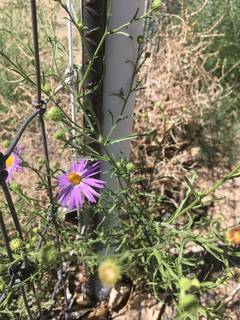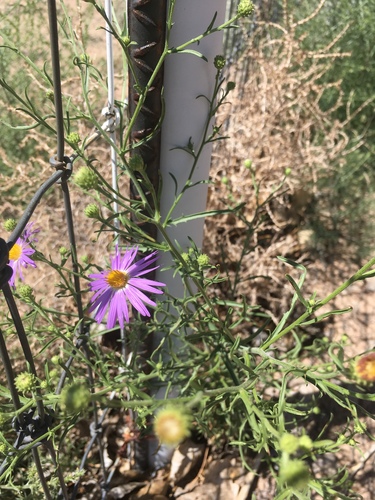
Dieteria, Genus, spp., Multiple species,
- Genus
- Multiple species
tansyasters
Overview
Dieteria is a genus of three species of annual, biennial, and short-lived perennial herbs in the family Asteraceae, native to dry regions of western North America. Known as tansyasters, plants grow 6 in to 4 ft (15-120 cm) tall, with branched, often gray-hairy stems and narrow, toothed or lobed leaves. The aster-like flower heads are 0.8-1.5 in (2-4 cm) across, with many slender ray florets in violet, lavender, or purple-blue surrounding a yellow disc. D. canescens, hoary tansyaster, occurs across plains, sagebrush, and open woodland from Canada to Mexico. Plants bloom from summer into autumn and often grow as colonizers of disturbed, gravelly ground. They tolerate heat, drought, and alkaline soils, and the deep roots help them persist in arid sites. Most plants behave as annuals or biennials, completing their cycle in one or two seasons before setting abundant seed.
Native Range
Dieteria is native to western North America, from western Canada south through the western United States to northern Mexico. Plants grow in dry plains, foothills, sagebrush steppe, and open montane woodland. The genus was formerly included in Machaeranthera.Suggested Uses
Grown in native and pollinator gardens, dryland plantings, and wildflower seed mixes across the western United States. The late-season flowers draw bees and butterflies when many plants have finished. Tolerant of poor, alkaline soil, the plants fill low-water beds and restoration plantings.How to Identify
Appearance
Size & Dimensions
Height6" - 4'
Width/Spread8" - 2'
Bloom Information
Detailed Descriptions
Flower Description
violet to purple-blue with yellow centerFoliage Description
gray-greenGrowing Conditions
Sun Requirements
Requires 6-12 hours of direct sunlight daily
• Full Sun: 6+ hours of direct sunlight
• Partial Shade: 3-6 hours of direct sunlight
• Full Shade: Less than 3 hours of direct sunlight
Care & Maintenance
Care Guide
Plants grow in full sun and well-drained, gritty or sandy soil with a pH near 6.5 to 8.0, including alkaline ground. They tolerate heat and drought once established and decline in rich, moist, or poorly drained soils. Seed is sown in autumn or spring, and plants often self-sow in open, disturbed sites. Watering is minimal once seedlings root. Annual and biennial plants die after flowering and renew from seed.Pruning
Spent flower heads are removed to extend bloom or left to ripen for seed and to feed birds. Tall plants are cut back lightly in early summer to limit flopping. Annual and biennial plants are cleared once they finish their cycle.Container Growing
Suitable for container growing
Minimum container size: 2 gallons