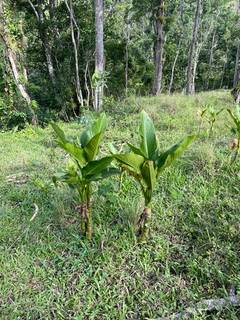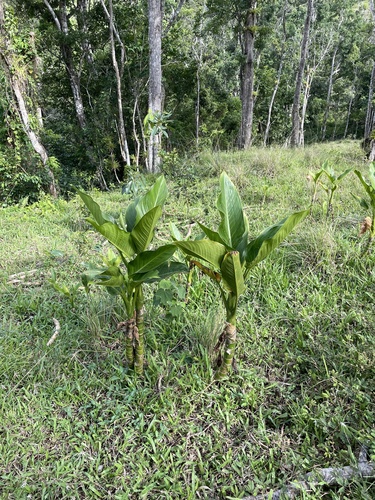
Dieffenbachia, Genus, spp., Multiple species,
- Genus
- Multiple species
mother-in-law's-tongues
Tropical Americas, from southern Mexico and the Caribbean through Central America to tropical South America
Overview
Dieffenbachia is a genus of about 30 to 50 species of evergreen tropical perennials in the arum family (Araceae), native to the American tropics and grown worldwide as foliage houseplants. Plants form upright, cane-like stems 1 to 6 ft (30 to 180 cm) tall, topped by large oblong to oval leaves 8 to 18 in (20 to 45 cm) long. The foliage is marbled, spotted, or banded in cream, white, or yellow against green, with the exact pattern varying by species and selection. Like other aroids the flower is a pale greenish spathe wrapped around a fingerlike spadix, but plants kept indoors rarely bloom. All parts contain needle-like calcium oxalate crystals and a protein-digesting enzyme, so chewing the stem or leaf causes intense burning and swelling of the mouth and throat that can leave a person briefly unable to speak, the source of the common name dumb cane. The sap is poisonous to pets as well. The genus grows in the warm, humid understory of lowland rainforest and is hardy outdoors only in frost-free climates of USDA zones 10 to 12.
Native Range
Dieffenbachia is native to the tropical Americas, ranging from southern Mexico and the Caribbean through Central America into tropical South America. It grows in the humid shaded understory of lowland and lower montane rainforest.Suggested Uses
Dieffenbachia is grown as a foliage houseplant for homes and offices, including lower-light interiors where many plants fail. In frost-free climates of zones 10 to 12 it is planted outdoors in shaded beds and under trees as a tropical foliage plant. Compact selections suit tabletops and desks, while taller canes are used as floor plants in bright corners.How to Identify
Appearance
Size & Dimensions
Height1' - 6'
Width/Spread1' - 3'
Bloom Information
Flowering is uncommon on plants grown indoors. When it occurs, mostly on mature plants in warm, humid conditions, the bloom is a narrow pale-green spathe partly enclosing a cream spadix, in the typical arum form. On most indoor plants no flowers appear at all.
Detailed Descriptions
Flower Description
pale greenish-white spathe, rarely produced indoorsFoliage Description
green with cream, white, or yellow variegationGrowing Conditions
Sun Requirements
Needs bright indirect light. Keep it out of direct sun, which can scorch the leaves.
• Bright indirect light: a bright spot near a window, with no direct sun on the leaves
Care & Maintenance
Care Guide
Dieffenbachia grows in bright, indirect light and warm temperatures above 60 F (16 C), in a rich, free-draining potting mix at a pH of about 6.0 to 7.0. It grows well when the top inch of mix is allowed to dry between waterings, with the soil kept evenly moist but never waterlogged, and benefits from raised humidity in dry indoor air. Direct midday sun scorches the leaves, while deep shade slows growth and fades the variegation. Monthly feeding through spring and summer supports growth, and cold drafts cause leaf drop. The sap contains calcium oxalate and irritates skin, eyes, mouth, and throat on contact or chewing. Spider mites and aphids are the main indoor pests, and stem rot follows overwatering in cold conditions.Pruning
Dieffenbachia needs little pruning beyond removing yellowed lower leaves. Tall, leggy canes can be cut back to about 6 in (15 cm) in late spring, and the plant resprouts from the base. The cut tops root readily in water or moist mix to make new plants, and the cut surfaces release the irritant sap.Pruning Schedule
Prune: May–June
late springsummer
Container Growing
Suitable for container growing
Minimum container size: 2 gallons