Image 1 of 8
Plant Reference
1 / 8
Dieffenbachia, Genus, seguine, Species,
- Genus & species
dumb cane
Tropical Americas — Caribbean, Central and South America
Overview
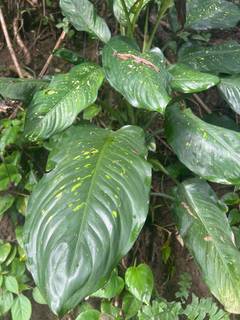
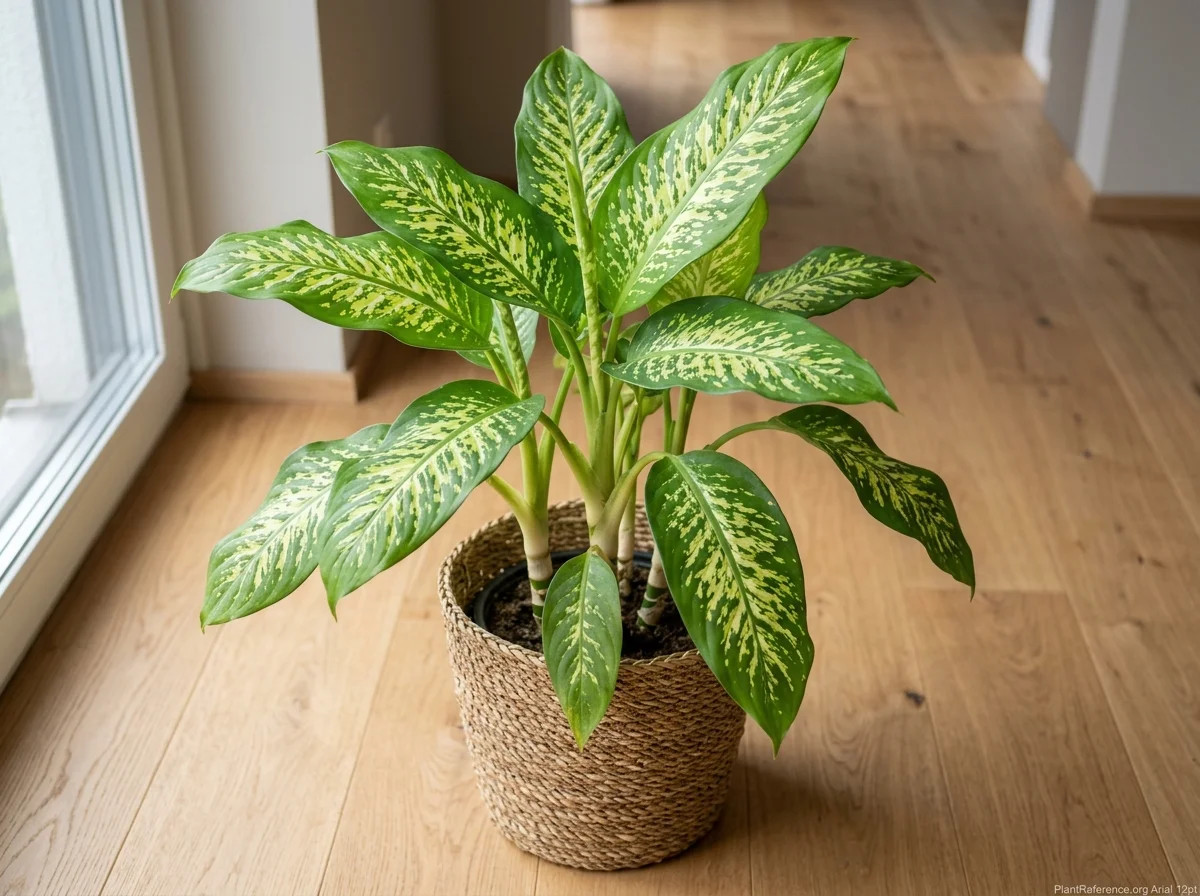
Dieffenbachia seguine is dumb cane, growing 36-72 inches (90-180 cm) indoors. Large ovate leaves 8-16 inches (20-40 cm) long with cream-to-white variegation on green — cultivar patterns range from speckled to broadly white-centered to green-margined. Tolerates low light (50-150 foot-candles) and average indoor conditions. The common name 'dumb cane' refers to the sap's effect on oral tissue: calcium oxalate raphides (microscopic needle-shaped crystals) in the sap puncture mucous membranes on contact, causing intense pain, tongue and throat swelling, and temporary loss of speech. The sap also causes contact dermatitis on skin and severe irritation to eyes. Gloves are advisable when pruning or handling cut stems. Toxic to cats, dogs, and humans. The stem can be cut to any height; dormant buds below the cut produce new rosettes within 3-6 weeks. Stem sections with at least one node can be laid horizontally on moist media to propagate. Tolerant of irregular watering and low humidity. Overwatering causes root rot, and lower leaves yellow naturally as the plant grows taller — this is normal stem development, not a cultural problem.
Native Range
Dieffenbachia seguine is native to the tropical Americas — Caribbean, Central and South America.Suggested Uses
Grown in containers of 3-5 gallons (12-20 liters) in offices, commercial interiors, and homes with low to moderate indirect light. Sited out of reach of children and pets due to the raphide-containing sap.How to Identify
Appearance
Size & Dimensions
Height3' - 6'
Width/Spread2' - 3'
Bloom Information
Rare indoors. The large variegated foliage is the year-round display.
Detailed Descriptions
Flower Description
Green-white spadix with green spathe (rare indoors)Foliage Description
Large ovate leaves with cream to white variegation on green — patterns vary from speckled to broadly white-centered depending on cultivarGrowing Conditions
Sun Requirements
Requires 2-6 hours of direct sunlight daily
• Full Sun: 6+ hours of direct sunlight
• Partial Shade: 3-6 hours of direct sunlight
• Full Shade: Less than 3 hours of direct sunlight
Care & Maintenance
Care Guide
Low to bright indirect light. Keep evenly moist. Significantly toxic — gloves are advisable when handling, and the plant should be sited away from areas frequented by children and pets. The sap causes intense oral pain and swelling. Easy and forgiving otherwise.Pruning
Remove yellowing lower leaves. Trunk-chop to regenerate. Gloves are advisable for all pruning — the sap is intensely irritating.Container Growing
Suitable for container growing
Minimum container size: 5 gallons