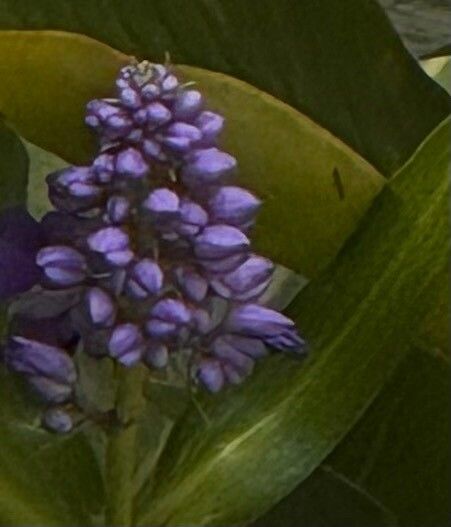
Dichorisandra, Genus, thyrsiflora, Species,
- Genus & species
blue ginger
Atlantic Forest of southeastern Brazil
Overview
Dichorisandra thyrsiflora is an evergreen rhizomatous perennial from the Atlantic Forest of southeastern Brazil, growing 60–96 inches (150–240 cm) tall and 24–48 inches (60–120 cm) wide in tropical landscape and 36–60 inches (90–150 cm) tall under indoor or container culture. Despite the common name, the plant is not a true ginger (Zingiberaceae) but a member of family Commelinaceae (spiderwort family). Stems are bamboo-like, jointed, and upright; leaves are 6–12 inches (15–30 cm) long, glossy mid- to dark-green, lance-shaped, and arranged spirally around the stem. Terminal panicles 4–8 inches (10–20 cm) long produce 30–60 deep blue-purple three-petaled flowers with yellow stamens in late summer through fall, with bloom duration of 4–6 weeks per stem. Stems may be cut for use as cut flowers; vase life is 5–10 days. The plant is non-toxic to dogs, cats, and humans. Cold-tender: foliage damage occurs below 50°F (10°C) and plant death below 35°F (2°C). The plant is dormant in zones 9–10 and may die back to the rhizome in winter, regrowing in spring. Common indoor pests include spider mite, mealybug, and aphid. Stem cuttings and rhizome divisions root in moist potting mix or water within 4–6 weeks.
Native Range
Native to lowland and submontane Atlantic Forest of southeastern Brazil. Despite the common name 'blue ginger,' the plant is in family Commelinaceae (spiderwort family) rather than Zingiberaceae (true ginger family).Suggested Uses
Grown as a flowering specimen in part-shade tropical and subtropical gardens in zones 9–12, and as a flowering houseplant in 3–7 gallon (12–28 liter) containers in temperate climates. The blue flowers are uncommon among shade-tolerant tropicals; bloom occurs in late summer through fall, after most tropical shade plants have finished flowering. Used as a cut flower with a vase life of 5–10 days.How to Identify
Appearance
Size & Dimensions
Height3' - 8'
Width/Spread2' - 4'
Bloom Information
Terminal panicles produce deep blue-purple flowers from late August through October in zones 9–11, with peak bloom in September. Bloom duration is 4–6 weeks per stem. Each stem flowers once and is replaced by new shoots from the rhizome the following year. Indoor plants flower in similar timing if given strong light.
Detailed Descriptions
Flower Description
Deep blue-purple three-petaled flowers with yellow stamens in terminal paniclesFoliage Description
Glossy mid- to dark-green, lance-shaped 6-12 inches (15-30 cm), arranged spirally around bamboo-like stemsGrowing Conditions
Sun Requirements
Requires 3-5 hours of direct sunlight daily
• Full Sun: 6+ hours of direct sunlight
• Partial Shade: 3-6 hours of direct sunlight
• Full Shade: Less than 3 hours of direct sunlight
Care & Maintenance
Care Guide
Grows in part shade to bright indirect light at 65–85°F (18–29°C) in summer and 55–65°F (13–18°C) in winter. Direct midday summer sun scorches leaves; deep shade slows growth and reduces flowering. Watering occurs when the top 1–2 inches (2.5–5 cm) of potting mix have dried — typically every 5–10 days in active growth and reduced to monthly during winter dormancy. Soil is rich, moisture-retentive, and slightly acidic (pH 5.5–6.5). Plants are re-potted every 2–3 years and may be divided at the rhizome at the same time.Pruning
Spent flower panicles are removed after bloom finishes in October or November. Old canes are cut to soil level when they yellow and die back, typically in winter. New shoots emerge from the rhizome in spring.Pruning Schedule
Prune: November–January
fallwinter
Container Growing
Suitable for container growing
Minimum container size: 3 gallons