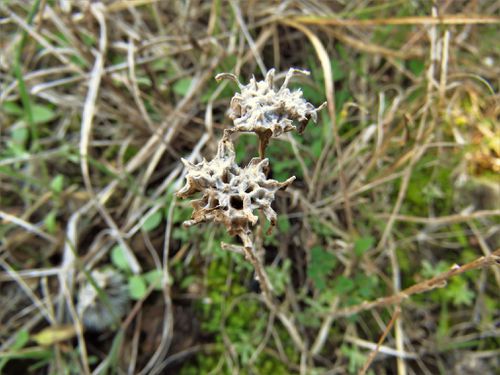
Diaperia, Genus, prolifera, Species,
- Genus & species
flathead rabbit tobacco
Overview
Diaperia prolifera is a winter or spring annual reaching 2-12 inches (5-30 cm) tall, the stem simple or branching above into a tight, flat-topped cluster of heads. The whole plant is densely covered in white woolly hairs, giving a gray to silvery cast. Leaves are small, spoon-shaped to oblong, 0.2-0.6 inch (5-15 mm) long, alternate and overlapping along the stem. Flower heads are small and rayless, 0.1-0.2 inch (3-5 mm) wide, clustered in dense terminal glomerules subtended by woolly bracts. Bloom occurs from March through May. The fruit is a tiny achene without a pappus, dispersed as the dried heads break apart. The plant completes its life cycle in a single season, germinating in autumn or late winter, flowering in spring, and dying as soils dry in early summer. Growth is rapid but the plant stays small, forming colonies on bare or disturbed ground rather than competing in dense vegetation.
Native Range
Native to the south-central United States, concentrated in Texas, Oklahoma, and adjacent states, with scattered populations across the southern Great Plains. Grows on dry, open, sandy or gravelly ground including prairies, roadsides, glades, and disturbed sites at low to middle elevations.Suggested Uses
Used in native plant restorations, rock gardens, and gravel plantings on dry, open ground, sown directly where it is to grow. Suited to bare or low-competition sites; it does not persist in mulched beds or irrigated borders. Self-seeds to form low colonies on poor soil.How to Identify
Appearance
Size & Dimensions
Height2" - 1'
Width/Spread1" - 4"
Bloom Information
Flowers from March through May, with timing driven by winter rainfall and temperature. The rayless heads are small and easily overlooked. Plants set seed and dry out by June in most years, and the entire above-ground portion disintegrates by midsummer.
Detailed Descriptions
Flower Description
whitish to greenishFoliage Description
gray-green, densely white-woollyGrowing Conditions
Sun Requirements
Requires 6-12 hours of direct sunlight daily
• Full Sun: 6+ hours of direct sunlight
• Partial Shade: 3-6 hours of direct sunlight
• Full Shade: Less than 3 hours of direct sunlight
Water & Climate
Water Needs
Drought Tolerance
Drought tolerant when established
Care & Maintenance
Care Guide
Grows in full sun on dry, low-nutrient, sharply drained soil. As an annual it needs no long-term maintenance and depends on self-seeding to return. Seedlings appear after autumn or late-winter rain and need no supplemental water in the native climate. Rich or irrigated soil favors larger competing plants that crowd it out. There are no significant pests or diseases. The plant tolerates poor, compacted, and gravelly substrates where few other species establish.Pruning
No pruning is applicable. As a small annual the plant is left in place to set and drop seed, which maintains the stand from year to year. Dried plants break apart on their own by midsummer.Toxicity
Non-toxicPlanting Guide
Planting Methods & Timing
Planting Method
direct sow
Direct Sow Timing
Sow in autumn or late winter for spring bloom
Days to Maturity
60–120 days
Plant Spacing
4 inches