Dianella, Genus, revoluta, Species,
- Genus & species
blueberry lily
Overview
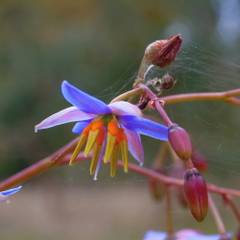
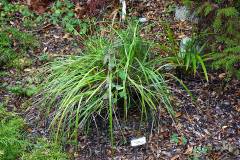
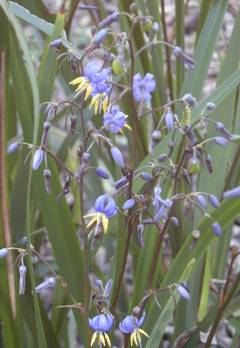
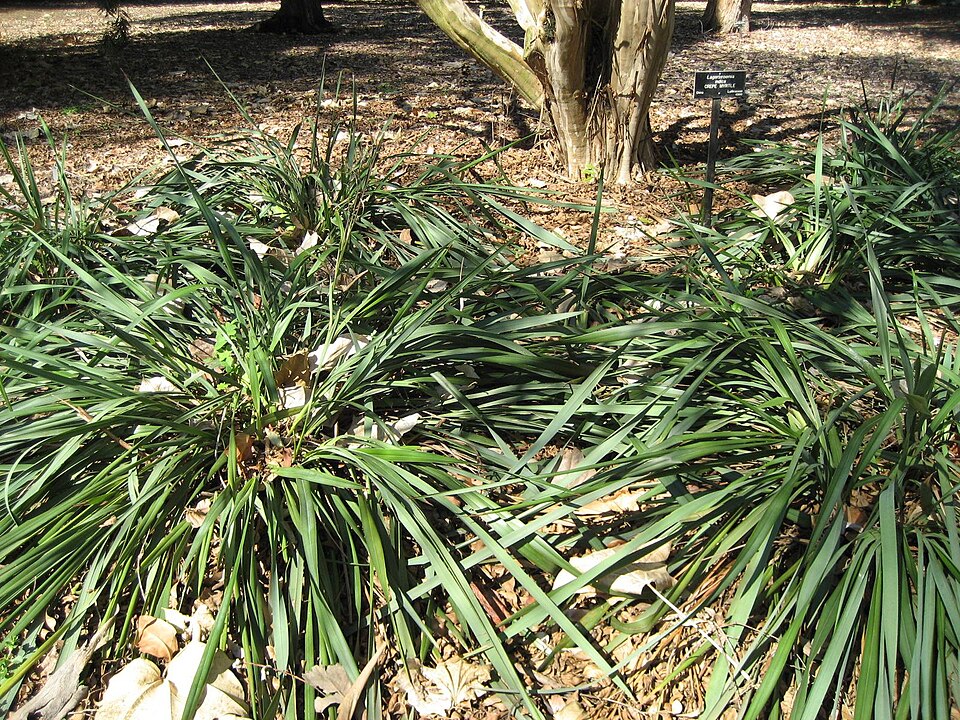
Dianella revoluta is a tufted, rhizomatous perennial forming clumps of strappy leaves 30-80 cm (12-32 in) long and 0.5-1.5 cm (0.2-0.6 in) wide. The flat, grey-green to blue-green leaves have rough, inrolled (revolute) margins and arise from a spreading underground rhizome. In spring and summer, branched flowering stems rise above the foliage and carry many small star-shaped flowers, each 1-1.5 cm (0.4-0.6 in) across with six blue to violet tepals and yellow anthers. The flowers are followed by glossy blue to violet-purple berries 0.5-1 cm (0.2-0.4 in) long that hold several shiny seeds. The species grows in open eucalypt forest, woodland, grassland, and coastal heath across a wide range of soils. Spreading rhizomes allow clumps to widen over time. Limitation: the rhizomes can spread beyond the original clump in cultivation, and individual flowers are small and short-lived.
Native Range
Widespread across mainland Australia, occurring in all mainland states in open eucalypt forest, woodland, grassland, and coastal heath.Suggested Uses
Grown in mass plantings, borders, and rockeries, as a low-water groundcover, and in coastal and native gardens. It suits erosion control on slopes through its spreading rhizomes.How to Identify
Appearance
Size & Dimensions
Height1' - 2'8"
Width/Spread1' - 2'
Bloom Information
Detailed Descriptions
Flower Description
blue to violetFoliage Description
grey-green to blue-greenGrowing Conditions
Sun Requirements
Requires 4-9 hours of direct sunlight daily
• Full Sun: 6+ hours of direct sunlight
• Partial Shade: 3-6 hours of direct sunlight
• Full Shade: Less than 3 hours of direct sunlight
Care & Maintenance
Care Guide
Grows in well-drained soils in full sun to part shade and tolerates sandy, loam, and clay soils. Established clumps tolerate extended drought, frost, and coastal exposure. Water through the first season to establish, after which little water is needed. Clumps can be cut back near ground level every few years to refresh the foliage. The species spreads by rhizomes and divides readily in cooler months. It tolerates a wide pH range.Pruning
Tired or frost-burnt foliage can be cut back near ground level in late winter, and the clump reshoots from the rhizome. Spent flowering stems can be removed after the berries finish. No other pruning is needed.Container Growing
Suitable for container growing
Minimum container size: 3 gallons