Dianella, Genus, spp., Multiple species,
- Genus
- Multiple species
Flax-lilies
Australia, New Zealand, the southwest Pacific, and tropical Asia
Overview
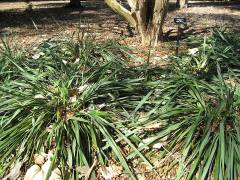
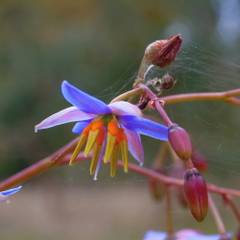
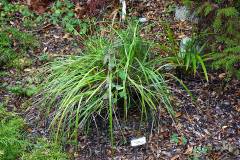
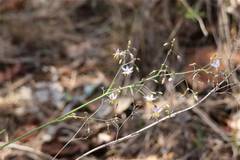
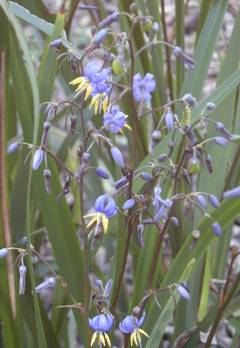
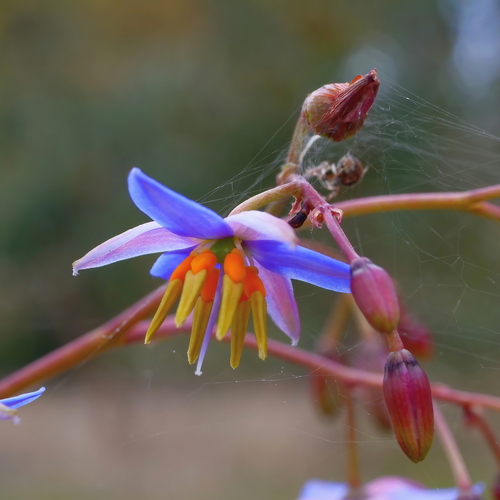
Dianella is a genus of about 40 species of evergreen, clump-forming perennials in the family Asphodelaceae, native to Australia, New Zealand, the Pacific islands, and tropical Asia, where they grow in woodland, grassland, and coastal scrub. Plants spread slowly by short rhizomes into dense tufts of strap-shaped leaves 1-4 ft (0.3-1.2 m) long, arching and often blue-green or variegated with cream stripes. In spring and summer wiry, branched flower stems rise above the foliage carrying many small, nodding, star-shaped flowers in blue, violet, or white, each with six petals and a cluster of bright yellow anthers. The flowers are followed by glossy berries in shades of deep blue to violet that persist for weeks. Most species tolerate full sun to part shade, a wide range of soils, drought once established, and coastal exposure, which has made flax-lilies common in low-maintenance and mass plantings. They spread steadily and can be divided to control size. The berries of some species are reported as toxic if eaten, and the tough leaves resist most pests and browsing.
Native Range
The genus is native to Australia, New Zealand, the southwest Pacific, and parts of tropical and subtropical Asia. The greatest diversity is in Australia, where flax-lilies occur in habitats from coastal dunes to open eucalypt forest.Suggested Uses
Flax-lilies are grown in mass plantings, borders, and ground-cover sweeps, and along paths and driveways for their strappy evergreen form. They suit coastal gardens, rain gardens, and dry banks, and tolerate containers. Cut flower and berry stems are used in arrangements.How to Identify
Appearance
Size & Dimensions
Height1' - 4'
Width/Spread1' - 3'
Colors
Foliage Colors
Fall Foliage Colors
Bloom Information
Flowering comes mainly in spring and early summer, generally September to December in the southern hemisphere and spring to summer where grown in the north. The small star-shaped flowers open in succession on branched airy stems over several weeks. Glossy blue to violet berries follow and can persist into autumn.
Detailed Descriptions
Flower Description
blue, violet, white with yellow anthersFoliage Description
blue-green, some variegated with creamGrowing Conditions
Sun Requirements
Requires 4-10 hours of direct sunlight daily
• Full Sun: 6+ hours of direct sunlight
• Partial Shade: 3-6 hours of direct sunlight
• Full Shade: Less than 3 hours of direct sunlight
Care & Maintenance
Care Guide
Dianella grows in full sun to part shade on most freely draining soils at pH around 5.5-7.5, tolerating sand, clay, drought, and coastal salt once established. Plants need regular water through the first season, after which most species cope with extended dry spells. They spread by rhizomes into wider clumps and can be lifted and divided in spring to renew tired centres or limit spread. Few pests trouble them, though leaf spot and rust can mark foliage in humid conditions, and very wet soil causes root rot. Cutting old foliage to the base in late winter refreshes the clump.Pruning
Cut tired or frost-marked foliage back close to the base in late winter or early spring to make way for fresh growth. Remove spent flower and berry stems at any time to keep clumps tidy. Lifting and dividing congested clumps every few years maintains vigour.Pruning Schedule
Prune: February–March
winterearly spring
Container Growing
Suitable for container growing
Minimum container size: 2 gallons