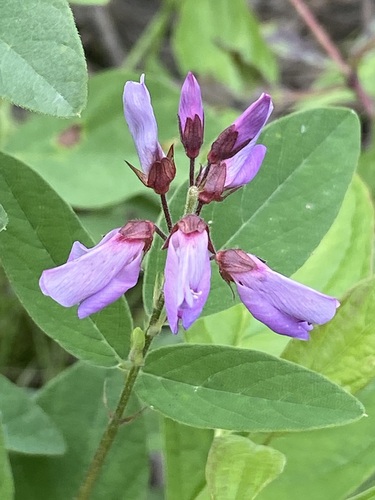
Desmodium, Genus, spp., Multiple species,
- Genus
- Multiple species
ticktrefoils
Tropical and warm temperate regions worldwide; many species in North America
Overview
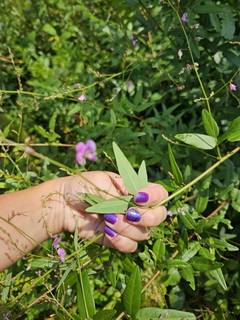
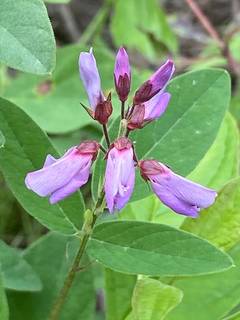
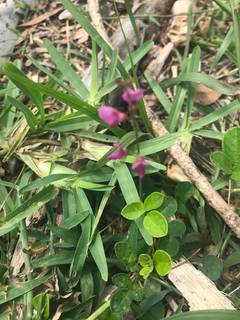
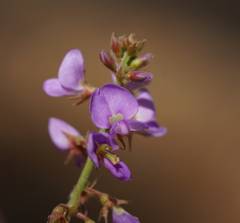
Desmodium is a genus of about 280 species of perennials, subshrubs, and shrubs in the legume family, Fabaceae, found in tropical and warm temperate regions worldwide, with many species in North America. Plants have trifoliate leaves of three leaflets, like clover or beans, on stems that range from upright to sprawling, 0.3-1.5 m (1-5 ft) tall. Small pea-like flowers in pink, purple, or white are carried in slender, often branched spikes through summer and early autumn. The flowers ripen into flat, jointed pods that break into one-seeded segments covered in tiny hooked hairs, which cling to clothing and animal fur and give the group its common name of tick trefoil. D. canadense and D. paniculatum are widespread in North American prairies and open woods. As legumes, the plants fix nitrogen and are grown for forage and soil improvement. Many species are larval food for skipper and hairstreak butterflies. The genus grows in open woods, prairies, and disturbed ground, often spreading by seed carried on the clinging pods.
Native Range
Found in tropical and warm temperate regions worldwide, with a strong presence in North America, Asia, and Central and South America. D. canadense and D. paniculatum are native across much of the eastern and central United States and Canada. The genus grows in prairies, open woods, and disturbed ground.Suggested Uses
Grown in prairie and meadow plantings and native gardens, where the summer flowers and seeds support butterflies and birds. Several species are grown as nitrogen-fixing forage and cover crops in pastures and orchards.How to Identify
Appearance
Size & Dimensions
Height1' - 5'
Width/Spread1' - 3'
Bloom Information
Detailed Descriptions
Flower Description
pink to purpleFoliage Description
greenGrowing Conditions
Sun Requirements
Requires 4-10 hours of direct sunlight daily
• Full Sun: 6+ hours of direct sunlight
• Partial Shade: 3-6 hours of direct sunlight
• Full Shade: Less than 3 hours of direct sunlight
Care & Maintenance
Care Guide
Tick trefoils grow in full sun to part shade in a wide range of soils, including poor and dry ground, fixing their own nitrogen as legumes. Most North American species are hardy to about -30 C (-22 F) and die back to the ground in winter. Plants tolerate drought once established and need little feeding. They spread freely by seed carried on the clinging pods and can colonize open ground. Some tropical species become weedy in warm climates.Pruning
Spent flowering stems are cut back after bloom to limit the spread of clinging seed. Plants are cut to the ground in late autumn or late winter once growth has died down. No other pruning is needed.Pruning Schedule
Prune: October–November
fall