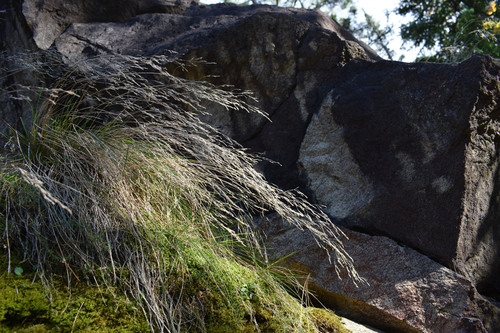
Deschampsia, Genus, cespitosa, Species,
- Genus & species
tufted hairgrass
Circumboreal — North America (Alaska to California and east to the Atlantic), Europe, and Asia; wet meadows, stream banks, bogs, forest edges, and alpine meadows from sea level to 12,000 feet (3,650 m)
Overview
Deschampsia cespitosa is a cool-season cespitose grass of the family Poaceae, forming dense compact tussocks of dark green evergreen foliage 8-18 inches (20-45 cm) tall and 18-24 inches (45-60 cm) wide. Leaves are narrow, stiff, and rolled, 0.04-0.12 inch (1-3 mm) wide, with rough margins that catch on skin. Flowering culms emerge from the tussock in late May, reaching 18-36 inches (45-90 cm) and bearing open airy panicles 4-10 inches (10-25 cm) long with shimmering silvery to purplish-tan spikelets that catch backlight. The species requires consistent soil moisture; drought stress in late summer causes premature dormancy and reduced flowering the following year. Tussocks live 8-15 years and rarely self-sow in cultivated sites. Native populations occupy wet meadows, stream banks, bogs, forest openings, and alpine meadows across the boreal and temperate zones of three continents.
Native Range
Circumboreal in distribution, occurring across North America from Alaska to California and east to the Atlantic, throughout Europe, and across northern Asia. In the Pacific Northwest, populations grow in wet meadows, stream margins, sphagnum bogs, and subalpine meadows from sea level to 12,000 feet (3,650 m).Suggested Uses
Used in moist meadow plantings, rain garden mid-zones, woodland edges, and naturalistic groupings paired with Iris ensata, Lobelia cardinalis, and Filipendula ulmaria. Spaced 24-30 inches (60-75 cm) apart for solid coverage. Containers of 3 gallons (11 L) or larger sustain a single tussock for 3-4 years before division is required.How to Identify
Appearance
Size & Dimensions
Height1'6" - 3'
Width/Spread1'6" - 2'
Bloom Information
Panicles emerge in late May and reach full expansion by mid-June, with each tussock holding silvery to purplish-tinged spikelets through July. By August, spikelets ripen to straw-tan and gradually shatter through September; seed heads remain partially intact on standing culms into October.
Detailed Descriptions
Flower Description
silvery to purplish-tan open airy paniclesFoliage Description
dark green; narrow, stiff blades 0.04-0.12 inch (1-3 mm) wideGrowing Conditions
Sun Requirements
Requires 4-10 hours of direct sunlight daily
• Full Sun: 6+ hours of direct sunlight
• Partial Shade: 3-6 hours of direct sunlight
• Full Shade: Less than 3 hours of direct sunlight
Care & Maintenance
Care Guide
Plant in moist to wet loam, clay, silty, or organic soils in the pH range 5.0-7.0, in full sun to part shade. Soils must remain consistently moist; the species fails in drought-prone sites or sandy soils that drain rapidly. Water needs are moderate to high during the growing season and through summer. No fertilizer is required in mineral soils, though container plants benefit from a single spring application of slow-release nitrogen. Tussocks expand slowly to 24 inches (60 cm) over 4-5 years and live 8-15 years before declining. Division is possible in early spring by lifting and cutting the crown into 4-inch (10 cm) sections.Pruning
Comb out dead foliage with a stiff garden rake or gloved hands in late winter (February-March), or shear the tussock to 4 inches (10 cm) from the crown for a complete reset. Avoid shearing every year; alternate with raking to preserve the evergreen base structure. No deadheading is required.Pruning Schedule
Prune: February–March
late spring
Container Growing
Suitable for container growing
Minimum container size: 3 gallons