Dermatophyllum, Genus, spp., Multiple species,
- Genus
- Multiple species
South-western United States and northern Mexico
Overview
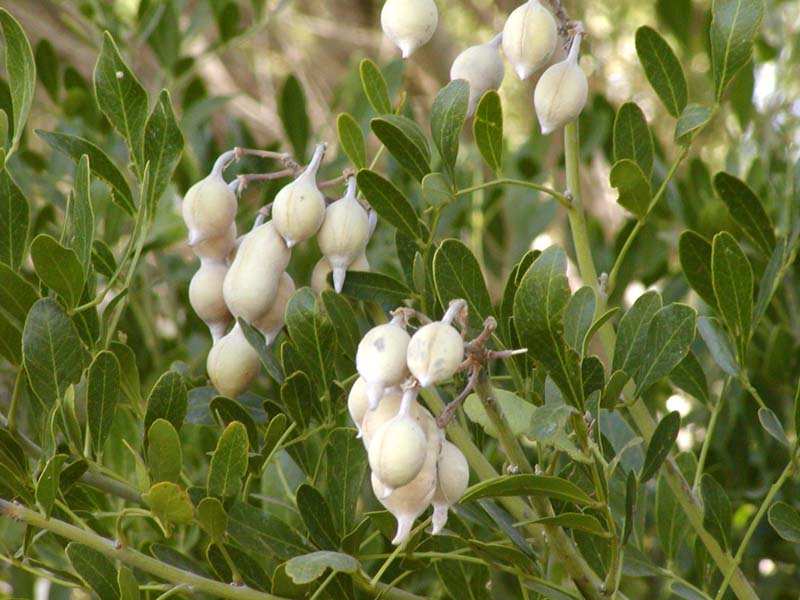
Dermatophyllum is a genus of about four evergreen shrubs and small trees in the pea family (Fabaceae), native to the south-western United States and Mexico. The widely grown species, D. secundiflorum, the Texas mountain laurel or mescal bean, grows 8-25 feet (2.4-7.6 m) tall with glossy, dark green, leathery compound leaves divided into rounded leaflets. In early spring it bears drooping clusters of violet-purple pea flowers 3-5 inches (8-13 cm) long with a strong scent often compared to grape soda. The flowers are followed by hard, woody, constricted pods containing bright red seeds. These seeds, and to a lesser degree the foliage, contain the alkaloid cytisine and are poisonous to people and animals if the hard seed coat is broken and the seed is swallowed. The plants grow on dry limestone soils, rocky slopes, and canyon edges, tolerating heat, drought, and alkaline ground. Growth is slow, and young plants take several years to reach flowering size. They are grown as evergreen specimen and screening shrubs in hot, dry regions for the fragrant spring flowers and glossy foliage, though the slow growth and toxic seed limit some uses.
Native Range
Native to the south-western United States and northern Mexico, including central and western Texas and New Mexico, on limestone hills, rocky slopes, and canyon margins.Suggested Uses
Grown as an evergreen specimen, screen, or small patio tree in hot, dry gardens and xeriscapes within its hardiness range. The fragrant spring flowers and glossy foliage suit courtyards and street plantings on alkaline soils.How to Identify
Appearance
Size & Dimensions
Height8' - 25'
Width/Spread6' - 12'
Bloom Information
Flowering occurs in early spring, mostly March and April, before or as new growth begins. The fragrant violet-purple clusters last one to two weeks. Woody seed pods develop through summer and ripen by autumn, holding red seeds into winter.
Detailed Descriptions
Foliage Description
glossy dark greenGrowing Conditions
Sun Requirements
Requires 6-12 hours of direct sunlight daily
• Full Sun: 6+ hours of direct sunlight
• Partial Shade: 3-6 hours of direct sunlight
• Full Shade: Less than 3 hours of direct sunlight
Care & Maintenance
Care Guide
Grow in full sun and sharply drained rocky, sandy, or limestone soil with an alkaline pH of 7.0-8.5. Once established, plants are tolerant of heat and prolonged drought and need little or no irrigation, rotting in wet or poorly drained ground. Growth is slow, and young plants take several years to flower. They are hardy in USDA zones 8-10 and withstand reflected heat from paving and walls. Little fertiliser is needed on lean soils. The bright red seeds contain cytisine and are poisonous if chewed and swallowed.Pruning
Little pruning is needed; a light shaping after flowering can lift the canopy into a small tree form or keep a denser shrub. Spent flower clusters and developing pods can be removed to limit seed where children or pets are present. Cutting into old wood is avoided, as regrowth is slow.Pruning Schedule
Prune: April–May
late spring
Container Growing
Suitable for container growing
Minimum container size: 10 gallons