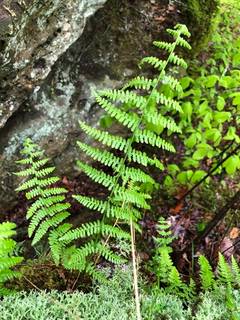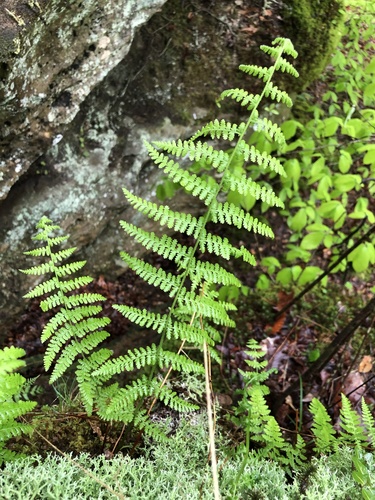
Dennstaedtia, Genus, spp., Multiple species,
- Genus
- Multiple species
Worldwide tropical and temperate regions
Overview
Dennstaedtia is a genus of about 70 ferns in the family Dennstaedtiaceae, found in tropical and temperate regions worldwide and related to the bracken ferns. They spread by branching underground rhizomes to form open colonies, sending up finely divided, lacy fronds that range from about 12 inches (30 cm) in temperate species to several feet in tropical ones. A widely grown temperate species, D. punctilobula of eastern North America, has yellow-green, twice- to thrice-divided fronds 1-3 feet (30-90 cm) long that release a scent of cut hay when bruised and turn yellow before dying back in autumn. The fronds carry spores in small cup- or pocket-shaped structures along the leaf margins rather than producing flowers or seed. Many species colonise disturbed ground, clearings, banks, and burned sites, and the running rhizomes let them form broad, weed-suppressing stands that can crowd smaller plants. Temperate species die back in winter, while tropical ones may stay green year-round. The colony-forming habit makes them useful for covering ground and stabilising slopes, though the same vigour can make them difficult to contain in small gardens.
Native Range
Native across tropical and temperate parts of the world, including the Americas, Asia, and the Pacific. The hay-scented fern D. punctilobula is native to eastern North America, from Canada south to Georgia.Suggested Uses
Used as a deciduous groundcover for shade and woodland gardens, slope stabilisation, and naturalising under trees where its spread is wanted. The colonies suppress weeds and cover difficult dry shade, and are kept away from small or mixed plantings where they can crowd other plants.How to Identify
Appearance
Size & Dimensions
Height1' - 4'
Width/Spread2' - 4'
Colors
Foliage Colors
Fall Foliage Colors
Bloom Information
As ferns, Dennstaedtia do not flower; they reproduce by spores. Spores ripen in the marginal sori from mid to late summer in temperate species. New fronds unfurl in spring, and temperate species yellow and die back with the first autumn frosts.
Detailed Descriptions
Foliage Description
yellow-green to greenGrowing Conditions
Sun Requirements
Requires 2-8 hours of direct sunlight daily
• Full Sun: 6+ hours of direct sunlight
• Partial Shade: 3-6 hours of direct sunlight
• Full Shade: Less than 3 hours of direct sunlight
Care & Maintenance
Care Guide
Grow in partial shade to full sun in moist, well-drained, acidic soil with a pH of 4.5-6.5, where the running rhizomes can spread. Temperate species tolerate poor, rocky, and dry soils once established and cope with more sun than many ferns. Steady moisture produces the fullest fronds, while drought causes early dieback. The spreading rhizomes form broad colonies, so a barrier or regular edging keeps them from overrunning neighbours. Temperate species are hardy to USDA zone 3 and need no winter protection. No fertiliser is required on humus-rich woodland soil.Pruning
Old fronds are cut or raked away in late winter before the new fronds unfurl. Spreading rhizomes can be cut back or lifted at the colony edge to limit spread. No other pruning is needed.Pruning Schedule
Prune: February–March
winterearly spring