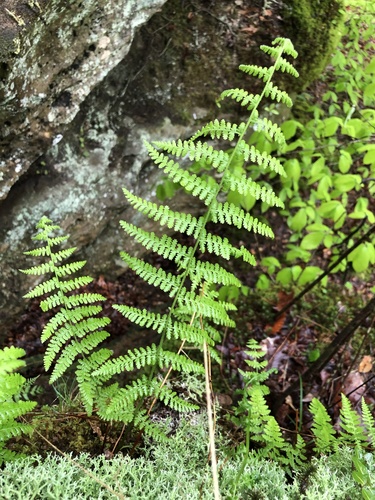
Dennstaedtia, Genus, punctilobula, Species,
- Genus & species
hay-scented fern
Eastern North America, from Nova Scotia south to Georgia and west to Arkansas
Overview
Dennstaedtia punctilobula is a vigorous, colony-forming native fern that grows 18–30 inches (45–75 cm) tall and spreads indefinitely by long-creeping rhizomes. The common name hay-scented fern comes from the sweet, hay-like fragrance released when the fronds are crushed or brushed — a trait shared by few other ferns. Yellow-green to bright green bipinnate fronds with a finely cut, lacy texture arch gracefully from the spreading rhizome network. The species tolerates a wider range of conditions than most ferns: it grows in full sun to deep shade, in dry to moist soil, and on acidic to slightly acidic ground, making it among the more adaptable native ferns. In the wild, hay-scented fern forms vast colonies on hillsides, road cuts, and forest floors, particularly in areas with deer pressure, since deer do not eat ferns and the dense colonies prevent wildflower and tree seedling establishment. This aggressive colonising ability is both the species' greatest virtue (erosion control and large-scale ground cover) and its greatest limitation (overwhelms smaller plants and prevents forest regeneration). In a garden setting, the spread requires management with barriers, edging, or placement where unlimited expansion is acceptable. Fall frond colour is a warm golden-yellow. The sweet hay scent is detectable when walking through a stand and is released by foot traffic, rain, and brushing.
Native Range
Dennstaedtia punctilobula is native to eastern North America, from Nova Scotia south to Georgia and west to Arkansas. It grows on rocky hillsides, road cuts, open forests, and acidic slopes, often forming dense monoculture colonies.Suggested Uses
Used for large-scale erosion control on slopes, as a ground cover in naturalised woodland areas, and for stabilising road cuts and embankments. The aggressive spread makes this a poor choice for small gardens or mixed borders. Suited to deer-browsed properties where few alternatives establish. The golden fall colour and hay fragrance add sensory value to woodland trails.How to Identify
Growing Conditions
Sun Requirements
Requires 2-8 hours of direct sunlight daily
• Full Sun: 6+ hours of direct sunlight
• Partial Shade: 3-6 hours of direct sunlight
• Full Shade: Less than 3 hours of direct sunlight
Care & Maintenance
Care Guide
Site in partial shade to full sun with 2–8 hours of light. Acidic, well-drained soil of any type. Tolerates dry, rocky, and poor conditions, ranking among the more site-flexible native ferns. The aggressive rhizome spread requires management — root barriers, edging, or placement where unlimited spread is acceptable. Mow or rake brown fronds in early spring before new growth. Fertilization is unnecessary.Pruning
Mow or rake brown fronds in early spring before new fiddleheads emerge. Contain rhizome spread with root barriers or edging. No other maintenance is required.Pruning Schedule
Prune: March
early spring