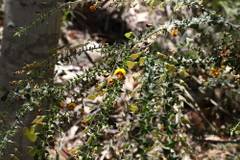
Daviesia, Genus, spp., Multiple species,
- Genus
- Multiple species
Overview
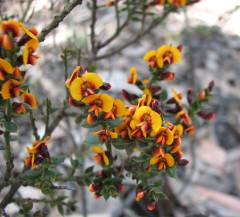
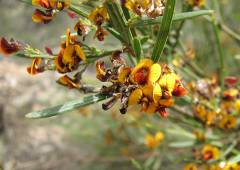
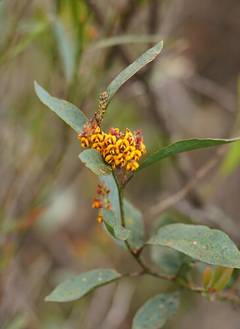
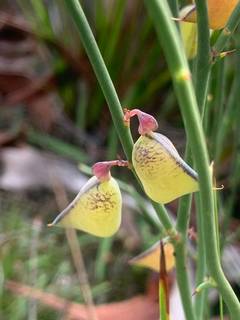
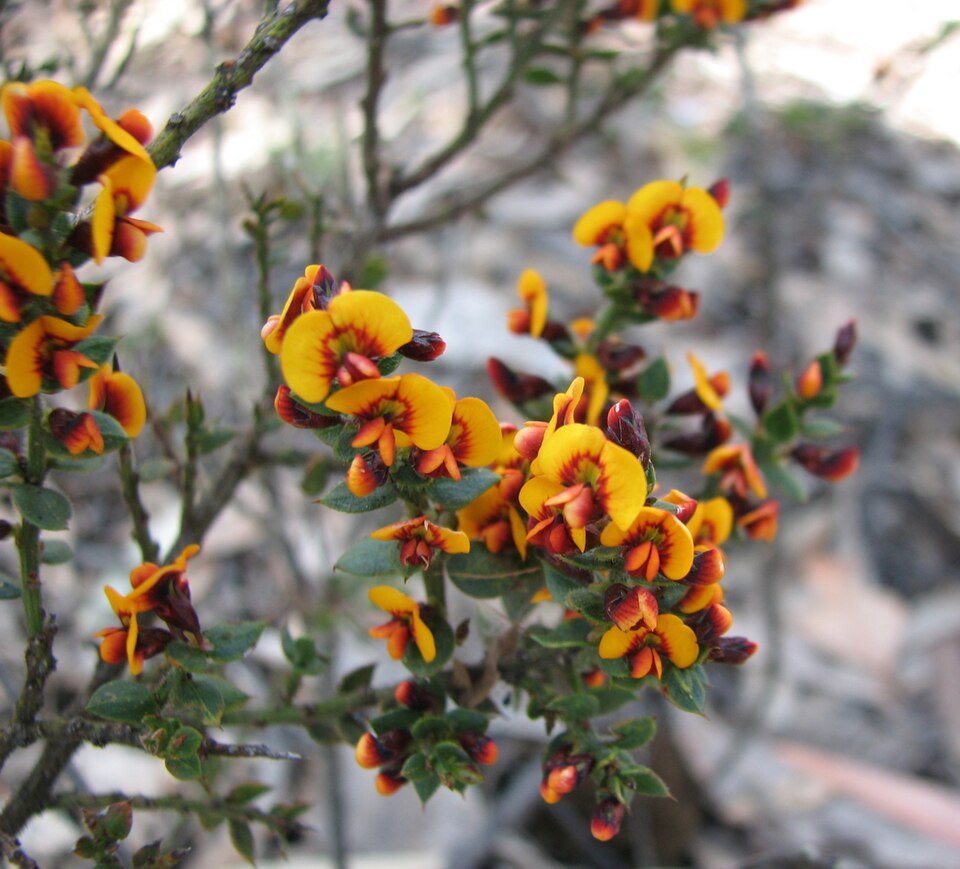
Daviesia is a genus of about 130 evergreen shrubs in the pea family (Fabaceae), found only in Australia and present in every state. Plants range from low, spreading subshrubs under 20 inches (50 cm) to erect shrubs reaching 10 feet (3 m), and many are rigid and spiny. In most species the true leaves are reduced or absent and their role is taken by flattened, often sharp-pointed phyllodes that vary from needle-like to broad and triangular, a feature that gives the group its common name bitter-peas from the bitter taste of the foliage. The flowers are typical pea flowers, mostly in shades of yellow and orange marked with red or brown, carried singly or in clusters in the leaf axils during late winter and spring. Flat to triangular pods follow and release hard seed that can persist in soil for years until stimulated by fire. As legumes the plants fix nitrogen through root nodules and grow on poor, sandy, and gravelly soils where many other shrubs fail. Most species are frost-tender and short-lived, regenerating from seed after bushfire rather than persisting as long-lived individuals, which limits their garden longevity. Several are grown by native-plant enthusiasts for their spiny structure and orange-and-red spring flowers.
Native Range
Endemic to Australia, occurring in all states and territories across heath, woodland, and dry sclerophyll forest, with the greatest diversity in south-western Western Australia.Suggested Uses
Grown in native and water-wise gardens for low spiny screening, habitat plantings, and revegetation of poor sandy soils. Smaller species suit rockeries and containers where drainage is controlled, and the spiny habit is used for barrier plantings.How to Identify
Appearance
Size & Dimensions
Height1' - 10'
Width/Spread1' - 8'
Bloom Information
Detailed Descriptions
Flower Description
yellow and orange with red or brown markingsFoliage Description
green to grey-greenGrowing Conditions
Sun Requirements
Requires 6-12 hours of direct sunlight daily
• Full Sun: 6+ hours of direct sunlight
• Partial Shade: 3-6 hours of direct sunlight
• Full Shade: Less than 3 hours of direct sunlight
Care & Maintenance
Care Guide
Grow in full sun and sharp, free-draining sandy or gravelly soil with an acidic to neutral pH of 5.0-7.0. Once established, plants tolerate extended dry periods and need little or no summer water. As phosphorus-sensitive legumes they require no nitrogen feeding and only low-phosphorus fertiliser, if any. Good drainage and air movement reduce root-rot losses in cultivation. Most species are frost-tender and grown in USDA zones 9-11 or under glass in colder regions. Many are naturally short-lived and are replaced from seed every several years.Pruning
A light tip prune after flowering keeps growth dense, though the spiny stems of many species make trimming awkward. Cutting into old bare wood often fails to reshoot. Dead and damaged stems are removed as needed.Pruning Schedule
Prune: November–December
late springsummer
Container Growing
Suitable for container growing
Minimum container size: 2 gallons