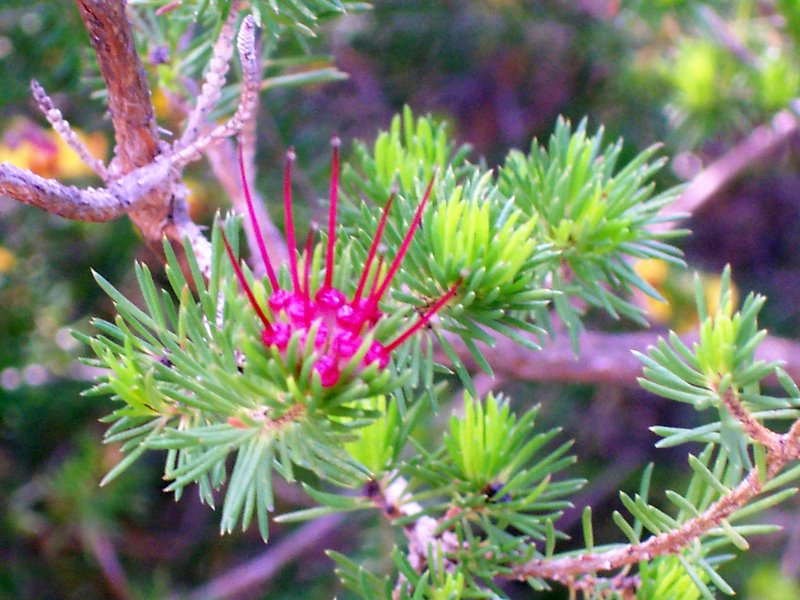
Darwinia, Genus, spp., Multiple species,
- Genus
- Multiple species
South-western and south-eastern Australia
Overview
Darwinia is a genus of about 70 evergreen shrubs in the myrtle family (Myrtaceae), endemic to Australia and concentrated in the south-west of Western Australia. Plants range from prostrate mats under 12 inches (30 cm) to erect shrubs reaching 10 feet (3 m), with small, crowded, linear to oval leaves 0.2-0.8 inch (5-20 mm) long that often carry aromatic oils when crushed. The flowers are small and tubular, grouped into compact heads; in the group known as mountain bells, the heads are enclosed by large coloured bracts that hang downward in shades of red, pink, green, cream, and yellow, while other species bear open clusters without showy bracts. Long styles project beyond the flowers and are pollinated by birds and insects. Species occupy heath, rocky ridges, and sandy plains, and several have narrow natural ranges restricted to single mountain ranges or granite outcrops. Many Darwinia are sensitive to the root-rot fungus Phytophthora cinnamomi in poorly drained soils, which limits cultivation outside their native climate. The genus is grown in Mediterranean and frost-free gardens for its pendulous bell flowers and narrow heath foliage, though most species are short-lived and exacting about drainage. Several rare species are the subject of conservation programs in Western Australia.
Native Range
Endemic to Australia, with the greatest concentration of species in the south-west of Western Australia and a smaller number in south-eastern Australia.Suggested Uses
Used in Mediterranean-climate and frost-free gardens as a low shrub for rockeries, embankments, and native plant borders. Compact and prostrate species are grown in containers and raised beds where drainage can be controlled, and cut flowering stems of mountain-bell species are used in floristry.How to Identify
Appearance
Size & Dimensions
Height1' - 10'
Width/Spread1' - 8'
Bloom Information
Most species flower from late winter through spring, roughly July to November in their native range. Individual flower heads persist for several weeks, and the coloured bracts of mountain-bell species remain coloured after the small inner flowers fade. Sporadic flowering can occur at other times in cultivation.
Detailed Descriptions
Flower Description
red, pink, cream, green, and yellowFoliage Description
greenGrowing Conditions
Sun Requirements
Requires 6-10 hours of direct sunlight daily
• Full Sun: 6+ hours of direct sunlight
• Partial Shade: 3-6 hours of direct sunlight
• Full Shade: Less than 3 hours of direct sunlight
Care & Maintenance
Care Guide
Grow in full sun and sharp, free-draining sandy or gravelly soil with an acidic to neutral pH of 5.5-7.0. Water is needed to establish young plants, after which most species tolerate extended dry periods and are damaged by summer irrigation in heavy soil. Good air movement and raised or sloping ground reduce losses to Phytophthora root rot, the main cause of sudden death in the genus. Light applications of low-phosphorus fertiliser suit these phosphorus-sensitive Myrtaceae. Most species are frost-tender, survive only light frosts, and are grown in USDA zones 9-11 or under glass in colder regions. Many are naturally short-lived, persisting 5-10 years before requiring replacement.Pruning
A light trim immediately after flowering keeps plants compact and encourages branching from the lower stems. Cutting back into old, leafless wood often fails to reshoot, so trimming stays within the current season growth. Dead or diseased stems are removed as they appear.Pruning Schedule
Prune: November–December
late springsummer
Container Growing
Suitable for container growing
Minimum container size: 3 gallons
