Danthonia, Genus, spp., Multiple species,
- Genus
- Multiple species
oat grass
Temperate Americas, Europe, and Asia
Overview
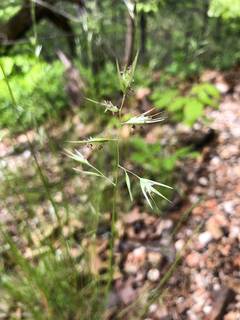
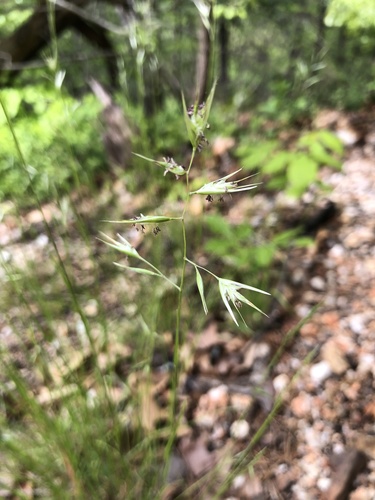
Danthonia is a genus of tufted perennial grasses in the grass family (Poaceae), with around twenty species native to temperate and montane regions of the Americas, Europe, and Asia; closely related Southern Hemisphere grasses once placed here are now treated separately. Known as oat grasses or wallaby grasses, the plants form slender tussocks 8-40 inches (20-100 cm) tall with narrow, often inrolled, blue-green leaves that may be hairy at the base. The flower heads are open or contracted panicles of plump spikelets, each holding several florets whose lemmas end in a flat, twisted, bent awn and a pair of small teeth. Many species also produce hidden self-pollinated flowers tucked within the lower leaf sheaths, a backup that sets seed even when the open flowers fail. Danthonia is a cool-season grass of poor, acid, well-drained soils, growing on heaths, open woodland, rocky slopes, and lean grassland where richer pasture grasses struggle. The tussocks stay green through mild winters and cure to straw in summer. The genus tolerates drought, low fertility, and grazing, and is used in low-input pasture and grassland restoration, though yields are modest compared with sown forage grasses.
Native Range
Danthonia is native to temperate and mountainous parts of North and South America, Europe, North Africa, and Asia, growing in heath, open woodland, and lean grassland. D. spicata, poverty oat grass, is widespread in North America, while D. decumbens occurs across Europe. Related wallaby grasses of Australasia are now placed in the genus Rytidosperma.Suggested Uses
Danthonia is used in low-input pasture, native grassland restoration, and meadow plantings on poor acid soils, and as an ornamental tussock grass in naturalistic plantings. The tussocks give seed and cover for grassland birds and insects. The genus suits lean, sunny, free-draining sites rather than fertile borders.How to Identify
Appearance
Size & Dimensions
Height8" - 3'4"
Width/Spread8" - 1'6"
Bloom Information
Danthonia flowers in late spring and summer, generally May to August depending on species and elevation, when the awned panicles emerge and shed pollen on the wind. Hidden self-pollinated flowers within the leaf sheaths can set seed across a longer period. The heads dry to straw colour as the seed ripens.
Detailed Descriptions
Flower Description
green to strawFoliage Description
blue-greenGrowing Conditions
Sun Requirements
Requires 6-12 hours of direct sunlight daily
• Full Sun: 6+ hours of direct sunlight
• Partial Shade: 3-6 hours of direct sunlight
• Full Shade: Less than 3 hours of direct sunlight