Cypripedium, Genus,
- Genus
Lady's slipper orchid
Overview
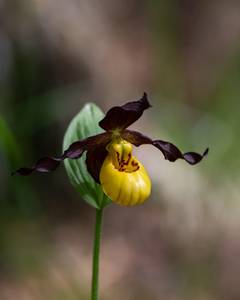
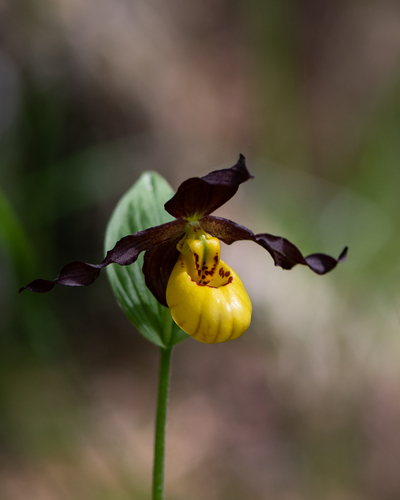
Cypripedium is a genus of about 50 species of terrestrial orchids, known as lady's slipper orchids, native across the temperate Northern Hemisphere in North America, Europe, and Asia. Plants grow from a slow-creeping rhizome into upright stems 6-32 inches (15-80 cm) tall, with broad, pleated, strongly veined leaves. Each flower has a hollow, pouch-shaped lip, the slipper, flanked by twisted petals and a hood-like upper sepal, in colors from yellow and white to pink, maroon, and combinations. The pouch briefly traps visiting insects and channels them past the pollen before they leave. Flowering comes in late spring and early summer. The genus grows in woodland, fens, and meadows on humus-rich, moisture-retentive but well-drained soil, often where the roots associate with soil fungi the plant depends on when young. Plants are slow to establish, do not transplant well, and are difficult to raise from seed, so wild collection has reduced many populations and several species are legally protected. Garden-raised hybrids adapt more readily than wild species. Plants are long-lived once settled and increase slowly into clumps.
Native Range
Native across the temperate Northern Hemisphere, including North America, Europe, and temperate Asia, in woodland, fens, and grassland. Several species are rare and legally protected in the wild.Suggested Uses
Grown in woodland and shade gardens, peat beds, and shaded rock gardens for the pouched late-spring flowers. Suited to cool, humus-rich borders among ferns and other woodlanders. Plants are slow and exacting, and are not suited to hot, dry, or sun-baked sites.How to Identify
Appearance
Size & Dimensions
Height6" - 2'8"
Width/Spread1' - 2'
Bloom Information
Detailed Descriptions
Flower Description
yellow, white, pink, or maroonFoliage Description
greenGrowing Conditions
Sun Requirements
Requires 3-6 hours of direct sunlight daily
• Full Sun: 6+ hours of direct sunlight
• Partial Shade: 3-6 hours of direct sunlight
• Full Shade: Less than 3 hours of direct sunlight
Care & Maintenance
Care Guide
Plants grow in dappled shade or morning sun on humus-rich soil that holds moisture yet drains freely, near-neutral to slightly alkaline for many species. They are planted from dormant, nursery-propagated rhizomes in autumn or early spring, set just below the surface with the buds facing up. Steady moisture in spring and summer supports growth, while sharp drainage and a winter chill suit the dormant rhizome. The plants are slow to establish and are left undisturbed once sited. A mulch of leaf mold feeds the soil and conserves moisture. Nursery-raised plants are used rather than wild-collected ones, which rarely survive transplanting and deplete protected populations.Pruning
Routine pruning is not needed. Spent flower stems can be removed unless seed is wanted, and the foliage is left to die down naturally in autumn before being cleared. Old leaves are tidied away once they yellow and collapse.Container Growing
Suitable for container growing
Minimum container size: 2 gallons