Cymbalaria, Genus, spp., Multiple species,
- Genus
- Multiple species
ivy-leaved toadflax
Overview
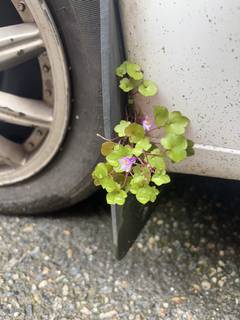
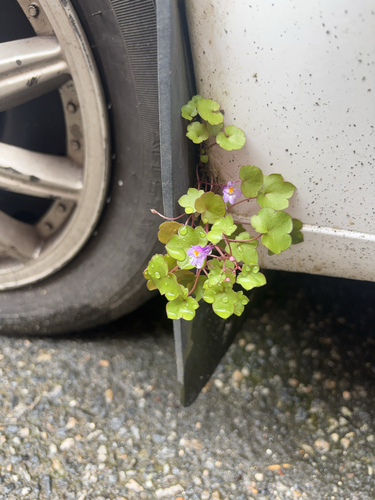
Cymbalaria is a genus of about ten species of low, trailing perennial and annual herbs in the plantain family (Plantaginaceae), formerly placed in the figwort family. Native to the Mediterranean region, the plants form mats of slender, often reddish stems that root at the nodes and trail to 12-24 inches (30-60 cm) long, draping over walls, rocks, and banks. The rounded to kidney-shaped leaves 0.4-1 inch (1-2.5 cm) wide are shallowly lobed, resembling small ivy leaves, and are sometimes purple-tinged beneath. From spring to autumn the plants carry many small, snapdragon-like two-lipped flowers about 0.3-0.6 inch (8-15 mm) long, usually lilac to violet with a white and yellow throat, each on a slender stalk. After pollination the flower stalks of several species bend away from the light and push the developing seed capsules into crevices, a movement that helps the plants colonise masonry. C. muralis has naturalised on old walls across temperate Europe, North America, and Australia. Cymbalaria grows in the cool, shaded, lime-rich conditions of mortar joints and shaded rockwork, spreading quickly but shallowly rooted and easily removed. Its mat-forming habit and long flowering season have led to its use on walls, troughs, and crevice plantings.
Native Range
Cymbalaria is native to the Mediterranean region of southern Europe, with the centre of diversity in Italy and the Balkans. Several species, especially C. muralis, have naturalised widely on walls and rocky ground in temperate Europe, North America, Australia, and New Zealand.Suggested Uses
Cymbalaria is used to clothe shaded walls, steps, rockwork, and crevices, and to trail from troughs, containers, and hanging plantings. Its tolerance of cool, lime-rich masonry makes it a frequent component of crevice and wall gardens. The trailing mats also serve as a small-scale groundcover in shaded, moist corners.How to Identify
Appearance
Size & Dimensions
Height2" - 4"
Width/Spread1' - 2'
Bloom Information
Cymbalaria flowers over a long season from spring into autumn, often May to October in temperate climates, and can flower nearly year-round in mild, frost-free areas. The small flowers appear continuously rather than in a single flush. Light frost ends flowering, though the mats persist and resume in spring.
Detailed Descriptions
Flower Description
lilac to violet with yellow throatFoliage Description
greenGrowing Conditions
Sun Requirements
Tolerates up to 6 hours of direct sunlight daily
• Full Sun: 6+ hours of direct sunlight
• Partial Shade: 3-6 hours of direct sunlight
• Full Shade: Less than 3 hours of direct sunlight
Care & Maintenance
Care Guide
Cymbalaria grows in part to full shade in cool, moist, well-drained sites and is especially suited to the lime-rich crevices of walls and rockwork. The trailing perennial species tolerate poor, shallow soils and need little feeding, drawing moisture from shaded masonry and stony ground. Even, moderate moisture maintains the mats, while hot, dry, sunny positions cause scorch and dieback. Plants self-seed freely into cracks and can spread beyond their intended area, but the shallow roots make unwanted growth easy to pull. No serious pests or diseases affect the genus. In containers and troughs the trailing stems cascade over the rim and may be trimmed to shape.Pruning
Little pruning is needed. Trailing stems can be trimmed at any time to limit spread or tidy the edges of troughs and walls. Shearing the mats after the main flush encourages fresh growth and renewed flowering.Container Growing
Suitable for container growing
Minimum container size: 1 gallons