Cydonia, Genus, oblonga, Species,
- Genus & species
quince
Overview
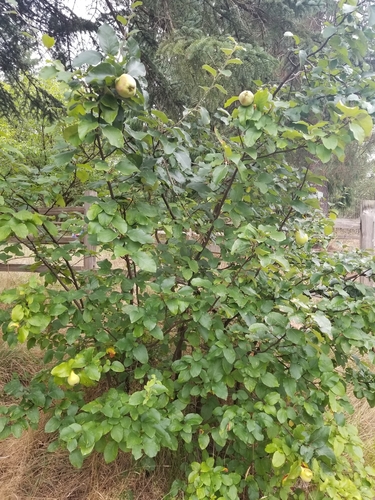
Cydonia oblonga is the quince (fruiting quince), a small deciduous tree growing 144–240 inches (360–600 cm / 12–20 feet) tall and 144–216 inches (360–540 cm / 12–18 feet) wide. Pale pink to white solitary 5-petaled flowers 1.5–2 inches (4–5 cm) in late spring (May), resembling apple blossoms. Large golden-yellow pear-shaped aromatic fruit 3–5 inches (7–13 cm) ripening in fall (September–October). The fruit is inedible raw — hard and astringent — but cooked into jelly, paste (membrillo), and preserves. The fruit fragrance is detectable at room distance. Gray-green ovate leaves 2–4 inches (5–10 cm) with silvery-white woolly pubescence beneath — the densely silver-woolly new spring growth is a secondary seasonal feature. Mottled flaking bark on mature trunks. In the rose family (Rosaceae). Monotypic: Cydonia contains only this species. Not to be confused with Chaenomeles (flowering quince — a different genus with earlier red, pink, or white flowers and smaller hard fruit). Self-fertile — does not require a second tree for fruit. Cultivated for over 4,000 years (referenced in Greek mythology as the golden apple). Fire blight (Erwinia amylovora) and cedar-quince rust are the primary disease concerns. Native to the Caucasus region and northern Iran. Non-toxic — fruit edible (cooked). Full sun. Zones 5–9. Growth rate is moderate.
Native Range
Native to the Caucasus region and northern Iran. Cultivated for over 4,000 years.Suggested Uses
Commonly planted as a specimen and fruit tree in zones 5–9. The pale pink spring flowers, the silver-woolly foliage, the aromatic golden fall fruit, and the mottled winter bark provide four-season interest. Fruit cooked into jelly, paste (membrillo), and preserves. Self-fertile. Fire blight management required. Non-toxic.How to Identify
Appearance
Size & Dimensions
Height12' - 20'
Width/Spread12' - 18'
Bloom Information
Late spring (May), lasting 2–3 weeks. Pale pink to white solitary flowers 1.5–2 inches (4–5 cm). Large golden-yellow aromatic fruit ripen September–October. Self-fertile.
Detailed Descriptions
Flower Description
Pale pink to white, solitary, 5-petaled, 1.5-2 inches (4-5 cm), resembling apple blossomsFoliage Description
Gray-green above with silvery-white woolly pubescence beneath; ovate, 2-4 inches (5-10 cm); the new spring growth is densely silver-woollyGrowing Conditions
Sun Requirements
Requires 6-10 hours of direct sunlight daily
• Full Sun: 6+ hours of direct sunlight
• Partial Shade: 3-6 hours of direct sunlight
• Full Shade: Less than 3 hours of direct sunlight
Care & Maintenance
Care Guide
Full sun (6+ hours). Moist well-drained soil. Fire blight and cedar-quince rust are the primary disease concerns — prune out fire blight strikes 12 inches (30 cm) below visible infection, sterilize tools between cuts. Self-fertile. Fruit inedible raw — cooked into jelly and preserves. Non-toxic. Zones 5–9.Pruning
Prune in late winter (February–March). Maintain an open vase-shaped crown for air circulation (reduces fire blight). Remove dead, damaged, crossing, and inward-growing branches. Remove suckers from the base. Fire blight: cut 12 inches (30 cm) below visible infection, sterilize tools.Pruning Schedule
Prune: February–March
winterearly spring