Cydonia, Genus, spp., Multiple species,
- Genus
- Multiple species
quince
Overview
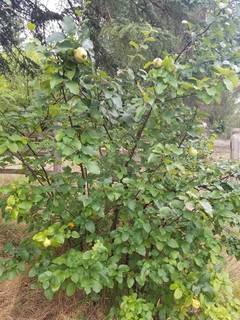
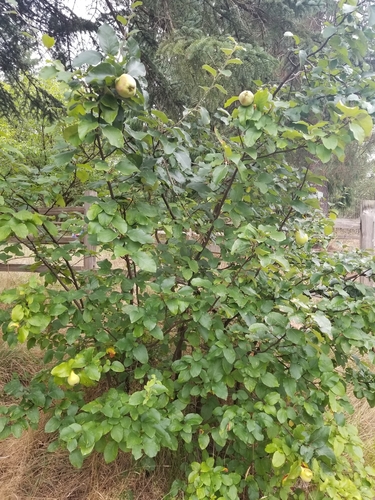
Cydonia is a genus in the rose family (Rosaceae) containing a single species, C. oblonga, the common quince. It is a deciduous large shrub or small tree growing 10-26 feet (3-8 m) tall with a low, crooked, often multi-stemmed form and a rounded crown. Young shoots are woolly, maturing to smooth grey-brown bark. Oval to broadly elliptic leaves 2-4 inches (5-10 cm) long are dark green above and densely grey-felted beneath. Solitary white to pale pink five-petalled flowers 2-2.4 inches (5-6 cm) across open in mid to late spring after the leaves emerge, each at the tip of a short shoot. The fruit is a hard, aromatic pome 2.8-4.7 inches (7-12 cm) long, pear- to apple-shaped, ripening from green to golden yellow and covered when young with a grey felt-like down. Raw quince flesh is hard, dry, and astringent in most forms but becomes tender, fragrant, and pink when cooked, and is used for preserves, jellies, and the paste known as membrillo. Cydonia is hardy, long-lived, and self-fertile, so a single plant sets fruit without a pollinating partner, and it is widely used as a dwarfing rootstock for cultivated pears. It tolerates a range of soils but fruits more dependably in regions with warm summers.
Native Range
Cydonia oblonga is native to the Caucasus region, northern Iran, Turkey, and adjacent parts of southwest and central Asia. It has been cultivated for thousands of years and is now naturalised in parts of southern and central Europe, North Africa, and temperate regions worldwide.Suggested Uses
Cydonia is grown as a fruiting specimen tree in orchards and gardens and as a flowering small tree for spring blossom. The aromatic fruit is used for jellies, preserves, and membrillo paste, and the species is widely used as a dwarfing rootstock for pears. Its low, spreading form also suits training against walls in cooler regions.How to Identify
Appearance
Size & Dimensions
Height10' - 26'
Width/Spread10' - 20'
Bloom Information
Cydonia flowers in mid to late spring, generally April to May in the Northern Hemisphere, after the new leaves have expanded. The solitary flowers open over two to three weeks. Fruit develops through summer and ripens in autumn, from September to November depending on climate.
Detailed Descriptions
Flower Description
white to pale pinkFoliage Description
dark greenGrowing Conditions
Sun Requirements
Requires 6-12 hours of direct sunlight daily
• Full Sun: 6+ hours of direct sunlight
• Partial Shade: 3-6 hours of direct sunlight
• Full Shade: Less than 3 hours of direct sunlight