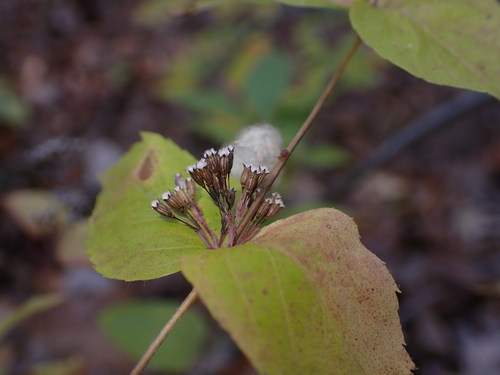
Cunila, Genus, origanoides, Species,
- Genus & species
common dittany
Overview
Cunila origanoides is a wiry, aromatic perennial that forms a low, bushy clump 8 to 16 inches (20 to 40 cm) tall and about as wide, with slender, much-branched stems. The paired, nearly stalkless leaves are triangular to oval, 1 to 1.5 inches (2.5 to 4 cm) long, with toothed margins and a strong oregano-like scent when crushed. From late summer into autumn the stems carry many small tubular flowers of pale lavender to pink-purple, each about 0.25 inch (6 mm) long, clustered in the leaf axils and at the stem tips. The plant grows on dry, rocky woodland slopes and in open oak woods and tolerates drought and lean soil once established. In early winter, splitting stems at the base can extrude thin ribbons of ice, sometimes called frost flowers. It needs sharp drainage and declines in heavy, wet soil. The dried leaves have a history of use as a herbal tea. Growth is slow and the clump stays compact.
Native Range
Native to the eastern United States, from New York and Pennsylvania south to Florida and west to Oklahoma and eastern Texas. It grows in dry oak woods, on rocky slopes, and in open woodland clearings.Suggested Uses
Used in rock gardens, dry woodland edges, native plantings, and herb gardens. The aromatic foliage and late flowers suit pollinator and wildlife gardens. It fits dry, sunny banks where many herbs struggle.How to Identify
Appearance
Size & Dimensions
Height8" - 1'4"
Width/Spread8" - 1'4"
Bloom Information
Flowering runs from late summer into autumn, generally August through October. Small tubular flowers in pale lavender to pink-purple open in the leaf axils and at the stem tips. Bloom continues over 6 to 8 weeks. The flowers draw bees and other small pollinators.
Detailed Descriptions
Flower Description
lavender to pink-purpleFoliage Description
greenGrowing Conditions
Sun Requirements
Requires 4-8 hours of direct sunlight daily
• Full Sun: 6+ hours of direct sunlight
• Partial Shade: 3-6 hours of direct sunlight
• Full Shade: Less than 3 hours of direct sunlight
Care & Maintenance
Care Guide
Grow in full sun to part shade in dry, well-drained, rocky or sandy soil. Cunila origanoides tolerates drought and low fertility once established and needs little water. A soil pH from 5.5 to 7.0 suits it. The plant rots in heavy, wet, or poorly drained ground. It is cold hardy in USDA zones 4 through 8. Cut back the dead stems in late winter before new growth begins.Pruning
Cut the previous year dead stems to the ground in late winter or early spring. Light shearing after flowering keeps the clump tidy. No other routine pruning is needed. The plant resprouts from the base each spring.Pruning Schedule
Prune: February–March
winter
Container Growing
Suitable for container growing
Minimum container size: 1 gallons