Cunila, Genus, spp., Multiple species,
- Genus
- Multiple species
dittany
Overview
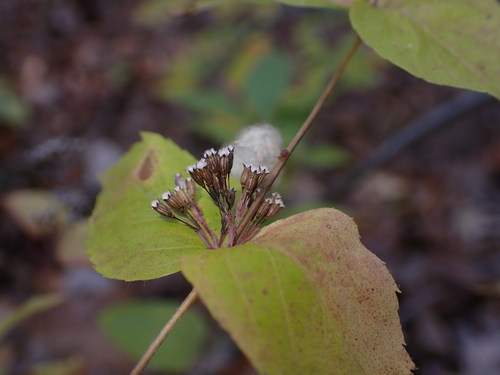
Cunila is a genus of about 15 aromatic perennial herbs and small subshrubs in the mint family, native to North and South America. Plants form wiry, upright to spreading clumps 8-24 inches (20-60 cm) tall, with small, opposite, often stalkless leaves that are strongly scented when crushed. Clusters of small two-lipped flowers in pink, lilac, or white open from late summer into autumn and draw bees and other small pollinators. Cunila origanoides, the American dittany or stone mint, is the species seen in eastern North America, growing in dry, open woods and rocky slopes on acidic soils. In early winter the dead stems of this species can split and extrude thin ribbons of ice, a phenomenon known as frost flowers. The genus grows in well-drained, often poor and stony ground in sun or light shade, and it is drought-tolerant once established. The aromatic leaves of several species are used to make herbal teas. Plants are otherwise undemanding but resent heavy, wet soils, where the roots rot.
Native Range
Cunila is native to the Americas, from eastern North America through Mexico to South America. C. origanoides grows in dry, open woodland and on rocky slopes in the central and eastern United States, on acidic, well-drained soils.Suggested Uses
Cunila is grown in herb gardens, dry banks, rockeries, and naturalistic plantings for its late flowers and aromatic foliage. The leaves of C. origanoides are used to brew a herbal tea with an oregano-like flavour. Its late-season nectar makes it a useful plant for bees in herb and wildlife gardens.How to Identify
Appearance
Size & Dimensions
Height8" - 2'
Width/Spread10" - 1'6"
Bloom Information
Flowering runs from late summer into autumn, broadly August to October in temperate North America. The small two-lipped flowers open in branched clusters and last several weeks. They draw bees and other small pollinators late in the season when fewer flowers are available.
Detailed Descriptions
Flower Description
pink to lilacFoliage Description
greenGrowing Conditions
Sun Requirements
Requires 5-9 hours of direct sunlight daily
• Full Sun: 6+ hours of direct sunlight
• Partial Shade: 3-6 hours of direct sunlight
• Full Shade: Less than 3 hours of direct sunlight
Care & Maintenance
Care Guide
Cunila grows in full sun to light shade in well-drained, often poor, stony, acidic soils. Established plants are drought-tolerant and cope with dry, rocky banks, but they decline in heavy, rich, or wet ground where the roots rot. The aromatic foliage holds up through summer heat, and the plants flower most freely in an open, sunny position. They need no rich feeding and grow steadily in lean soil. In cold areas the top growth dies back and the rootstock overwinters, sometimes producing frost flowers on the old stems. Propagation is by seed, division, or cuttings of the wiry stems.Pruning
Cunila needs little pruning beyond cutting back the dead stems in late winter or early spring. Trimming after flowering keeps the wiry clumps compact and can bring a small second flush of foliage. Old, woody plants can be renewed by hard cutting in spring as new growth begins.Container Growing
Suitable for container growing
Minimum container size: 2 gallons