Cryphaea, Genus, heteromalla, Species,
- Genus & species
lateral cryphaea
Europe, North Africa, and western Asia
WaterMedium
Overview
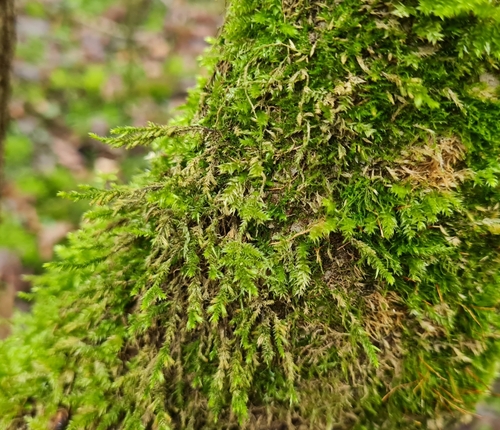
Cryphaea heteromalla is a small epiphytic moss in the family Cryphaeaceae, forming thin, dull green to yellowish-green patches on the bark of trees and shrubs rather than growing in soil. The creeping main stems press against the bark and send up short, erect side branches 0.2-0.8 inch (5-20 mm) long, giving the colony a tufted look. The leaves are small, egg-shaped, and tapered to a narrow point, arranged so they tend to turn toward one side of the branch. Unlike most mosses, the spore capsules are not raised on long stalks but sit almost stalkless and partly hidden among special leaves along the branches, ripening in autumn and winter. The plant has no roots, flowers, or true conducting tissue, taking up water and nutrients directly over its surface and drying out and reviving with the weather. It grows on the trunks and twigs of broadleaved trees such as elder, willow, ash, and hazel, mostly in damp, humid, lowland woods and hedgerows. Native to Europe and parts of North Africa and western Asia, it is sensitive to air pollution and bark drying.
Native Range
Native to Europe, North Africa, and western Asia, with a mainly Atlantic and Mediterranean distribution. It grows as an epiphyte on the bark and twigs of broadleaved trees and shrubs in damp, humid lowland woodland, hedgerows, and along watercourses.Suggested Uses
Of interest mainly in woodland conservation and as an indicator of humid, unpolluted air. It is not grown ornamentally but contributes to the epiphyte communities of native trees and supports tiny invertebrates.How to Identify
Appearance
Bloom Information
As a moss, Cryphaea heteromalla does not flower. It reproduces by spores formed in small capsules set close against the branches, which ripen mainly in autumn and winter. Spores disperse to new bark surfaces, where they grow into new colonies in humid conditions.
Detailed Descriptions
Foliage Description
dull green to yellowish-greenGrowing Conditions
Water & Climate
Water Needs