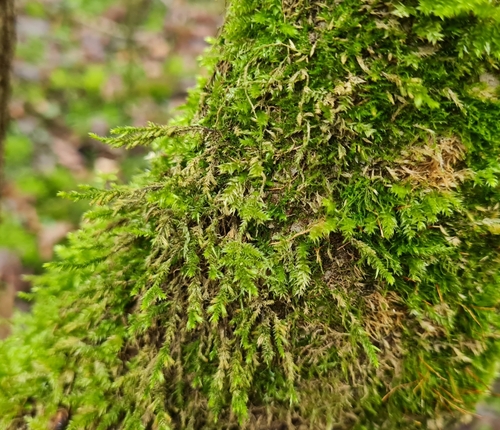
Cryphaea, Genus, spp., Multiple species,
- Genus
- Multiple species
cryphaea moss
Temperate and subtropical regions worldwide
SunPart Shade – Full Shade
WaterHigh
Overview
Cryphaea is a genus of small epiphytic mosses in the family Cryphaeaceae, found on the bark of trees and shrubs across temperate and subtropical regions. The plants form thin, dark-green to brownish patches, with creeping primary stems that cling to bark and short erect secondary shoots 0.2-1.2 inches (5-30 mm) long. The leaves are small, egg-shaped, and tapered to a narrow point, overlapping along the shoots and curling inward when dry. A characteristic feature of the genus is the spore capsule, which is partly sunk among specialized leaves along the shoots rather than raised on a long stalk. Cryphaea heteromalla is a widespread European representative, growing on the trunks and branches of broadleaved trees such as elder, willow, and hazel. The genus favours humid, sheltered woodland and shaded bark with steady moisture, and it is sensitive to air pollution and prolonged drying. Like other mosses, it has no roots, drawing water and minerals directly across its surface. It plays a minor role in bark ecology, holding moisture and giving cover to tiny invertebrates.
Native Range
Cryphaea occurs across temperate and subtropical regions of Europe, Asia, the Americas, Africa, and Australasia. C. heteromalla, a common European species, grows on the bark of broadleaved trees and shrubs in humid lowland woodland and hedgerows.Suggested Uses
Cryphaea has no horticultural use and features instead as part of natural bark communities. Its sensitivity to air pollution makes it useful as a bio-indicator in woodland and air-quality monitoring. It contributes to the moisture-holding and micro-habitat structure of tree trunks and branches.How to Identify
Appearance
Size & Dimensions
Height1"
Bloom Information
As a moss, Cryphaea produces spores rather than flowers. Spore capsules mature mainly through autumn and winter, releasing spores as they dry and open. Reproduction also occurs vegetatively when detached shoot fragments establish on new bark.
Detailed Descriptions
Foliage Description
dark green to brownGrowing Conditions
Sun Requirements
Tolerates up to 4 hours of direct sunlight daily
• Full Sun: 6+ hours of direct sunlight
• Partial Shade: 3-6 hours of direct sunlight
• Full Shade: Less than 3 hours of direct sunlight
Water & Climate
Water Needs
