Cruciata, Genus, spp., Multiple species,
- Genus
- Multiple species
crosswort
Europe, North Africa, and temperate Asia
Overview
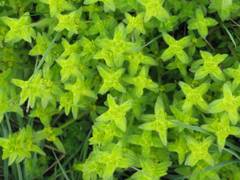
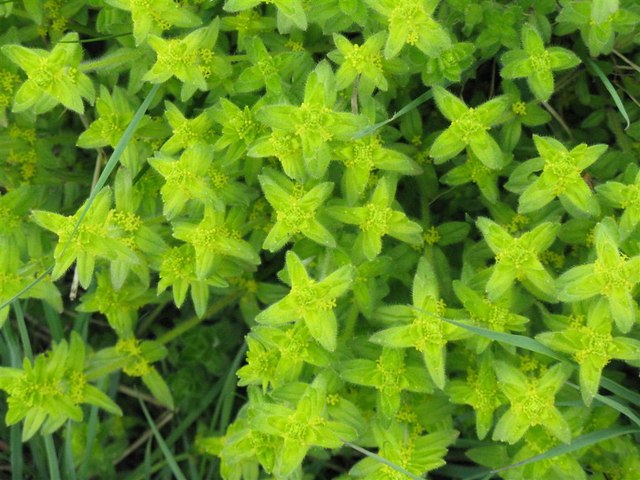
Cruciata is a genus of about eight herbaceous perennials in the madder family, native to Europe, North Africa, and temperate Asia. Its most familiar member, C. laevipes, the crosswort, sends up weak, four-angled stems 8-24 inches (20-60 cm) tall from creeping rootstocks. The hairy, pale-green leaves are carried in whorls of four, giving the cruciform pattern that names the genus. Small yellow flowers, each about 0.1 inch (2-3 mm) across and honey-scented, cluster in the leaf axils through late spring and early summer. The plant scrambles through grass and over low vegetation rather than standing upright, and it spreads steadily by rhizomes to form loose patches. Cruciata grows in rough grassland, hedge banks, woodland edges, and roadsides, usually on neutral to calcareous soils of moderate fertility. It tolerates a wide range of conditions but grows most strongly in part shade with steady moisture. In gardens it is little cultivated and can spread into a weed of borders. The whorled foliage dies back to the rootstock each winter and reappears in spring.
Native Range
Cruciata is native to Europe, North Africa, and temperate western and central Asia. C. laevipes is widespread across Europe in rough grassland, hedge banks, and woodland margins, typically on neutral to lime-rich soils.Suggested Uses
Cruciata is occasionally grown in wildflower meadows, naturalistic plantings, and hedge-bank schemes for its whorled foliage and honey-scented flowers. It suits informal grassy areas where its scrambling, spreading habit is an advantage. The flowers are a minor nectar source for small bees and flies.How to Identify
Appearance
Size & Dimensions
Height8" - 2'
Width/Spread1' - 3'
Bloom Information
Flowering occurs in late spring and early summer, broadly May to July across the European range. The small yellow flowers open in axillary clusters and carry a noticeable honey scent. Seed sets soon after, and the upper stems begin to die back by late summer.
Detailed Descriptions
Foliage Description
pale greenGrowing Conditions
Sun Requirements
Requires 3-8 hours of direct sunlight daily
• Full Sun: 6+ hours of direct sunlight
• Partial Shade: 3-6 hours of direct sunlight
• Full Shade: Less than 3 hours of direct sunlight