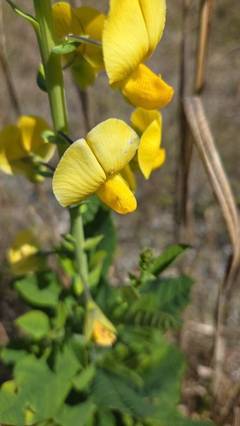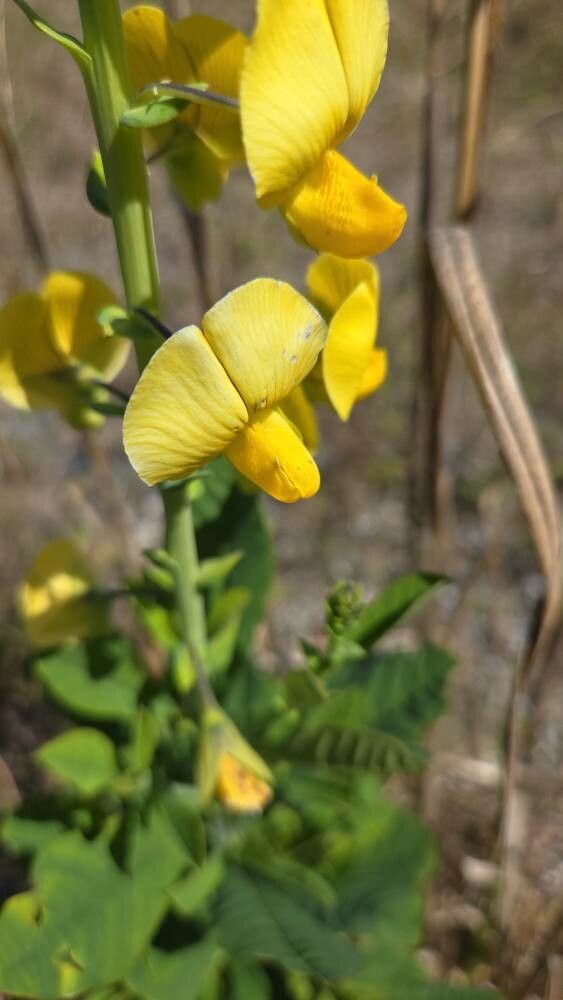
Crotalaria, Genus, spp., Multiple species,
- Genus
- Multiple species
rattlepods
Pantropical; centre of diversity in sub-Saharan Africa
Overview
Crotalaria is a genus of roughly 700 species of herbaceous plants and shrubs in the legume family (Fabaceae), distributed across tropical and subtropical regions worldwide, with the greatest concentration in Africa. Plants range from 1–10 feet (0.3–3 m) in height, with simple or trifoliate leaves and upright to spreading stems. Flowers are pea-shaped, 0.4–1 inch (1–2.5 cm) long, and borne in terminal racemes; most species are yellow, sometimes marked with brown or purple veining. The common name rattlepod refers to the inflated, papery seed pods, 1–2 inches (2.5–5 cm) long, in which loosened seeds rattle when the dried pod is shaken. Several species, including C. juncea (sunn hemp), are grown as green-manure and cover crops because they fix atmospheric nitrogen through root nodules. All parts contain pyrrolizidine alkaloids that are toxic to livestock and humans when ingested, causing cumulative liver damage; this limits the use of most species near grazing animals. Foliage is typically mid-green and herbaceous, dying back in species from seasonal climates. Most members require full sun and well-drained soil and tolerate low fertility, though species native to wetter regions need consistent moisture. The genus spans short-lived annuals, herbaceous perennials, and woody shrubs, so growth form and longevity vary considerably between species.
Native Range
The genus is pantropical, with its centre of diversity in sub-Saharan Africa and additional species native to tropical Asia, Australia, and the Americas. Crotalaria occupies grasslands, savannas, and disturbed ground from sea level to montane elevations.Suggested Uses
Crotalaria species are grown as green-manure and nitrogen-fixing cover crops in rotation systems, particularly C. juncea. Some shrubby species are planted in tropical and subtropical borders for their yellow racemes. The genus is also used in soil-stabilisation and revegetation plantings on degraded ground.How to Identify
Appearance
Size & Dimensions
Height1' - 10'
Width/Spread1' - 5'
Bloom Information
Most species flower through the warm season, from late spring into autumn in subtropical climates and across much of the year in the tropics. Individual racemes open progressively from the base upward over several weeks. Pollination is carried out chiefly by bees, after which the rattling seed pods develop and dry on the plant.
Detailed Descriptions
Flower Description
Yellow, sometimes marked brown or purpleFoliage Description
GreenGrowing Conditions
Sun Requirements
Requires 6-12 hours of direct sunlight daily
• Full Sun: 6+ hours of direct sunlight
• Partial Shade: 3-6 hours of direct sunlight
• Full Shade: Less than 3 hours of direct sunlight