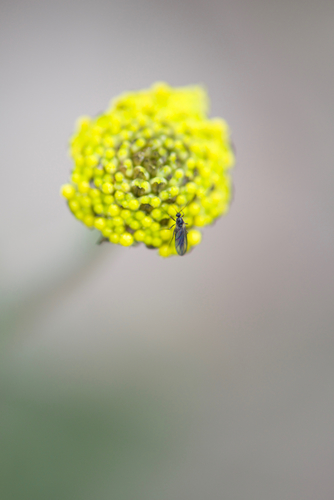
Craspedia, Genus, variabilis, Species,
- Genus & species
common billy buttons
Overview
Craspedia variabilis is a tufted perennial herb in the daisy family (Asteraceae), forming a basal rosette of soft, grey-green leaves from which rise slender, leafless flowering stems 8-24 in (20-60 cm) tall. It is native to south-eastern Australia, where it grows in grassland, grassy woodland, and along moist roadsides. The lance-shaped to spoon-shaped leaves are 2-6 in (5-15 cm) long, covered in soft woolly hairs, and form a flat ground rosette. In spring and early summer each stem is topped by a single spherical compound flower-head, 0.6-1.2 in (1.5-3 cm) across, packed with many tiny golden-yellow florets - the feature that gives the plant its common name. The dried heads hold their shape and colour and are used in cut and dried arrangements. Plants are variable in size and leaf form across their range, as the species name suggests, and may be short-lived in cultivation, persisting longer in cool, moist soils. They tolerate light frost and seasonal dryness but resent waterlogging and humidity, which shorten their life.
Native Range
Craspedia variabilis is native to south-eastern Australia, occurring across Victoria, New South Wales, Tasmania, and South Australia. It grows in native grassland, grassy woodland, and damp open ground, from lowlands to subalpine elevations.Suggested Uses
Used in native grassland plantings, rockeries, cottage borders, and containers, and grown for fresh and dried cut flowers. The yellow globes carry well in meadow-style schemes. Spaced 8-12 in (20-30 cm) apart in drifts.How to Identify
Appearance
Size & Dimensions
Height8" - 2'
Width/Spread6" - 1'
Bloom Information
Detailed Descriptions
Foliage Description
grey-green, woollyGrowing Conditions
Sun Requirements
Requires 6-10 hours of direct sunlight daily
• Full Sun: 6+ hours of direct sunlight
• Partial Shade: 3-6 hours of direct sunlight
• Full Shade: Less than 3 hours of direct sunlight
Care & Maintenance
Care Guide
Grow in full sun on moist but free-draining soil enriched with organic matter. Steady moisture through spring supports strong flowering, while sharp drainage prevents the rot that follows winter wet. Plants tolerate light frost and short dry spells once established but decline in humid, poorly drained conditions. Lift and divide congested clumps, or raise fresh plants from seed, as individuals are often short-lived. Low to moderate feeding in spring sustains rosette growth.Pruning
Cut spent flower stems back to the base after the heads fade, unless seed or dried stems are wanted. Tidy old outer leaves from the rosette in late winter. No other pruning is needed.Pruning Schedule
Prune: December–January
summer
Container Growing
Suitable for container growing
Minimum container size: 2 gallons