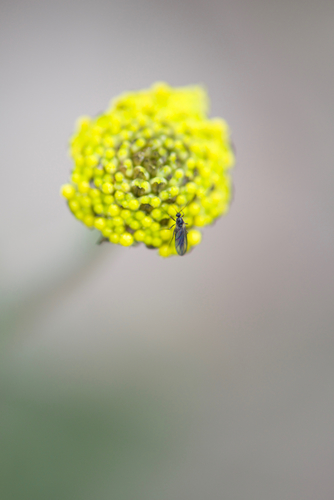
Craspedia, Genus, spp., Multiple species,
- Genus
- Multiple species
billy buttons
Overview
Craspedia is a genus of about 20 species of herbs in the daisy family (Asteraceae), native to Australia and New Zealand, where they grow in alpine herbfields, grassland, and open woodland. The common names billy buttons, woollyheads, and drumsticks all refer to the rounded, globe-shaped flower heads carried on long, leafless stalks. Plants form a basal rosette of narrow, grey-green leaves that are often woolly or silky-haired, from which the flowering stalks rise 10 to 24 inches (25 to 60 cm) tall, with rosettes 6 to 12 inches (15 to 30 cm) wide. Each stalk ends in a dense, spherical head of many tiny flowers, golden-yellow in most species, 0.5 to 1.5 inches (1 to 4 cm) across. Bloom comes in spring and summer. Because the heads hold their shape and colour when dried, they are cut for fresh and dried arrangements. Plants grow on freely draining soils in full sun and tolerate dry spells, though some species are short-lived and many are sensitive to wet winter ground and hard frost.
Native Range
Native to Australia and New Zealand, in alpine herbfields, grassland, and open woodland.Suggested Uses
Grown in rock gardens, native and water-wise borders, and containers for the round yellow heads, and the stalks are cut for fresh and dried arrangements. Suited to sunny, sharply drained sites and pollinator plantings.How to Identify
Appearance
Size & Dimensions
Height10" - 2'
Width/Spread6" - 1'
Bloom Information
Detailed Descriptions
Foliage Description
Grey-greenGrowing Conditions
Sun Requirements
Requires 6-12 hours of direct sunlight daily
• Full Sun: 6+ hours of direct sunlight
• Partial Shade: 3-6 hours of direct sunlight
• Full Shade: Less than 3 hours of direct sunlight
Care & Maintenance
Care Guide
Most species grow in full sun on freely draining sandy or loamy soils with pH from 5.5 to 7.0. Water needs are low to medium, and established plants tolerate dry spells. Wet winter soils and hard frost cause losses, so many kinds suit roughly USDA zones 8 to 11 or are grown as annuals in colder areas. Some species are naturally short-lived and are renewed from seed. Removing spent stalks tidies the rosette.Pruning
Spent flower stalks are cut to the base after bloom, which keeps the rosette neat and can prompt further stems. Plants grown for dried use are cut as the heads colour fully. Tattered outer leaves are removed as needed.Pruning Schedule
Prune: February
summer
Container Growing
Suitable for container growing
Minimum container size: 2 gallons
