Shrubs
Correa, Genus, pulchella, Species,
- Genus & species
Salmon correa
Overview
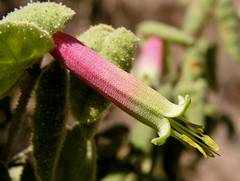
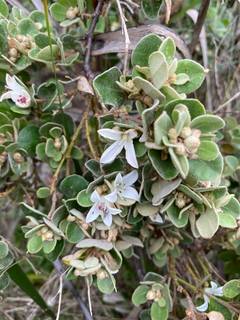
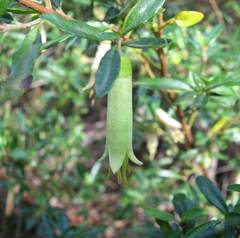
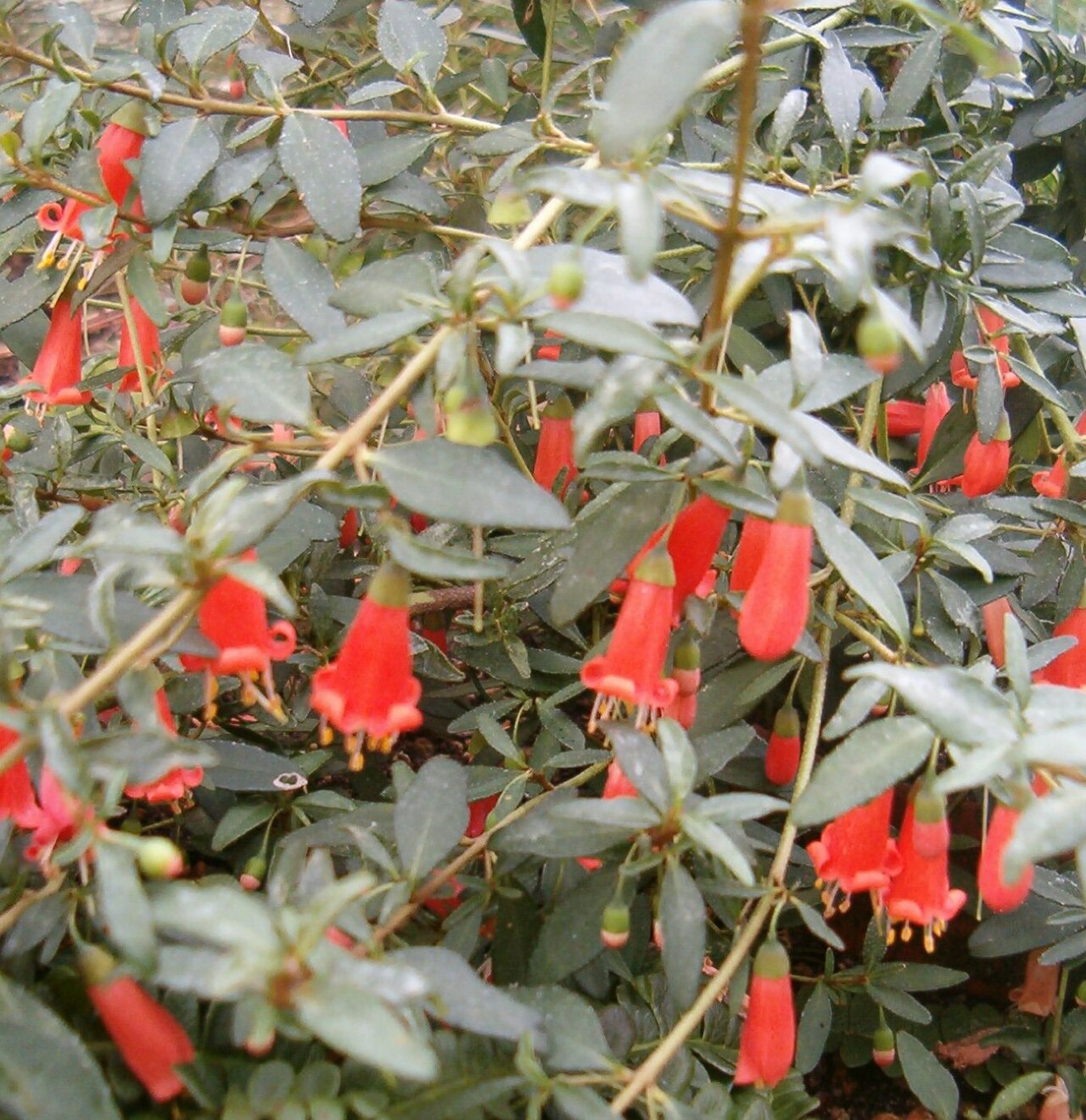
Correa pulchella is a low, spreading evergreen shrub 1–3 feet (0.3–0.9 m) tall and 3–5 feet (0.9–1.5 m) wide, with a dense, mounding to prostrate habit. Leaves are opposite, elliptic to oblong, 0.4–1 inch (1–2.5 cm) long, grey-green above and paler with star-shaped hairs beneath. Flowers are pendent, tubular bells 0.8–1 inch (2–2.5 cm) long, salmon-pink to orange-red in the common form, with yellow-green and cream forms also in cultivation. Flowers lack a spreading corolla and have protruding stamens, and they are followed by small, dry, four-lobed capsules. Growth is moderate at 6–10 inches (15–25 cm) per year. Plants tolerate coastal exposure, light frost, and alkaline soil, but they decline in soils that stay wet and in humid summers.
Native Range
Native to South Australia, including the Fleurieu Peninsula, Kangaroo Island, and the Eyre Peninsula, growing on coastal dunes, limestone, and sandy heath.Suggested Uses
Used as a groundcover, in rock gardens, and in coastal plantings, spaced 2–3 feet (0.6–0.9 m) apart. Grown in containers and used to attract honeyeaters.How to Identify
Appearance
Size & Dimensions
Height1' - 3'
Width/Spread3' - 5'
Colors
Bloom Information
Detailed Descriptions
Flower Description
Salmon-pink to orange-redFoliage Description
Grey-greenGrowing Conditions
Sun Requirements
Requires 4-8 hours of direct sunlight daily
• Full Sun: 6+ hours of direct sunlight
• Partial Shade: 3-6 hours of direct sunlight
• Full Shade: Less than 3 hours of direct sunlight
Care & Maintenance
Care Guide
Grows in full sun to part shade (4–8 hours of sun) and sandy or loamy, well-drained soil with a pH of 6.0–8.0. Hardy to about 23°F (-5°C), equivalent to USDA zones 9–10. Established plants tolerate short dry spells and are watered every 1–2 weeks in summer. Soil that stays wet causes root rot. Mulch of 2 inches (5 cm) keeps roots cool, and low-phosphorus fertilizer is used sparingly in spring.Pruning
Tip pruning after flowering in early spring removes about one-third of the new growth and maintains a dense form. Cuts are made into leafy wood, and hard pruning of old stems is tolerated poorly.Pruning Schedule
Prune: September–October
early spring
Container Growing
Suitable for container growing
Minimum container size: 3 gallons