Corethrogyne, Genus, spp., Multiple species,
- Genus
- Multiple species
California aster
California and northern Baja California
Overview
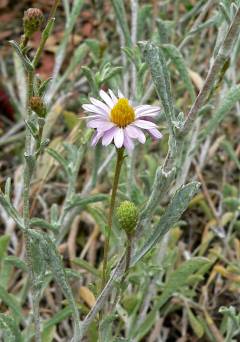
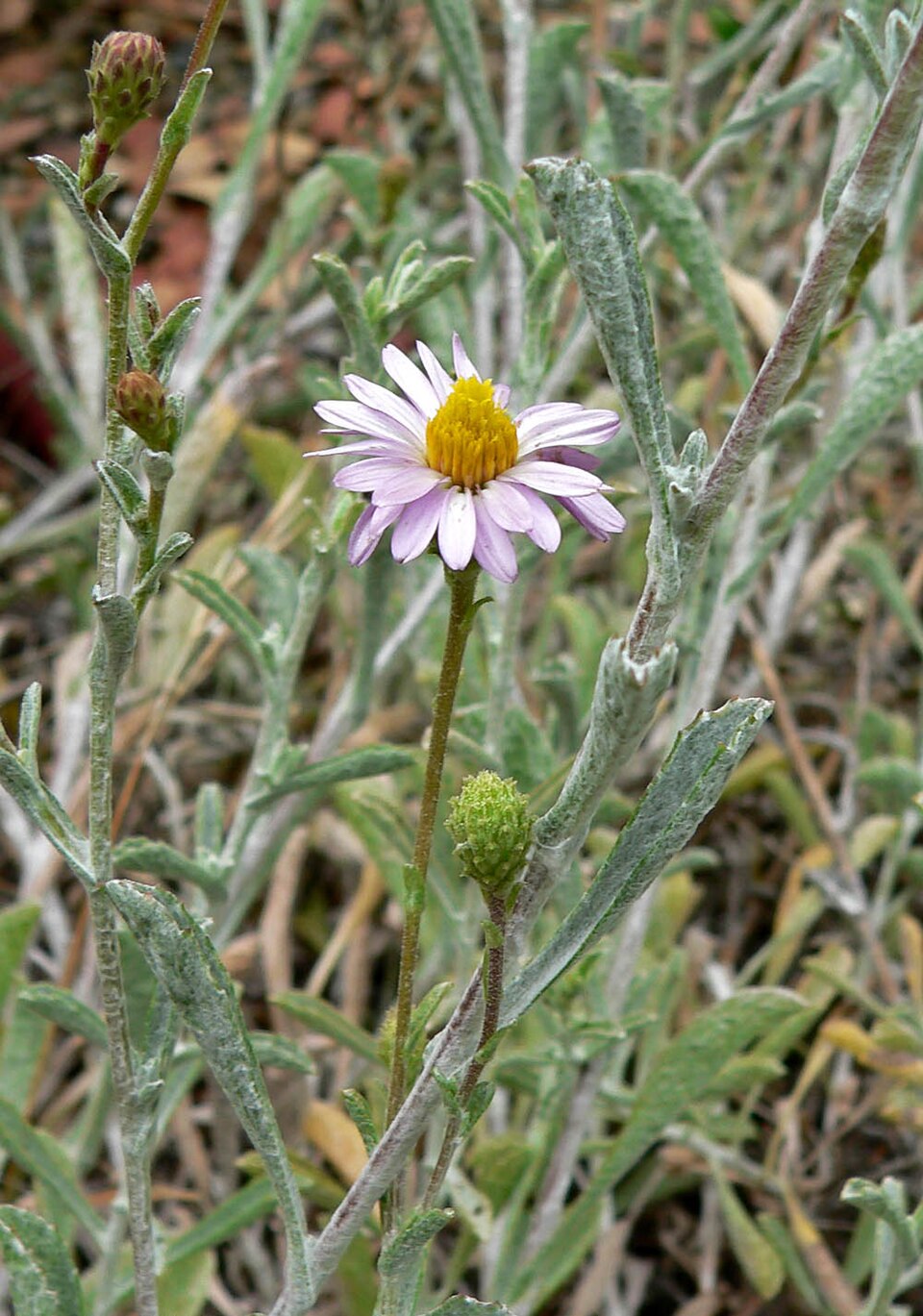
Corethrogyne is a genus in the daisy family (Asteraceae) native to California and adjacent Baja California, often treated as containing a single variable species, C. filaginifolia, the California aster or common sandaster; some species once placed here are now folded into Lessingia. Plants are low, woody-based perennials or subshrubs forming spreading mounds 1 to 2 feet (30 to 60 cm) tall and 1 to 3 feet (30 to 90 cm) wide, with sprawling to ascending stems. The narrow leaves are grey-green and densely coated in white woolly hairs, giving the foliage a felted look that helps the plant endure dry, sunny sites. From summer into autumn, the stems carry many small daisy flower heads, each about 1 inch (2.5 cm) across, with lavender to pink-purple rays around a yellow disc. Plants grow on dry slopes, coastal bluffs, chaparral edges, and sandy flats. They tolerate drought, lean soils, and salt air but are short-lived and can look straggly without an occasional cut-back.
Native Range
Native to California and northern Baja California, on dry slopes, coastal bluffs, sandy flats, and the edges of chaparral and woodland.Suggested Uses
Grown in dry, native, and coastal gardens, on banks for erosion control, and in pollinator plantings where the late-season flowers feed bees and butterflies. Suited to water-wise and chaparral-style borders.How to Identify
Appearance
Size & Dimensions
Height1' - 2'
Width/Spread1' - 3'
Bloom Information
Detailed Descriptions
Flower Description
Lavender to pink-purple with yellow centreFoliage Description
Grey-greenGrowing Conditions
Sun Requirements
Requires 6-12 hours of direct sunlight daily
• Full Sun: 6+ hours of direct sunlight
• Partial Shade: 3-6 hours of direct sunlight
• Full Shade: Less than 3 hours of direct sunlight
Care & Maintenance
Care Guide
Plants grow in full sun on dry, freely draining sandy or rocky soils with pH from 6.0 to 7.5. Water needs are low, and established plants tolerate drought, poor soil, and coastal salt air. Hardiness spans roughly USDA zones 8 to 10. Plants are short-lived, often persisting 3 to 5 years, and self-sow where conditions suit. A cut-back after flowering keeps growth from sprawling.Pruning
Cutting plants back by about half after flowering keeps them compact and tidy. Straggly or woody stems can be removed in late winter. Plants resprout from the woody base after a hard trim.Pruning Schedule
Prune: November
fall
Container Growing
Suitable for container growing
Minimum container size: 3 gallons