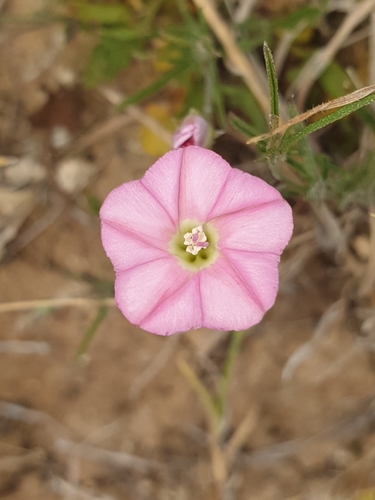
Convolvulus, Genus, spp., Multiple species,
- Genus
- Multiple species
bindweeds
Cosmopolitan, with many species in the Mediterranean and temperate regions
Overview
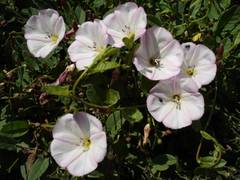
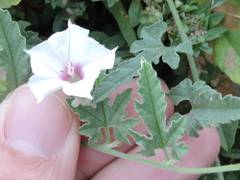
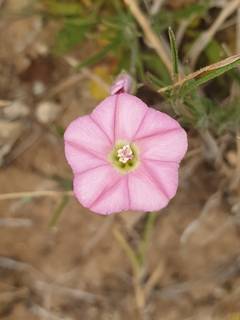
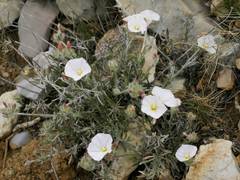
Convolvulus is a genus of about 200 to 250 species of twining and trailing herbs, perennials, and small shrubs in the morning-glory family Convolvulaceae, found across temperate and subtropical regions worldwide. Stems may twine, trail, or mound, carrying alternate, often arrow-shaped leaves and funnel-shaped flowers 0.5 to 2.5 in (1 to 6 cm) wide that open in the morning and close by afternoon. Flower color spans white, pink, blue, and purple, frequently with a paler or yellow throat. The genus spans garden ornamentals and aggressive weeds: C. cneorum, the silverbush, is a silvery-leaved Mediterranean shrub; C. sabatius is a trailing blue-flowered perennial; C. tricolor is an annual dwarf morning glory; and C. arvensis, field bindweed, is a deep-rooted perennial that is a serious agricultural weed worldwide. Most species are drought tolerant and grow on poor, dry soils. Limitations include the invasive, hard-to-remove roots of field bindweed, frost sensitivity in the shrubby species, and flowers that last only part of a day.
Native Range
Convolvulus grows wild across Europe, Asia, Africa, Australia, and the Americas, with a strong concentration of species around the Mediterranean. Field bindweed (C. arvensis) is native to Europe and Asia and has naturalized as a weed on every continent except Antarctica. Plants grow in grassland, scrub, rocky slopes, roadsides, and cultivated ground.Suggested Uses
Convolvulus ornamentals are grown in gravel and Mediterranean gardens, on dry banks, in raised beds, and in containers and hanging baskets, where the silverbush and trailing blue species suit hot, dry spots. The annual C. tricolor is sown for summer bedding and edging. Field bindweed is not planted and is managed as a weed.How to Identify
Appearance
Size & Dimensions
Height6" - 6'
Width/Spread1' - 3'
Bloom Information
Convolvulus flowers from late spring through autumn, with each funnel-shaped bloom opening in the morning and closing by midday or in dull weather. Plants produce a long succession of short-lived flowers over many weeks. Bees and hoverflies visit the open trumpets for nectar and pollen.
Detailed Descriptions
Flower Description
white, pink, blue, or purpleFoliage Description
green to silver-greyGrowing Conditions
Sun Requirements
Requires 6-10 hours of direct sunlight daily
• Full Sun: 6+ hours of direct sunlight
• Partial Shade: 3-6 hours of direct sunlight
• Full Shade: Less than 3 hours of direct sunlight
Water & Climate
Water Needs
Drought Tolerance
Drought tolerant when established
Care & Maintenance
Care Guide
Convolvulus grows in full sun in free-draining soil over a wide pH range from about 6.0 to 8.0, including poor, sandy, and chalky ground. The ornamental species are drought tolerant once established and need little water, while wet or rich soil makes them leggy and shy to flower. The shrubby C. cneorum is frost tender below about 20 F (-7 C), whereas field bindweed is hardy and persistent across most climates. Field bindweed regrows from root and rhizome fragments left in the soil and from long-lived seed, so it spreads and resists removal once established. Container plants of C. sabatius are overwintered under cover in cold regions.Pruning
Convolvulus shrubs such as C. cneorum are lightly trimmed after flowering to keep a compact shape, since hard cutting into old wood is slow to recover. Trailing ornamentals are sheared back when growth outgrows its space. Field bindweed is cut or pulled repeatedly to weaken the roots, though a single treatment rarely clears it.Container Growing
Suitable for container growing