Image 1 of 5
1 / 5
Plant Reference
Convolvulus, Genus, arvensis, Species,
- Genus & species
field bindweed, morning glory
Europe and Asia (native); naturalized across all 50 U.S. states and all Canadian provinces
Overview
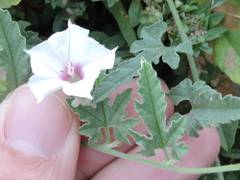
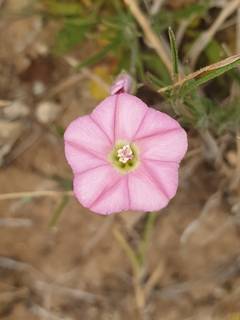
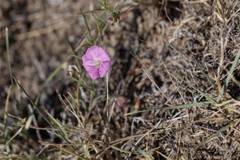
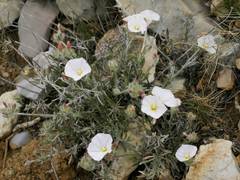
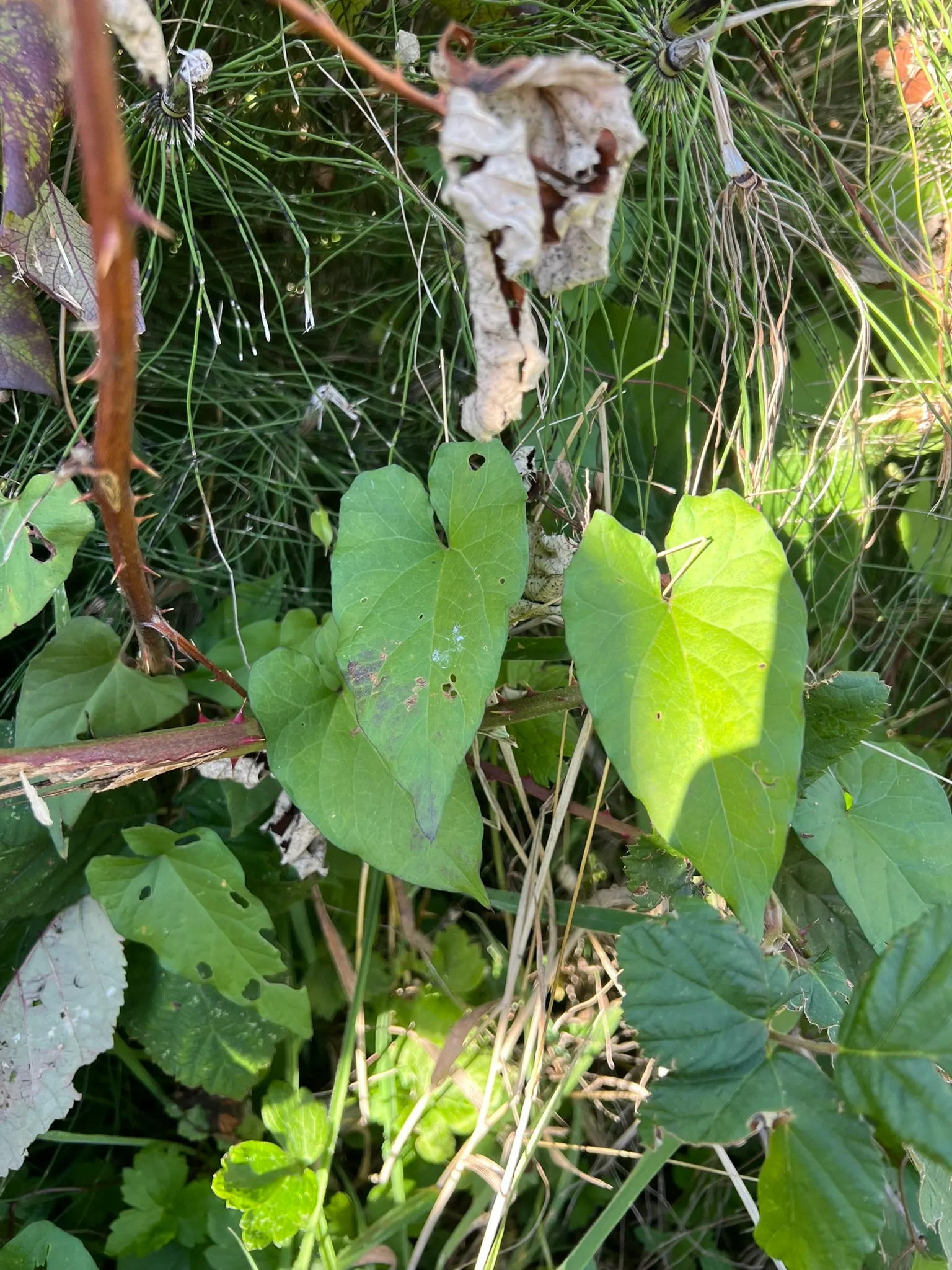
Convolvulus arvensis is a deep-rooted twining herbaceous perennial vine in the morning glory family (Convolvulaceae) growing 2–6 feet (0.6–1.8 m) per season and spreading widely through lateral roots. Stems are slender, smooth to finely hairy, twining counterclockwise around adjacent plants and structures or trailing along the ground. Leaves are alternate, arrow-shaped (sagittate), 1–2 inches (2.5–5 cm) long, with pointed basal lobes, on short petioles. Flowers are funnel-shaped, 0.5–1 inch (12–25 mm) across, white to pale pink, borne singly or in pairs on slender axillary peduncles. Individual flowers open in the morning and close by afternoon, each lasting 1–2 days. Fruit is a round capsule carrying 1–4 dark-brown seeds. The root system is the primary competitive feature: a deep taproot descends 10–20 feet (3–6 m) or more, and lateral roots extend horizontally 10–30 feet (3–9 m) from the parent plant at depths of 6–24 inches (15–60 cm), with adventitious shoots emerging from lateral root buds. Root fragments as small as 2 inches (5 cm) regenerate. A single plant produces 25–300 seeds per season; seeds remain viable in soil for 20–50 years. The species is classified as a noxious weed in most U.S. states and is widely cited as a major difficult-to-eradicate perennial weed in temperate agriculture worldwide.
Native Range
Convolvulus arvensis is native to Europe and Asia, occurring in cultivated fields, vineyards, orchards, gardens, roadsides, and waste ground from sea level to approximately 8,000 feet (2,400 m). The species was introduced to North America in the 1700s and is now naturalized across all 50 U.S. states and all Canadian provinces, with particularly severe infestations in irrigated agriculture across the western United States.Suggested Uses
Used widely in weed management education as a model for deep-rooted perennial weed biology. Studied in root physiology, carbohydrate reserve dynamics, and competitive interference research. Included in weed identification training for differentiation from Calystegia sepium (hedge bindweed) and annual Ipomoea species. Intentional garden planting is not a standard use.How to Identify
Appearance
Size & Dimensions
Height2' - 6'
Width/Spread3' - 10'
Bloom Information
Flowers continuously from May through October as new shoots extend along the twining and trailing stems — a 12–16 week flowering window. Individual flowers open in the morning and wilt by afternoon. In the Pacific Northwest, flowering begins in late May and continues until first frost. Pollination is self-compatible but flowers are also visited by bees. Seeds mature 3–4 weeks after pollination.
Detailed Descriptions
Flower Description
White to pale pink; funnel-shaped 0.5–1 inch (12–25 mm); open in morning and close by afternoonFoliage Description
Dark green; arrow-shaped (sagittate) with pointed basal lobes; smoothGrowing Conditions
Sun Requirements
Requires 4-12 hours of direct sunlight daily
• Full Sun: 6+ hours of direct sunlight
• Partial Shade: 3-6 hours of direct sunlight
• Full Shade: Less than 3 hours of direct sunlight