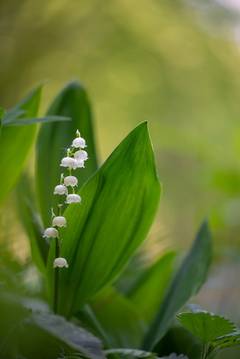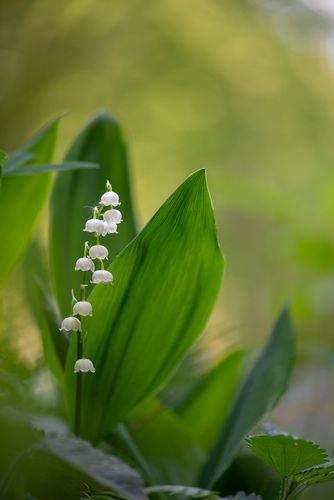
Convallaria, Genus, spp., Multiple species,
- Genus
- Multiple species
lilies of the valley
Temperate Northern Hemisphere - Europe, Asia, and eastern North America
Overview
Convallaria is a genus of one to three rhizomatous perennials in the asparagus family (Asparagaceae), grown for the lily of the valley, C. majalis. Spreading by underground stems, the plants form dense colonies of paired, broad, lance-shaped leaves 4-8 inches (10-20 cm) long that rise 6-12 inches (15-30 cm) tall. In mid to late spring an arching one-sided raceme bears six to fifteen nodding, bell-shaped white flowers about 0.25-0.4 inch (6-10 mm) wide, carrying a sweet, far-reaching fragrance long used in perfume. Small red-orange berries follow in late summer. Convallaria grows in cool, moist, shaded woodland soil and spreads steadily, forming a weed-suppressing groundcover that can become invasive and crowd out smaller plants. Every part of the plant is highly toxic; the leaves, flowers, and berries contain cardiac glycosides that disrupt the heartbeat if eaten. The foliage yellows and dies down by late summer, leaving bare ground until spring.
Native Range
Convallaria is native to cool temperate woodlands across Europe and Asia, with a closely related form (C. majuscula) in the mountains of eastern North America. It has naturalized in parts of North America from garden plantings.Suggested Uses
Used as a fragrant deciduous groundcover under trees and shrubs and along shaded north-facing borders, spaced 4-6 inches (10-15 cm) apart. The cut stems are grown for small fragrant posies. Because it spreads strongly, it is placed where its running habit is wanted or contained.How to Identify
Appearance
Size & Dimensions
Height6" - 1'
Width/Spread8" - 1'
Bloom Information
Lily of the valley flowers for two to three weeks in mid to late spring, usually April to June depending on climate. The nodding white bells open along one side of an arching stem. The strong sweet fragrance is the most noticeable feature of the plant in bloom.
Detailed Descriptions
Foliage Description
greenGrowing Conditions
Sun Requirements
Tolerates up to 4 hours of direct sunlight daily
• Full Sun: 6+ hours of direct sunlight
• Partial Shade: 3-6 hours of direct sunlight
• Full Shade: Less than 3 hours of direct sunlight
Care & Maintenance
Care Guide
Grow Convallaria in part to full shade in cool, moist, humus-rich soil with a pH around 5.0-7.0. Plant rhizomes (pips) in autumn, setting them just below the surface 4-6 inches (10-15 cm) apart, and mulch with leaf mould. The plants spread by underground rhizomes and can travel well beyond their planting, so a buried barrier or a confined bed limits their reach. Water during dry spells, as drought forces early dormancy. A topdressing of compost in autumn keeps colonies vigorous. All parts are highly toxic if eaten, and the berries are removed where children or pets have access.Pruning
No routine pruning is needed. Yellowing foliage is left to die down naturally, then cleared in late summer or autumn. Spent flower stems and berries are removed to limit self-seeding and to keep the toxic fruit out of reach.Container Growing
Suitable for container growing
Minimum container size: 1 gallons