Conocephalum, Genus, conicum, Species,
- Genus & species
great scented liverwort
SunFull Shade – Part Shade
WaterHigh
Overview
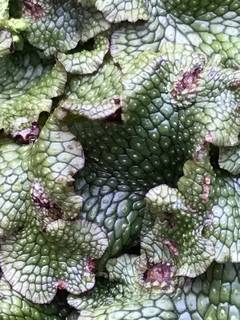
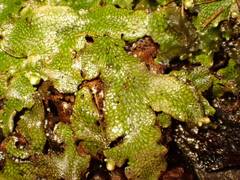
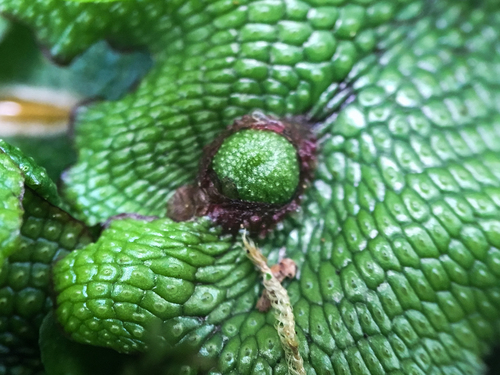
Conocephalum conicum is a thalloid liverwort forming flat, ribbon-like green bands that branch and overlap into spreading mats. The thallus is 0.3-0.8 inch (8-20 mm) wide and up to 4 inches (10 cm) long, leathery in texture, with a surface divided into polygonal segments each marked by a central pore, producing a pattern that resembles snakeskin. The upper surface is deep green and slightly glossy; the underside bears purple-tinged scales and root-like rhizoids that anchor it to the substrate. Crushed tissue releases a mushroom-like scent. The plant has no true roots, stems, leaves, or flowers, taking up water and nutrients directly across the thallus surface. Reproduction occurs by spores: male and female structures form on separate plants, and after fertilisation cone-shaped stalked receptacles rise 1-3 inches (2.5-8 cm) to shed spores in spring. The thallus also fragments and spreads vegetatively. Growth is continuous in moist conditions and slows or stops in dry spells, when the thallus margins curl and brown. It forms persistent colonies on permanently damp surfaces and depends on a steady supply of moisture, dying back where the substrate dries for extended periods.
Native Range
Found across the temperate Northern Hemisphere, including Europe, Asia, and North America. Grows on permanently moist, shaded surfaces such as stream banks, wet rocks, ravine walls, and damp soil, often near running water and in deep shade.Suggested Uses
Grown in terrariums, vivariums, bog gardens, and around shaded ponds and water features for ground-covering green growth on damp rock and soil. Suited to deeply shaded, consistently moist spots where few vascular plants establish. Not suited to dry, sunny, or exposed positions.How to Identify
Appearance
Colors
Foliage Colors
Bloom Information
This liverwort does not flower. Spore-bearing receptacles rise from female plants in spring, chiefly March to May, shedding spores as the stalks elongate. Vegetative growth of the thallus continues through the cooler, wetter months from autumn to spring and slows in summer dry spells.
Detailed Descriptions
Foliage Description
greenGrowing Conditions
Sun Requirements
Tolerates up to 3 hours of direct sunlight daily
• Full Sun: 6+ hours of direct sunlight
• Partial Shade: 3-6 hours of direct sunlight
• Full Shade: Less than 3 hours of direct sunlight
Water & Climate
Water Needs
Care & Maintenance
Care Guide
Grows in deep to partial shade on surfaces kept constantly moist, such as stream margins, shaded rock, and damp soil. It needs high humidity and a steady supply of water, and the thallus browns and curls if the substrate dries out. In cultivation it is grown in terrariums, bog gardens, and shaded water features on damp soil or rock. No feeding is needed, as the plant absorbs nutrients across its surface. It spreads by thallus fragments, which root readily on moist substrate. Direct sun and prolonged drought cause dieback.Pruning
No pruning is required. Overgrown patches can be lifted or divided to control spread or to start new colonies. Clearing accumulated leaf litter keeps the thallus surface exposed to light and moisture.Container Growing
Suitable for container growing