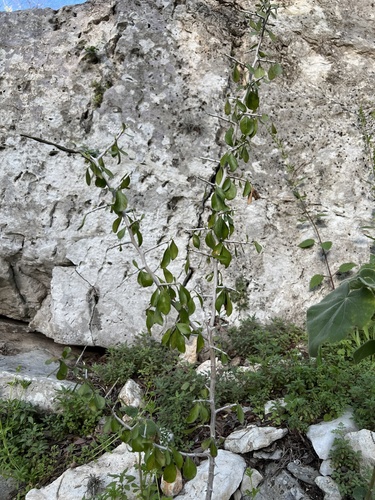
Condaliopsis, Genus, obtusifolia, Species,
- Genus & species
lotebush
Southwestern United States and northern Mexico
Overview
Condaliopsis obtusifolia is a spiny, densely branched deciduous shrub reaching 3-6 feet (0.9-1.8 m) tall and as wide, with rigid, gray-green, thorn-tipped branches. The small leaves are alternate, oblong to spoon-shaped, 0.25-1 inch (0.6-2.5 cm) long, gray-green, and drop during drought and cold. Clusters of tiny greenish-white five-petaled flowers appear at the nodes from spring into summer. The fruit is a round blue-black drupe about 0.25 inch (6 mm) wide containing a single stone. C. obtusifolia grows on dry plains, mesas, brushland, and desert washes across the southwestern United States and northern Mexico. Its tangle of stiff thorny branches shelters birds and small mammals, and the fruit is eaten by wildlife. The deep root system makes it well suited to drought. Growth is slow, and the shrub can live for decades on harsh sites.
Native Range
Condaliopsis obtusifolia is native to the southwestern United States, from California and Texas through the southern Great Plains, and into northern Mexico. It grows on dry plains, mesas, desert washes, and brushland at low to middle elevations.Suggested Uses
Condaliopsis obtusifolia is grown in desert, barrier, and wildlife plantings, spaced 4-6 feet (1.2-1.8 m) apart. Its thorny branches form a hedge and shelter nesting birds. The fruit feeds birds and small mammals in late summer.How to Identify
Appearance
Size & Dimensions
Height3' - 6'
Width/Spread3' - 6'
Bloom Information
Detailed Descriptions
Foliage Description
Gray-greenGrowing Conditions
Sun Requirements
Requires 6-12 hours of direct sunlight daily
• Full Sun: 6+ hours of direct sunlight
• Partial Shade: 3-6 hours of direct sunlight
• Full Shade: Less than 3 hours of direct sunlight
Care & Maintenance
Care Guide
Condaliopsis obtusifolia grows in full sun in dry, well-drained sandy, gravelly, or rocky soil with a pH from 7.0 to 8.5. It is deeply rooted and drought-adapted, needing little to no water once established. The shrub drops its leaves in drought or cold and leafs out again when conditions improve. Plants are slow-growing and long-lived on harsh, exposed sites. Growth declines on wet or poorly drained soils and in shade. It is hardy in zones 7 to 10.Pruning
Light pruning in late winter removes dead or crossing branches and shapes the thorny crown. The dense branching needs little routine cutting. Stiff thorns make heavy pruning slow work.Pruning Schedule
Prune: February
winter