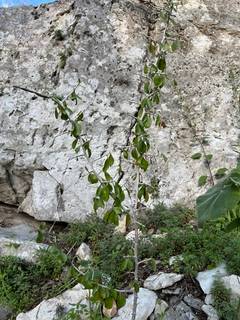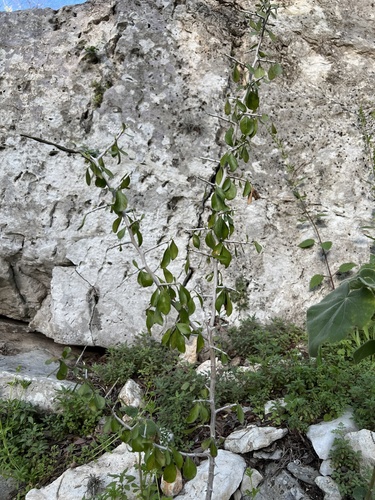
Condaliopsis, Genus, spp., Multiple species,
- Genus
- Multiple species
lotebush
Southwestern North America (United States and Mexico)
Overview
Condaliopsis is a name applied to a small group of spiny shrubs in the buckthorn family (Rhamnaceae) from the arid Americas; its species are now generally placed within Ziziphus and Condalia, so the name is most often met as a synonym. Plants are rigid, intricately branched shrubs of dry country in the southwestern United States and Mexico, typically 3 to 10 feet (1 to 3 m) tall and 3 to 12 feet (1 to 3.6 m) wide. The pale grey-green branches end in sharp thorns and carry small leaves, 0.2 to 0.8 inch (5 to 20 mm) long, that drop during drought, leaving the green stems to carry on photosynthesis. Small greenish flowers open in the leaf axils after rain and give way to fleshy drupes, around 0.2 to 0.4 inch (5 to 10 mm) across, that ripen dark blue to black. Plants grow on dry slopes, washes, and desert grassland in well-drained, often alkaline soils, and they tolerate severe heat and drought. Growth is slow, and the dense spiny habit gives cover and food for desert wildlife.
Native Range
Native to the arid southwestern United States and northern and central Mexico, on desert slopes, washes, and grassland.Suggested Uses
Grown in desert and dryland gardens, as thorny barrier hedging, and for wildlife habitat where the fruit feeds birds and mammals. Suited to xeriscape and restoration plantings on hot, dry sites.How to Identify
Appearance
Size & Dimensions
Height3' - 10'
Width/Spread3' - 12'
Bloom Information
Detailed Descriptions
Foliage Description
Grey-greenGrowing Conditions
Sun Requirements
Requires 6-12 hours of direct sunlight daily
• Full Sun: 6+ hours of direct sunlight
• Partial Shade: 3-6 hours of direct sunlight
• Full Shade: Less than 3 hours of direct sunlight
Care & Maintenance
Care Guide
Plants grow in full sun on dry, freely draining sandy or rocky soils, including alkaline ground with pH from 7.0 to 8.5. Water needs are very low, and established shrubs tolerate extreme heat and prolonged drought. Growth is slow, and the plants are moderately frost-tolerant, hardy in roughly USDA zones 8 to 10. The dense thorny structure suits barrier and habitat plantings. Cut or browsed stems resprout from the base.Pruning
Pruning is rarely needed beyond removing dead wood in late winter. Thorny branches can be thinned to raise the canopy where a small tree form is wanted. Hard cuts resprout from the rootstock.Pruning Schedule
Prune: February–March
late spring