Comptonia, Genus, spp., Multiple species,
- Genus
- Multiple species
sweetfern
Overview
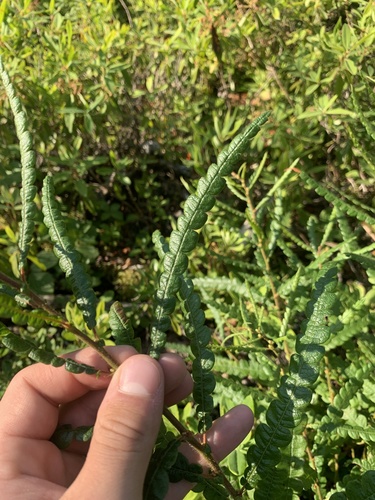
Comptonia is a genus in the bayberry family (Myricaceae) represented by a single living species, Comptonia peregrina, known as sweetfern. It is a deciduous, aromatic shrub of eastern North America, growing 2 to 5 feet (60 to 150 cm) tall and spreading by rhizomes into colonies 4 to 8 feet (1.2 to 2.4 m) across. The narrow leaves are 2 to 5 inches (5 to 13 cm) long and deeply cut into rounded lobes, giving a fern-like outline despite the plant being a woody shrub rather than a fern; crushed foliage releases a sweet, resinous scent. Flowers are borne in catkins in spring, the plant carrying separate male and female catkins, and pollination is by wind rather than insects. The fruit is a small bur-like cluster enclosing shiny brown nutlets. Roots carry nitrogen-fixing actinorhizal nodules, which let the shrub colonise poor, sandy, and sterile ground. It grows in full sun on dry, acidic soils and resents rich or limy conditions, and it transplants poorly because of the brittle rhizomes. Sweetfern is grown for erosion control on banks and for naturalistic plantings.
Native Range
Native to eastern North America, from eastern Canada south through the Appalachian region and the eastern United States.Suggested Uses
Grown for erosion control on dry banks, in native and woodland-edge plantings, and on poor sandy sites where many shrubs fail. The aromatic foliage suits naturalistic and pollinator-adjacent plantings.How to Identify
Appearance
Size & Dimensions
Height2' - 5'
Width/Spread4' - 8'
Bloom Information
Catkins open in spring, typically April to May, before or as the leaves expand. Male and female catkins are separate and inconspicuous, and pollination is by wind. There is no showy floral display.
Detailed Descriptions
Foliage Description
Green to bronze-greenGrowing Conditions
Sun Requirements
Requires 6-10 hours of direct sunlight daily
• Full Sun: 6+ hours of direct sunlight
• Partial Shade: 3-6 hours of direct sunlight
• Full Shade: Less than 3 hours of direct sunlight
Care & Maintenance
Care Guide
Sweetfern grows in full sun on dry, sandy or rocky, acidic soils with pH from 4.5 to 6.5. Water needs are low, and established plants tolerate drought and poor fertility through nitrogen-fixing root nodules. Rich or alkaline soils cause decline. The shrub is hardy in roughly USDA zones 2 to 6. It transplants poorly, so container-grown stock establishes more reliably than bare-root divisions.Pruning
Little pruning is needed beyond cutting back stray or winter-damaged stems in early spring. Colonies can be edged to limit rhizome spread. Rejuvenation cuts to near ground level resprout from the rootstock.Pruning Schedule
Prune: March–April
early spring
