Commelina, Genus, erecta, Species,
- Genus & species
whitemouth dayflower
Overview
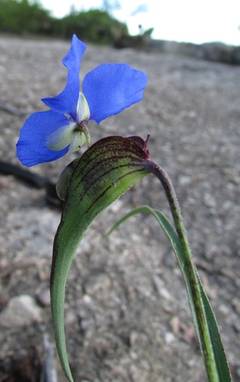
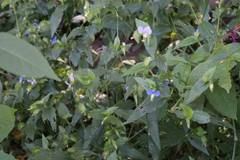
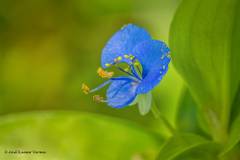
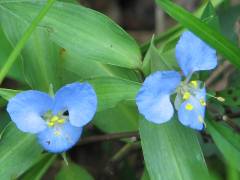
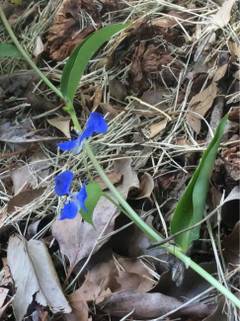
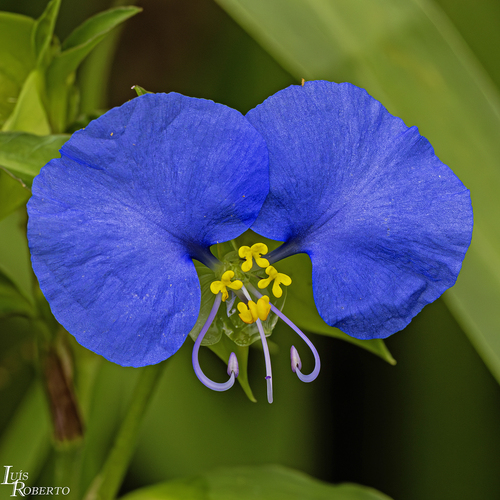
Commelina erecta is a herbaceous perennial in the spiderwort family, growing 8-39 inches (20-100 cm) tall from a cluster of fleshy roots. Stems are erect to sprawling, branched, and somewhat succulent, rooting where lower nodes touch the ground. Leaves are linear to lance-shaped, 2-6 inches (5-15 cm) long, with sheaths that clasp the stem. Each flower has two rounded upper petals in clear blue and a much smaller, often white lower petal, opening from a folded green spathe shaped like a boat. Individual flowers last a single morning, closing by afternoon, but plants bloom in succession from late spring through autumn. The blue color and the reduced white lower petal give rise to the name whitemouth dayflower. Plants grow in dry, sandy, or rocky open ground and tolerate heat and drought once established. The species self-seeds and can spread into a loose colony, becoming weedy in cultivated beds. Bees collect pollen from the flowers in the morning hours. The fleshy roots make it slow to remove once settled.
Native Range
Commelina erecta is native to the Americas and parts of Africa, ranging across the eastern and central United States, south through Mexico and Central America into South America. It grows in sandy woodlands, prairies, dunes, and disturbed open sites.Suggested Uses
Used in wildflower meadows, native plantings, and sandy or gravel gardens, spaced 12-18 inches (30-45 cm) apart. It suits naturalized areas where its spreading habit is not a concern. The flowers add blue color to summer borders.How to Identify
Appearance
Size & Dimensions
Height8" - 3'3"
Width/Spread1' - 2'
Bloom Information
Detailed Descriptions
Flower Description
blue with white lower petalFoliage Description
greenGrowing Conditions
Sun Requirements
Requires 4-10 hours of direct sunlight daily
• Full Sun: 6+ hours of direct sunlight
• Partial Shade: 3-6 hours of direct sunlight
• Full Shade: Less than 3 hours of direct sunlight
Care & Maintenance
Care Guide
Plants grow in full sun to part shade in dry, sandy, or rocky soil with sharp drainage. Once established they tolerate heat, drought, and poor fertility, and need little supplemental water. Rich or wet soil encourages lank, sprawling growth and heavier self-seeding. The fleshy perennial roots resprout each spring and can be slow to dig out. Plants spread by seed and by rooting stems, forming loose colonies. Hardy in USDA zones 5 to 10.Pruning
Cutting plants back after the first flush keeps growth compact and can prompt fresh blooms. Stems can be sheared to the ground in late autumn once the foliage dies back. Removing seed capsules before they ripen limits self-seeding.Pruning Schedule
Prune: November
fall
Container Growing
Suitable for container growing
Minimum container size: 1 gallons