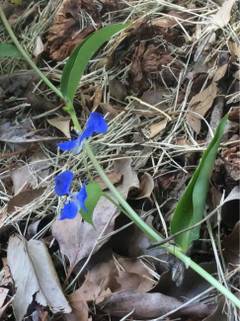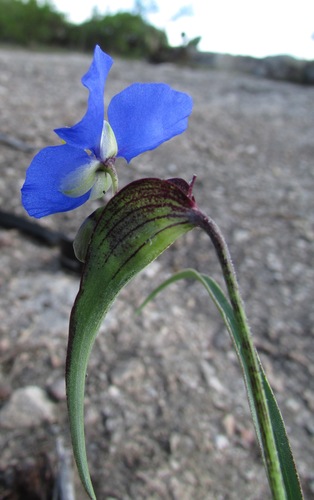
Commelina, Genus, dianthifolia, Species,
- Genus & species
birdbill dayflower
Southwestern United States and Mexico (Arizona and New Mexico south through the Sierra Madre mountains); rocky grasslands, pine-oak woodlands, and open slopes at elevations of 4,000-8,000 feet (1,200-2,400 m) on well-drained, often calcareous soils.
Overview
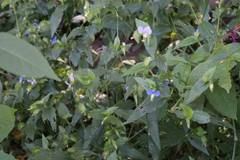
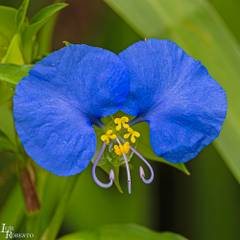
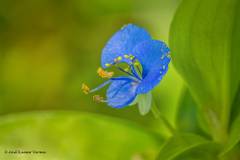
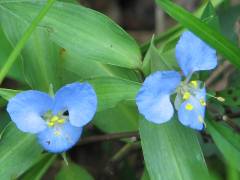
Commelina dianthifolia is a compact clump-forming perennial in the dayflower family (Commelinaceae) growing 8-18 inches (20-45 cm) tall and 8-12 inches (20-30 cm) wide. The species name 'dianthifolia' references the narrow grass-like blue-green leaves that resemble the foliage of Dianthus (pinks), with the leaf-shape resemblance to the unrelated Caryophyllaceae genus being the basis for the Latin epithet. Vivid cobalt-blue three-petaled flowers 1-1.5 inches (2.5-4 cm) across emerge from boat-shaped bracts (called spathes in this family) from July through October. Each flower opens in the morning and closes by afternoon, lasting only a single day, but new flowers open continuously from the same spathe over many weeks; the one-day-per-flower cycle gives the genus and family their common name dayflower. The cobalt-blue color saturation reaches the deepest end of the true-blue color range in flowering plants, comparable to Gentiana species in pigment intensity, and the color comes from delphinidin-based anthocyanin pigments that the family produces in unusually high concentrations relative to the surrounding tissue. The plant grows from a cluster of fleshy tuberous roots that store water and carbohydrates underground, allowing the species to survive the dry-season-and-cold-season inactivity period that defines its high-elevation southwestern habitat. Unlike the weedy non-native Asiatic dayflower (Commelina communis), which is a widespread agricultural weed across temperate North America, this southwestern species is well-behaved in cultivation and spreads slowly by clump expansion rather than by aggressive self-sowing or rhizome spread. In wet or heavy soils, the tuberous roots rot during winter; sharp drainage is the principal cultivation requirement. The plant goes fully dormant in winter, leaving no above-ground trace from late fall through late spring; placement marking is recommended to prevent accidental disturbance during dormancy. Deer avoid the foliage, and the plant is suited to the rock-garden and xeriscape registers where its quirky one-day-flower habit and rare true-blue color give it a singular place in a planting.
Native Range
Commelina dianthifolia is native to the southwestern United States and Mexico, with a range from southern Arizona and New Mexico south through the Sierra Madre Occidental and the Sierra Madre Oriental mountain ranges into central Mexico. The species occurs in rocky grasslands, pine-oak woodlands, and open slopes at elevations of 4,000-8,000 feet (1,200-2,400 m) on well-drained, often calcareous soils. The high-elevation southwestern range gives the species its cold tolerance to USDA zone 5 in dry well-drained conditions, which exceeds the cold tolerance of most other Commelina species in the genus. Several other Commelina species occur as widespread weeds across temperate North America (most notably the non-native Commelina communis from East Asia), and the well-behaved native habit of C. dianthifolia separates it from those weedy relatives.Suggested Uses
Used in rock gardens, xeriscape plantings, and southwestern-style gardens where the cobalt-blue flower color gives a rare true-blue contribution to a planting. Container culture works in pots of 3 gallons (11 liters) or larger with gritty media, and the container can be stored dry through winter in cold climates that exceed the species' open-ground hardiness. The cobalt-blue color pairs well with silver-leaved companions (Artemisia, Stachys) and warm-toned native wildflowers (Gaillardia, Penstemon) on shared dry-habitat sites. The compact size and the slow clump-expansion habit suit the species to small-scale plantings where its quirky one-day-flower cycle and intense color come through at a personal viewing distance.How to Identify
Appearance
Size & Dimensions
Height8" - 1'6"
Width/Spread8" - 1'
Colors
Bloom Information
Vivid cobalt-blue three-petaled flowers open from July through October across a 10-week active flowering window. Individual flowers open in the morning and close by afternoon, lasting only one day, but new flowers open continuously from the same spathe over many weeks; the one-day-per-flower cycle gives the family and genus their common name dayflower. The single-day bloom is supported by the spathe's role as a storage and protection structure that holds developing flower buds in sequence and releases one flower per day across the bloom window. Pollination is by bees, particularly small native bees that are attracted to the cobalt-blue color and work the three-petaled landing platform across the brief morning bloom window.
Detailed Descriptions
Flower Description
Vivid cobalt-blue three-petaled flowers 1-1.5 inches (2.5-4 cm) across emerging from boat-shaped bracts (spathes), the cobalt-blue saturation reaching the deepest end of the true-blue color range in flowering plantsFoliage Description
Blue-green; narrow grass-like leaves resembling Dianthus (pinks) foliage in form, with the leaf-shape resemblance giving the species its specific epithet dianthifolia (Dianthus-leaved)Growing Conditions
Sun Requirements
Requires 5-10 hours of direct sunlight daily
• Full Sun: 6+ hours of direct sunlight
• Partial Shade: 3-6 hours of direct sunlight
• Full Shade: Less than 3 hours of direct sunlight
Care & Maintenance
Care Guide
Plant in full sun to partial shade with 5-10 hours of direct light. Well-drained lean sandy or rocky soil at pH 6.0-8.0 is essential because the tuberous roots rot in wet winter conditions; the species' high-elevation southwestern habitat reflects the well-drained-soil physiological preference. Fertilization is omitted because high soil fertility produces leggy growth and weakens the tuberous roots' winter survival. Watering is sparing once established because the tuberous roots store water and carbohydrate reserves through the dry season. Marking the planting location is recommended because the plant is fully dormant from fall through late spring with no above-ground presence; an accidental dig during the dormant period damages the tuberous roots. In USDA zone 5, planting on raised ground or slopes for winter drainage and mulching the root zone with 2-3 inches (5-8 cm) of gravel or other dry material handles the cold-and-wet combination that limits the species in marginal-zone gardens.Pruning
Frost-killed foliage is removed in late fall or early spring after winter cold has terminated the above-ground growth. No other seasonal pruning or deadheading is needed because the plant dies to the ground naturally after frost and the spent one-day flowers dissolve on their own without intervention.Pruning Schedule
Prune: March & November
fallearly spring
Container Growing
Suitable for container growing
Minimum container size: 3 gallons