Comarum, Genus, palustre, Species,
- Genus & species
marsh cinquefoil
Circumboreal — northern North America (Alaska to Newfoundland, south through the mountain ranges), Europe, and Asia; bogs, fens, wet meadows, pond margins, and stream banks
Overview
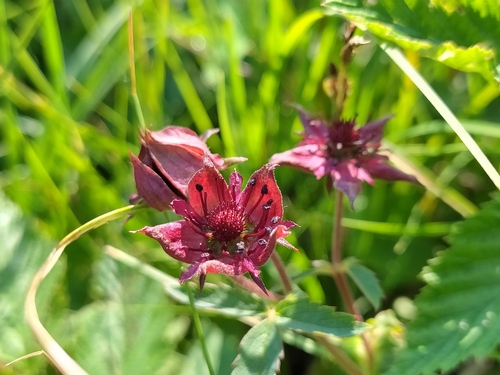
Comarum palustre is a low spreading semi-aquatic deciduous perennial reaching 8-18 inches (20-45 cm) tall and 24-48 inches (60-120 cm) wide. Prostrate to semi-floating reddish stems extend 12-36 inches (30-90 cm) and root at the nodes where they contact wet substrate. Dark red to deep burgundy-purple five-petaled flowers 0.6-1 inch (15-25 mm) appear in loose terminal clusters from June through August over 8 weeks; the dark flower color separates the species from other North American cinquefoils, all of which have yellow flowers. Pinnately compound green leaves with 5-7 sharply serrated leaflets emerge above reddish-purple petioles and stems. Formerly classified as Potentilla palustris, the species was moved to genus Comarum based on molecular phylogenetic evidence; both names remain in current use. Native to circumboreal regions across northern North America, Europe, and Asia. Functions as an obligate wetland specialist of bogs, fens, and pond margins; will not establish in conventional well-drained garden soil. Important nectar source for native bees in nutrient-poor northern wetlands. Spreads slowly by both rhizomes and rooting stems. Foliage turns red and yellow in fall. Non-toxic. Hardy in USDA zones 3-8.
Native Range
Circumboreal — northern North America from Alaska to Newfoundland and south through the mountain ranges, plus Europe and Asia. Found in bogs, fens, wet meadows, pond margins, and stream banks. Habitat is restricted to cool acid wetlands.Suggested Uses
Grown in bog gardens, pond margins, rain gardens, native plant gardens, and wetland restoration plantings, spaced 24-48 inches (60-120 cm). The dark flower color contrasts with the yellow blooms typical of other cinquefoils. Restricted to wetland conditions — fails in conventional garden beds.How to Identify
Appearance
Size & Dimensions
Height8" - 1'6"
Width/Spread2' - 4'
Bloom Information
Dark red to deep burgundy-purple five-petaled flowers 0.6-1 inch (15-25 mm) appear in loose terminal clusters from June through August. Total bloom period extends 8 weeks in undisturbed wetlands; bloom may be shorter in disturbed sites. Bee-pollinated. The spongy enlarged persistent receptacles develop after petal drop and remain into fall.
Detailed Descriptions
Flower Description
Dark red to deep burgundy-purple, five petals 0.6-1 inch (15-25 mm); the dark flower color separates the species from other North American Potentilla and cinquefoil species, all of which have yellow flowers; loose terminal clusters; spongy enlarged persistent receptacle; June-AugustFoliage Description
Green above, glaucous (whitish-blue) beneath; pinnately compound with 5-7 oblong-elliptic sharply serrated leaflets, each 1-2.5 inches (2.5-6 cm) long; stems and petioles reddish-purple and glandular-hairy; the prostrate to semi-floating reddish stems extend 12-36 inches (30-90 cm); turns red and yellow in fallGrowing Conditions
Sun Requirements
Requires 4-8 hours of direct sunlight daily
• Full Sun: 6+ hours of direct sunlight
• Partial Shade: 3-6 hours of direct sunlight
• Full Shade: Less than 3 hours of direct sunlight
Care & Maintenance
Care Guide
Grows in full sun to partial shade with 4-8 hours direct light. Requires consistently wet acidic substrate at pH 4.5-7.0 — peat, clay, or silt — and standing or saturated water at the root zone. Hardy in USDA zones 3-8. Will not survive in conventional well-drained garden beds; bog garden, pond margin, or rain garden conditions are essential. Foliage is rarely browsed by deer. All parts are non-toxic.Pruning
No regular pruning required. Cut back any winter-damaged stems in February or March before new growth emerges. Slow rhizome spread can be reduced by lifting and dividing every 4-5 years.Pruning Schedule
Prune: February–March
early spring