Comarum, Genus, spp., Multiple species,
- Genus
- Multiple species
marsh cinquefoil
Overview
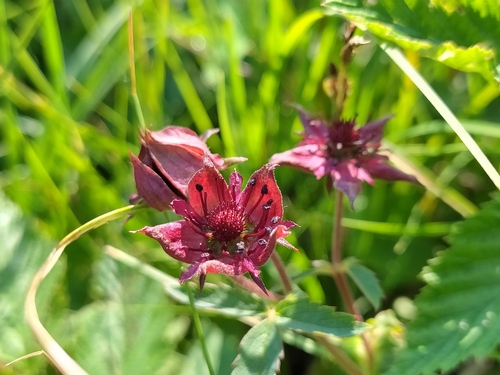
Comarum is a small genus of perennial herbs and subshrubs in the rose family, Rosaceae, native to the cool temperate and boreal Northern Hemisphere. The widespread marsh cinquefoil (C. palustre) is a creeping wetland plant that spreads by long, rooting rhizomes and stems 8-24 inches (20-60 cm) long through bogs, marshes, and the shallow margins of ponds and ditches. Its pinnate leaves carry five to seven sharply toothed, blue-green leaflets, and the star-shaped flowers are coloured unlike most of the rose family: pointed sepals of deep reddish-purple spread behind smaller, narrow petals of the same dark wine-red. Flowering occurs in early to mid summer, and the flowers draw bees and flies before forming a head of dry seeds. A second species, the shrubby C. salesovianum of the mountains of central Asia, forms a woody-based plant of dry slopes. Marsh cinquefoil grows in acidic, peaty, permanently wet ground and tolerates standing water, but fails in dry soil. The creeping stems can form floating mats at the water edge. The reddish flowers and wetland habit set it apart from the yellow-flowered cinquefoils (Potentilla).
Native Range
Comarum is native to the cool temperate and boreal Northern Hemisphere. The marsh cinquefoil (C. palustre) is circumboreal, found across northern North America, Europe, and Asia in wetlands, while C. salesovianum grows in the mountains of central Asia. It grows in acidic bogs, fens, marshes, and wet shorelines.Suggested Uses
Comarum palustre is grown in bog gardens, pond margins, and rain gardens, and in wetland restoration where it stabilises soft, saturated ground. The flowers draw bees and other insects, and the spreading mats shelter small wetland wildlife. Its need for permanently wet, acidic soil makes it unsuited to ordinary borders.How to Identify
Appearance
Size & Dimensions
Height8" - 2'
Width/Spread1' - 3'
Bloom Information
Flowering occurs in early to mid summer, generally June to July, with the dark reddish-purple flowers opening over several weeks. They are pollinated by bees and flies. Dry seed heads follow and ripen by late summer.
Detailed Descriptions
Foliage Description
blue-greenGrowing Conditions
Sun Requirements
Requires 4-10 hours of direct sunlight daily
• Full Sun: 6+ hours of direct sunlight
• Partial Shade: 3-6 hours of direct sunlight
• Full Shade: Less than 3 hours of direct sunlight
Care & Maintenance
Care Guide
Comarum palustre grows in full sun to partial shade in permanently wet, acidic, peaty soil and at the margins of ponds and bog gardens, tolerating standing water up to a few inches deep. It spreads by creeping, rooting rhizomes that can form floating mats and colonise the water edge. The plant is hardy through USDA zones 3-7 and dies back over winter. It fails in dry or limy soil and needs constant moisture to persist. The shrubby central Asian species, by contrast, needs sharp drainage and a drier site. Division of the rhizomes in spring is the simplest method of increase.Pruning
Cut back old stems in late autumn or early spring as the plant dies down. Lift and divide spreading rhizomes in spring to control the colony and renew growth. Thin floating mats where they overrun a pond margin.Pruning Schedule
Prune: March & October
fallearly spring
Container Growing
Suitable for container growing
Minimum container size: 2 gallons