Colocasia, Genus, esculenta, Species,
- Genus & species
taro
Southeast Asia and Indian subcontinent
Overview
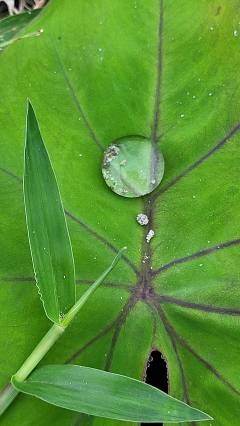
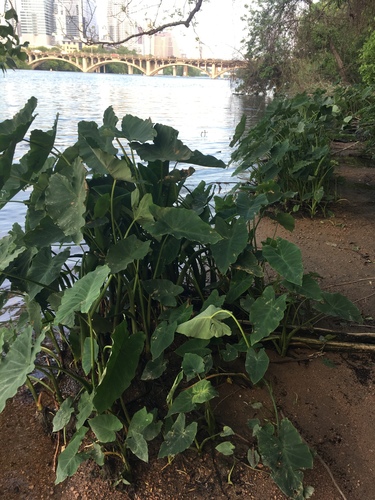
Colocasia esculenta is a herbaceous perennial in the arum family (Araceae), grown 36-72 inches (90-180 cm) tall and 24-48 inches (60-120 cm) wide from a starchy underground corm. Heart-shaped to arrow-shaped leaves measure 12-36 inches (30-90 cm) long on petioles 24-48 inches (60-120 cm) tall, with the leaf blade attached at the petiole on the inside of the V (peltate); water beads up and runs off the waxy upper surface. Foliage is medium to deep green, with some cultivars showing dark veins or near-black coloration. Inconspicuous greenish-yellow spadix flowers enclosed in a yellow-green spathe occur occasionally in tropical conditions; flowering is uncommon in cultivation. The corm and leaves contain calcium oxalate crystals (raphides) and are toxic when raw, causing intense burning of the mouth and throat; thorough cooking destroys the crystals and makes both edible. Cultivated as a staple food crop in tropical Asia, Africa, the Pacific Islands, and the Caribbean for at least 7,000 years. Grown as a perennial in zones 8-11 and as an annual elsewhere; corms can be lifted and stored frost-free for replanting. Foliage collapses at temperatures below 50°F (10°C). Listed as invasive in Florida and parts of the southeastern United States, where it escapes into wetlands and displaces native vegetation.
Native Range
C. esculenta is native to Southeast Asia and the Indian subcontinent, where it grows in wetland margins, stream banks, and seasonally flooded ground. Cultivated and naturalized across the tropics and subtropics worldwide; classified as invasive in Florida, Hawaii, and parts of the Gulf Coast.Suggested Uses
Grown as a foliage plant in pond margins, rain gardens, and bog plantings at 24-36 inch (60-90 cm) spacing in zones 8-11, and as a summer container plant in pots of at least 5 gallons (19 L) in colder zones. Cultivated as a food crop in tropical Asia, Africa, the Pacific, and the Caribbean for the starchy corms and young leaves, both eaten only after thorough cooking. Listed as invasive in wetlands of the southeastern United States.How to Identify
Appearance
Size & Dimensions
Height3' - 6'
Width/Spread2' - 4'
Bloom Information
Flowering is uncommon in cultivation outside tropical climates. When produced, a yellow-green spathe 6-12 inches (15-30 cm) long encloses a pale yellow spadix; flowers appear at the leaf base in summer. The plant is grown for foliage rather than flowers and rarely sets viable seed in temperate gardens.
Detailed Descriptions
Flower Description
Yellow-green spathe; pale yellow spadix; rare in cultivationFoliage Description
Medium to dark green; dark-veined or near-black in some cultivarsGrowing Conditions
Sun Requirements
Requires 4-8 hours of direct sunlight daily
• Full Sun: 6+ hours of direct sunlight
• Partial Shade: 3-6 hours of direct sunlight
• Full Shade: Less than 3 hours of direct sunlight
Care & Maintenance
Care Guide
Grows in consistently moist to waterlogged soil; tolerates standing water 2-6 inches (5-15 cm) deep at the crown. Full sun to part shade; richer leaf color develops in part shade in zones 9-11. Soil pH 5.5-7.0, rich in organic matter. In zones 7 and colder, lift corms after the first frost blackens the foliage and store at 45-55°F (7-13°C) in dry peat or sawdust through winter. Spider mites occur on plants grown in dry indoor air. Foliage and corm tissue contain calcium oxalate raphides and cause intense oral burning if eaten raw by humans, dogs, or cats.Pruning
Remove yellowing or damaged leaves at the base of the petiole through the growing season. Cut all foliage to ground level after the first hard frost in zones 8-9; corms resprout in spring. No structural pruning is required.Pruning Schedule
Prune: November
fall
Container Growing
Suitable for container growing
Minimum container size: 5 gallons