Colocasia, Genus, spp., Multiple species,
- Genus
- Multiple species
elephant ears
Overview
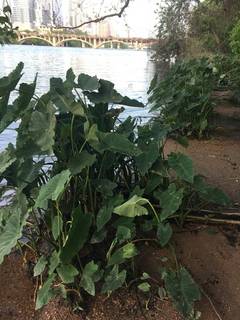
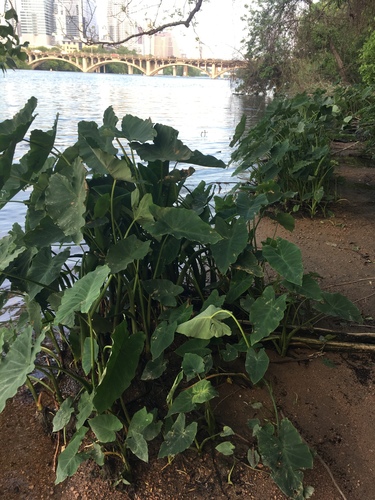
Colocasia is a genus of about 25 species of tuberous perennials in the arum family, Araceae, native to tropical and subtropical Asia and widely grown across the warm tropics. Plants grow from a starchy corm and produce large, heart-shaped to arrow-shaped leaves on long, fleshy stalks, the blades held outward or drooping like an elephant ear. Leaves range from 1 to 3 feet (30-90 cm) long, in plain green or, in many selections, flushed black-purple, blue-green, or veined with contrasting colour; whole plants reach 2-8 feet (0.6-2.4 m) tall. The leaf surface sheds water, and drops roll off the slightly cupped blades. Flowers are the typical arum type, a narrow pale spathe wrapped around a flowering spadix, but they appear infrequently in cultivation. C. esculenta, taro, is grown across the tropics for its edible cooked corms and leaves. All parts contain needle-like calcium oxalate crystals and are toxic and irritant if eaten raw. Most species need warmth, high humidity, and wet soil, and they are hardy outdoors only in USDA zones 8 to 11, grown elsewhere as summer container or bog plants lifted before frost.
Native Range
Colocasia is native to tropical and subtropical Asia, from India and southern China through Southeast Asia. Long cultivation has spread taro, C. esculenta, across the Pacific, Africa, and the Americas. Wild species grow in wet forest, marshes, and stream banks.Suggested Uses
Colocasia is planted for its bold foliage in tropical-style beds, container displays, and the margins of ponds and bog gardens. C. esculenta, taro, is grown across the tropics as a root and leaf vegetable. Dark-leaved selections are used as summer accent plants in cooler climates.How to Identify
Appearance
Size & Dimensions
Height2' - 8'
Width/Spread2' - 6'
Colors
Foliage Colors
Bloom Information
Flowering is infrequent in cultivation and irregular in the wild, mostly in warm, wet weather. The bloom is a narrow pale spathe wrapped around a slender spadix, partly hidden among the leaf stalks. The spadix bears tiny flowers, with female flowers below and male flowers above.
Detailed Descriptions
Flower Description
cream to pale greenFoliage Description
green to black-purple or blue-greenGrowing Conditions
Sun Requirements
Requires 4-8 hours of direct sunlight daily
• Full Sun: 6+ hours of direct sunlight
• Partial Shade: 3-6 hours of direct sunlight
• Full Shade: Less than 3 hours of direct sunlight
Care & Maintenance
Care Guide
Colocasia species grow in full sun to partial shade on rich, constantly moist to wet soil, and many tolerate standing water at the margins of ponds. They need warmth and high humidity, with strong growth above 70 degrees F (21 C). Soil pH from about 5.5 to 7.0 suits most plants. Growth stops and corms rot in cold, dry soil. Outdoors the genus is hardy in USDA zones 8 to 11; in colder areas corms are lifted and stored frost-free over winter. Spider mites trouble plants in dry indoor air. All parts are toxic and irritant if eaten raw.Pruning
Remove old, yellowing leaves at the base through the growing season. Cut the plant back after the first frost in marginal climates, then lift and store the corm. Divide crowded corms in spring before growth restarts.Container Growing
Suitable for container growing
Minimum container size: 5 gallons