Collinsonia, Genus, canadensis, Species,
- Genus & species
citronella horse balm
Overview
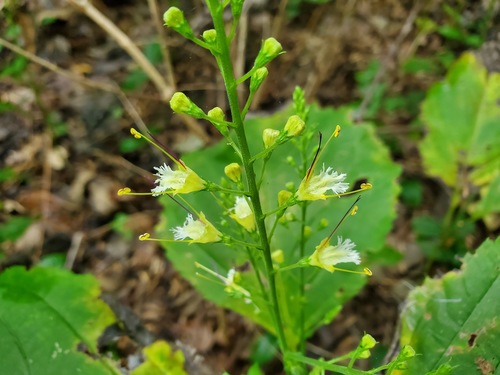
Collinsonia canadensis is an upright herbaceous perennial in the mint family, growing 2-4 ft (0.6-1.2 m) tall and 1-2 ft (0.3-0.6 m) wide from a thick, knotty rhizome. The square stems carry opposite, broadly ovate leaves 4-8 in (10-20 cm) long with serrate margins; when crushed, the foliage gives off a lemon or citronella scent. From mid summer into fall it produces open, branched panicles of small pale yellow tubular flowers about 0.5 in (1.3 cm) long, each with a fringed lower lip and projecting stamens that carry a faint lemon fragrance. The species is native to eastern North America, where it grows in rich, moist deciduous woodlands and shaded slopes. It grows in USDA zones 4 to 8, prefers consistent moisture, and spreads slowly to form clumps. In dry or sunny sites the leaf margins scorch and growth is stunted. The individual flowers are small and open over an extended period rather than in a single flush.
Native Range
Collinsonia canadensis is native to eastern North America, ranging from Ontario and Quebec south through the eastern United States to Florida and west toward the Mississippi River valley. It grows in moist, rich deciduous woodlands, ravines, and shaded slopes.Suggested Uses
Used in shade gardens, woodland borders, and native plantings under deciduous trees, spaced 18-24 in (45-60 cm) apart. The late-season flowers attract bees and other pollinators when few woodland plants are blooming.How to Identify
Appearance
Size & Dimensions
Height2' - 4'
Width/Spread1' - 2'
Bloom Information
Detailed Descriptions
Foliage Description
greenGrowing Conditions
Sun Requirements
Requires 2-4 hours of direct sunlight daily
• Full Sun: 6+ hours of direct sunlight
• Partial Shade: 3-6 hours of direct sunlight
• Full Shade: Less than 3 hours of direct sunlight
Care & Maintenance
Care Guide
Collinsonia canadensis grows in part shade to full shade and rich, consistently moist, well-drained soils high in organic matter, with pH from 5.5 to 7.0. It is hardy in USDA zones 4 through 8 and tolerates the deep shade of deciduous woodland. Water needs are moderate, and the plant declines in dry or sunny, exposed sites where leaf margins scorch. It spreads slowly by rhizome to form clumps over time. Few pests trouble it in suitable woodland conditions.Pruning
Cut spent stems to the ground in late fall or early spring as new growth resumes. Spent flower panicles can be removed to limit self-seeding. No other routine pruning is needed.Pruning Schedule
Prune: March & November
fallearly spring