Colchicum, Genus, 'Waterlily', Cultivar,
- Genus
- Cultivar
waterlily autumn crocus
Hybrid of garden origin (C. autumnale × C. speciosum)
Overview
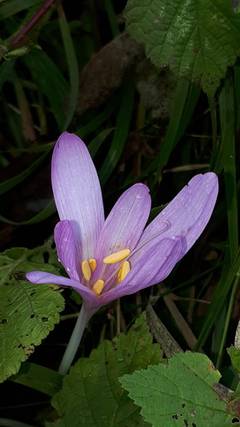
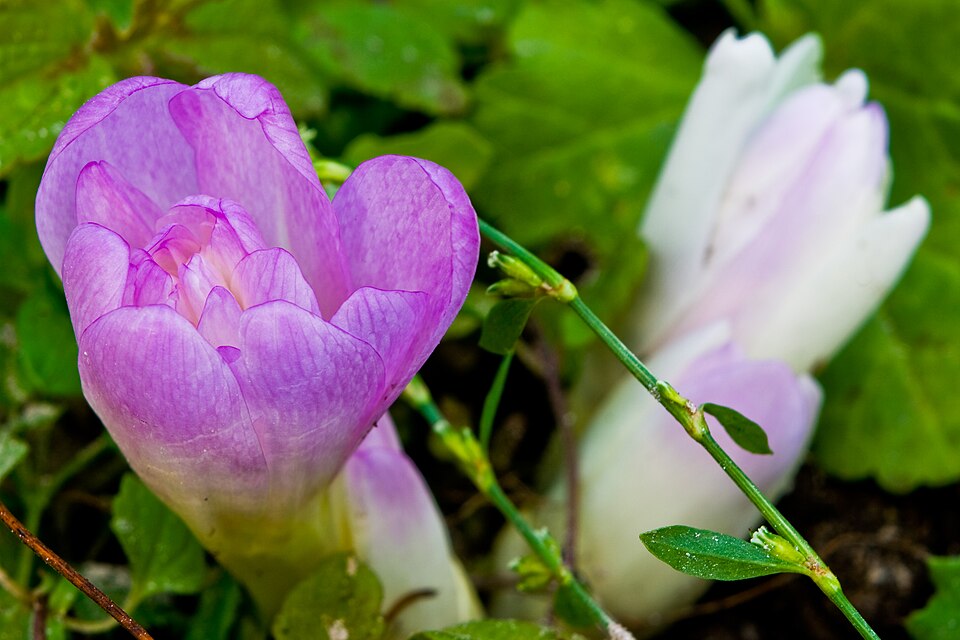
Colchicum 'Waterlily' is a cormous perennial reaching 5–8 inches (13–20 cm) tall in flower with a spread of 6–9 inches (15–23 cm) per corm. The cultivar carries fully double, multi-petaled flowers in rich lilac-pink to mauve-pink from September through October, emerging from bare ground without foliage. Each flower has 20–30 narrow tepals in a waterlily-like rosette 3–4 inches (8–10 cm) across — larger than the 2–3 inch (5–8 cm) single flowers of C. autumnale. Each corm produces 3–5 flowers. The double flowers are heavier than singles and may topple in rain or wind; a low groundcover or twiggy support keeps them upright. In spring, broad, glossy green, strap-like leaves 10–16 inches (25–40 cm) long emerge and persist until late June — larger and coarser than C. autumnale foliage. Growth rate is moderate; corms multiply slowly. The double flowers are sterile and set no seed. All parts contain the alkaloid colchicine and are toxic to humans, pets, and livestock if ingested. The cultivar is a hybrid involving C. autumnale and C. speciosum.
Native Range
Colchicum 'Waterlily' is a hybrid of garden origin, involving C. autumnale (native to Europe) and C. speciosum (native to Turkey, the Caucasus, and Iran). The cultivar was selected in cultivation.Suggested Uses
Used in drifts of 7 or more corms in borders, under deciduous trees, and in meadow plantings at 6–9 inch (15–23 cm) spacing. The large double flowers need support, so interplanting with low evergreen groundcover or short grasses works better than siting alone. Late-emerging perennials or ornamental grasses mask the large dying spring foliage. The cultivar grows in containers with 3–5 corms per 8-inch (20 cm) pot. Plantings are sited away from areas used by livestock, pets, or young children because of the toxicity of all plant parts.How to Identify
Appearance
Size & Dimensions
Height5" - 8"
Width/Spread6" - 9"
Bloom Information
Fully double lilac-pink to mauve-pink waterlily-like flowers 3–4 inches (8–10 cm) across with 20–30 tepals emerge from bare ground in September–October. Each corm produces 3–5 flowers. Bloom duration is 2–3 weeks. Flowers are sterile and produce no seed.
Detailed Descriptions
Flower Description
Rich lilac-pink to mauve-pink, fully doubleFoliage Description
Glossy green, broad, strap-like, 10-16 inches (25-40 cm) long in spring only; larger than C. autumnaleGrowing Conditions
Sun Requirements
Requires 4-10 hours of direct sunlight daily
• Full Sun: 6+ hours of direct sunlight
• Partial Shade: 3-6 hours of direct sunlight
• Full Shade: Less than 3 hours of direct sunlight
Care & Maintenance
Care Guide
Corms are planted 4–5 inches (10–13 cm) deep in late summer (August). Full sun to partial shade in average, well-drained soil. The heavy double flowers may topple in rain; a low groundcover of Sedum, Thymus, or short ornamental grasses keeps them upright. The very large spring foliage at 10–16 inches (25–40 cm) needs more room than C. autumnale; leaves are left to yellow naturally until late June. All parts are toxic if ingested, so the corms and leaves are sited away from grazing livestock and high-traffic pet or child areas. No serious pest or disease problems.Pruning
No pruning is required. Spring foliage is allowed to yellow and die back naturally by late June, after which the mowing or trimming of adjacent plantings can resume.Container Growing
Suitable for container growing
Minimum container size: 1 gallons