Colchicum, Genus, autumnale, Species,
- Genus & species
autumn crocus
Europe (British Isles east to Ukraine and south to the Mediterranean; meadows, open woodlands, and damp grasslands from lowland to 6,500 feet / 2,000 m)
Overview
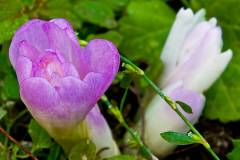
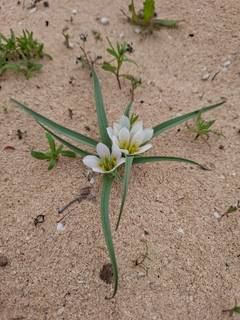
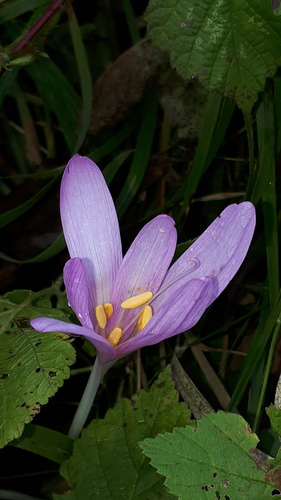
Colchicum autumnale is a cormous perennial in the autumn crocus family (Colchicaceae) reaching 4–6 inches (10–15 cm) tall in flower with a spread of 6–9 inches (15–23 cm) per corm. The plant carries goblet-shaped pale lilac-pink to rosy-pink flowers 2–3 inches (5–8 cm) long directly from bare ground in September–October, without accompanying foliage — leaves emerge the following spring. Each corm sends up 1–6 flowers on pale fleshy tubes (the tubes are elongated perianth tissue rather than stems). In spring large broad strap-like glossy green leaves 8–14 inches (20–36 cm) long and 2–4 inches (5–10 cm) wide emerge and persist until late June, when they yellow and die down to the corm. Spring foliage is substantial and coarse — it occupies significant ground space and smothers adjacent small plants if spacing is not planned. Seed capsules ripen at ground level in early summer within the foliage mass. Growth rate is moderate; corms multiply slowly by producing offsets. Hardy to zone 4. Despite the common name 'autumn crocus', Colchicum sits in Colchicaceae, unrelated to the true Crocus genus (Iridaceae) — the resemblance is convergent rather than botanical. All plant parts contain colchicine, a mitotic-inhibitor alkaloid that is highly toxic to mammals; ingestion of corms or foliage causes severe gastrointestinal symptoms, multi-organ failure, and has been fatal in both livestock and human poisonings historically. Skin contact with the sap may cause irritation in sensitive individuals.
Native Range
Colchicum autumnale is native to Europe, from the British Isles east to Ukraine and south to the Mediterranean, where it grows in meadows, open woodlands, and damp grasslands from lowland elevations to 6,500 feet (2,000 m).Suggested Uses
Grown in drifts of 10+ corms in lawns, under deciduous trees, in meadow plantings, and at the front of borders at 6–9 inch (15–23 cm) spacing. The leafless fall flowers emerging from bare ground carry a surprise-emergence effect that is uncommon among fall-blooming plants. Interplanting with low ground covers such as Vinca minor or late-emerging perennials such as Hosta masks the footprint during summer dormancy and screens the coarse spring foliage. Lawn naturalization works where mowing can be delayed until late June. Formal borders where the large dying spring foliage is visible are not suitable positions. The colchicine toxicity means positioning away from areas with high pet and child traffic reduces ingestion risk — sap and corms are the main concerns, and gardeners handling lifted corms for division work typically use hand protection. The species was historically cultivated for medicinal colchicine, which is still used to treat gout.How to Identify
Appearance
Size & Dimensions
Height4" - 6"
Width/Spread6" - 9"
Bloom Information
Goblet-shaped pale lilac-pink to rosy-pink flowers 2–3 inches (5–8 cm) long emerge directly from bare ground without foliage in September–October. Each corm produces 1–6 flowers on pale fleshy perianth tubes. Bloom duration is 2–3 weeks. Foliage appears the following spring (March–June) and is absent during the fall flowering period.
Detailed Descriptions
Flower Description
Pale lilac-pink to rosy-pink; goblet-shaped 2-3 inches longFoliage Description
Large broad glossy green strap-like leaves 8-14 inches long and 2-4 inches wide; spring-only, absent during fall floweringGrowing Conditions
Sun Requirements
Requires 4-10 hours of direct sunlight daily
• Full Sun: 6+ hours of direct sunlight
• Partial Shade: 3-6 hours of direct sunlight
• Full Shade: Less than 3 hours of direct sunlight
Care & Maintenance
Care Guide
Grows in full sun to partial shade in average well-drained soil at pH 6.0–7.5, tolerating loam. Hardy to zone 4. Corms are planted 3–4 inches (8–10 cm) deep in late summer (August) for first-year fall flowering. Unplanted corms may bloom on a shelf from stored moisture reserves, but in-ground planting produces larger flowers and long-term persistence through corm division. The large spring foliage occupies 8–14 inches (20–36 cm) of space per corm; planting interspersed with late-emerging perennials or ornamental grasses masks the dying foliage through its late-June decline. Lawn areas with Colchicum naturalization require delayed mowing until after foliage yellows in late June, as premature mowing removes the green tissue that replenishes the corm. All plant parts contain colchicine, a highly toxic alkaloid; contact with broken plant tissue transfers sap that can cause skin irritation in sensitive individuals, and ingestion of any part is dangerous to both pets and humans. No serious pest or disease problems.Pruning
No pruning is required. Spring foliage is allowed to yellow and die back naturally through late June — the green foliage replenishes the corm and premature removal reduces the following fall's flowering. Seed capsules are left to ripen at ground level. Mowing in lawn plantings is delayed until after the foliage has completely yellowed.Container Growing
Suitable for container growing
Minimum container size: 1 gallons