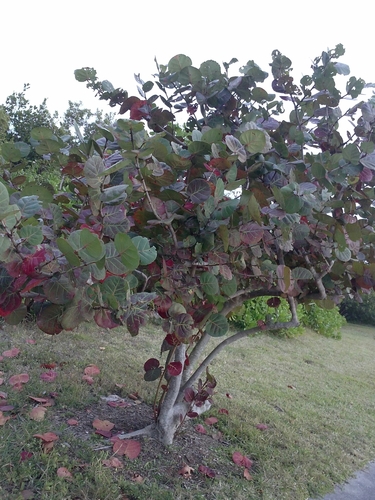
Coccoloba, Genus, spp., Multiple species,
- Genus
- Multiple species
sea grape
Overview
Coccoloba is a genus of around 120-150 species of evergreen trees, shrubs, and woody climbers in the knotweed family, Polygonaceae, native to tropical and subtropical America, including the Caribbean. The most familiar species, the sea grape (C. uvifera), forms a wind-sculpted coastal shrub or tree 10-35 feet (3-11 m) tall with thick, rounded, leathery leaves 4-10 inches (10-25 cm) wide that often show red veins. Members are dioecious, carrying male and female flowers on separate plants, with small white to greenish flowers in slender spike-like racemes. Female plants bear hanging, grape-like clusters of rounded fruits that ripen green to purple and contain a single hard seed; in sea grape these are edible and made into jelly and wine. Many species tolerate salt spray, sandy soil, and strong coastal wind, which suits them to seaside planting, while inland and forest species form larger trees. The leaves are tough and slow to break down, and fallen fruit can stain paving. Most species are frost-tender, growing only in USDA zones 9-12, and they are damaged by hard freezes.
Native Range
Coccoloba is native to the warm regions of the Americas, from Florida and the Caribbean through Mexico and Central America to tropical South America. It grows along coasts, in coastal scrub and mangrove edges, and in inland tropical forest, with the sea grape concentrated on sandy shores and dunes.Suggested Uses
Coccoloba is grown as a coastal hedge, windbreak, screen, and shade tree in frost-free regions, and the sea grape is planted to stabilise dunes and shorelines. The fruit of sea grape is eaten fresh and made into jelly and wine, and ripe fruit feeds birds and other wildlife. Its salt and wind tolerance suits exposed seaside sites where many plants fail.How to Identify
Appearance
Size & Dimensions
Height10' - 50'
Width/Spread10' - 30'
Bloom Information
Flowering occurs mainly in spring and summer, though it can extend much of the year in tropical climates. The small flowers are pollinated by bees and other insects, and only female plants set fruit. Grape-like fruit clusters ripen over the following months from green to purple.
Detailed Descriptions
Flower Description
white to greenishFoliage Description
greenGrowing Conditions
Sun Requirements
Requires 6-12 hours of direct sunlight daily
• Full Sun: 6+ hours of direct sunlight
• Partial Shade: 3-6 hours of direct sunlight
• Full Shade: Less than 3 hours of direct sunlight
